

Event Replay: Biodefense in the AI Age
Speakers

Jenn Beddor is the Policy and Legislative Director for the National Security Commission on Emerging Biotechnology (NSCEB), where she leads the commission’s legislative strategy. She played a key role in advancing 17 biotech-related provisions in last year’s National Defense Authorization Act (NDAA). Prior to joining the NSCEB, Jenn worked for the Government Accountability Office, leading teams in science and technology policy work. Jenn also worked on the House Armed Services Committee overseeing the defense department’s science and technology enterprise. Jenn has a M.S.E.in Systems Engineering and a B.S. in Chemical and Biomolecular Engineering

Hannu Rajaniemi is cofounder and President of Red Queen Bio, an AI biosecurity company building the countermeasures needed to keep biological defenses ahead of rapidly advancing AI-enabled biothreats. He is also cofounder and CEO of HelixNano, a clinical-stage mRNA therapeutics company pioneering the integration of machine learning into therapeutic design.
Hannu previously cofounded ThinkTank Maths, an applied mathematics and AI consultancy whose clients included the European Space Agency and the UK Ministry of Defense. He holds a PhD in Mathematical Physics from the University of Edinburgh and is the author of five science fiction novels.
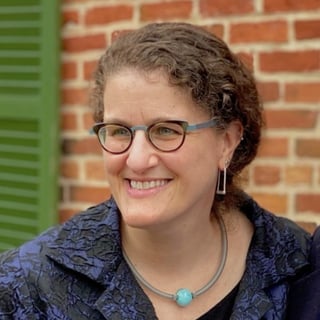
Beth Cameron Ph.D. is a senior advisor to the Brown Pandemic Center and a national and global leader in health security, biosecurity, pandemic preparedness, biodefense, and combating bioterrorism, Dr. Cameron has worked at the highest levels over decades within and outside of government to facilitate change. She spent two tours as a Special Assistant to the President on the White House National Security Council staff, twice helping establish and lead the Directorate on Global Health Security and Biodefense, a role in which she served under three Presidents. In this and other positions, she builds and leads robust teams focused, every day, on leaning forward to prevent, detect, and rapidly respond to biological crises. In addition to her role on the Pandemic Center senior leadership team, Beth is a non-resident senior advisor to the Center for Strategic and International Studies (CSIS) Global Health Policy Center, a life member of the Council on Foreign Relations, and a practitioner senior fellow of the UVA Miller Center.
Dr. Cameron has held senior posts at the Departments of State and Defense, where she created and oversaw biological and chemical security efforts, as well as the U.S. Agency for International Development where she served as a global health security adviser. Outside of government, she served as a Vice President at the Nuclear Threat Initiative, where she was an architect of NTI | bio, a program aimed at countering biological catastrophes. She has been instrumental to developing, coordinating, launching, and implementing the U.S. global COVID-19 response, the Pandemic Fund, the U.S. National Biodefense Strategy, the Global Health Security Agenda, the Development Finance Institution Medical Countermeasures Surge Financing Initiative, the Global Partnership Against the Spread of Weapons and Materials of Mass Destruction biosecurity effort, and many other initiatives focused on improving biosecurity and biosafety globally. Her work has helped address homeland and national security threats by enhancing pandemic preparedness, biosecurity and biosafety; improving emerging infectious disease surveillance, and countering the development and use of biological weapons. She got her start in government as an AAAS fellow at the State Department and in the office of Senator Edward M. Kennedy. Beth holds a Ph.D. in Biology from Johns Hopkins University and a B.A. in Biology from the University of Virginia (UVA).
Outside of government, she led and was an architect of NTI | bio, a program of the Nuclear Threat Initiative aimed at countering biological catastrophes, and she served at the American Cancer Society. She got her start in government as an AAAS Fellow at the State Department and in the office of Senator Edward M. Kennedy. Beth holds a Ph.D. in Biology from the Human Genetics and Molecular Biology Program at the Johns Hopkins University and a B.A. in Biology from the University of Virginia.
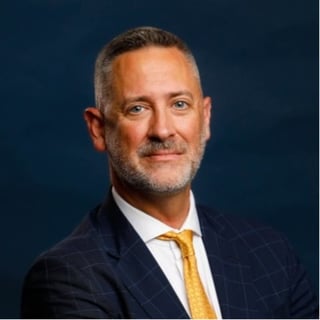
Richard Johnson is the National Security Risk Mitigation Lead on OpenAI's Global Affairs team, where he works on reducing risks from advanced AI and strengthening national security and societal resilience. His portfolio includes biosecurity and nuclear risks, as well as partnerships with AI safety and security institutions. He previously served as Deputy Assistant Secretary of Defense for Nuclear and Countering Weapons of Mass Destruction Policy and as Director for Nonproliferation at the National Security Council. He also held roles at the State Department and the Nuclear Threat Initiative. He holds a bachelor's degree from Claremont McKenna College, where he is also a visiting lecturer, and a Master in Public Affairs from Princeton University's School of Public and International Affairs.

Olivia Scharfman is a Biotechnology Fellow focused on biosecurity and biotechnology innovation policy at the Institute for Progress, a nonpartisan think tank dedicated to accelerating scientific, technological, and industrial progress. She also does biosecurity strategy and special projects work for BlueDot Impact. Prior to joining IFP, Scharfman co-founded LincSwitch Therapeutics, a lncRNA epigenetic editing company. Before that, she was a Principal at The SALT Fund, investing in biotechnology and deep tech startups such as General Biological and Northwood Space. She holds a B.S. in Molecular Biophysics and Biochemistry from Yale.
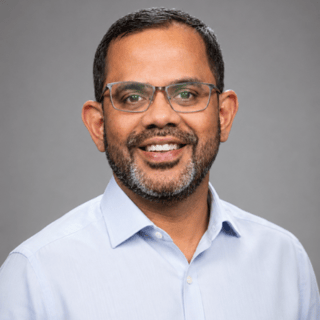
Shankar Sundaram serves as Deputy Principal Associate Director for Mission Engineering and Director of the Bioresilience Incubator at Lawrence Livermore National Laboratory (LLNL), where he leads efforts to harness AI and biotechnology to strengthen bioresilience and national preparedness. His work encompasses secure compute, trusted biological data resources, foundational AI capabilities, and public-private partnerships to accelerate pathogen detection and characterization, as well as the rapid design of medical countermeasures. He returned to LLNL after serving as Special Assistant to the President and Senior Director for Global Health Security and Biodefense at the National Security Council during the Biden Administration. In that role, he advised senior officials on global health security and biodefense, including outbreak response, AI and biotechnology policy, and biosafety. Previously at LLNL, as Director of the Center for Bioengineering, he led interdisciplinary research spanning engineering, computing, and biology, and held senior leadership roles advancing national biosecurity through scientific and technological innovation. Earlier in his career, he worked at Draper Laboratory and in the private sector on microfluidics, microfabrication, and computational multiphysics. Shankar holds a doctorate in Chemical Engineering from Pennsylvania State University and a bachelors degree also in Chemical Engineering from the Indian Institute of Technology, Madras.
SUMMARY
The panel explored how AI can strengthen biodefense by accelerating threat detection, improving understanding of emerging risks, and supporting the development of medical countermeasures. Speakers emphasized pairing these advances with layered safeguards, including model protections, gene-synthesis screening, and stronger public-health infrastructure. They highlighted high-quality biological data, secure access, and real-world validation as essential to translating research into practical capabilities. The discussion also underscored the need for sustained federal investment and coordination across government, industry, research institutions, and state and local communities. Across these themes, speakers stressed that scientific progress and policy must advance together to improve preparedness while enabling AI’s benefits for health and medicine.
CONTENT & TRANSCRIPT
