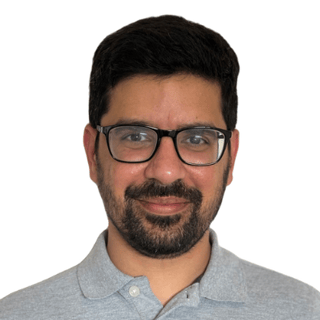
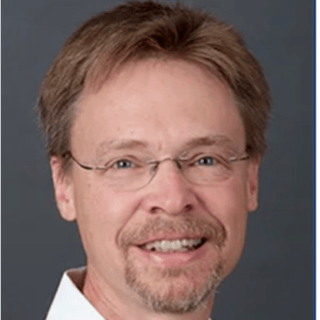
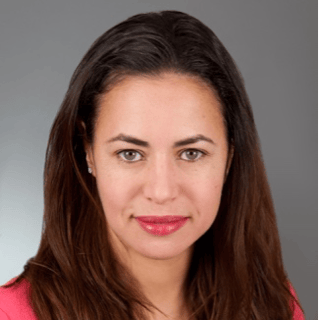
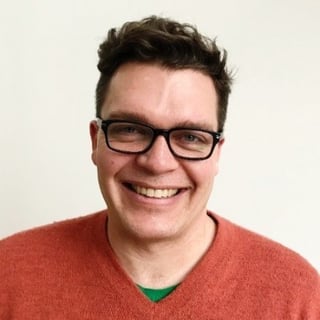
[00:00:09-00:01:44] Chris Nicholson: Welcome everyone. Thank you for joining us again. Today's conversation looks at a research collaboration between the Manton Center for Orphan Disease Research at Boston Children's Hospital and Harvard and ourselves at OpenAI. So you should know that hundreds of millions of families worldwide struggle with rare disease and the average time just to get a diagnosis is six to seven years. So it's a huge long struggle for them. And this research is super important. So in this study across 376 cases, an AI-driven workflow surfaced evidence-linked leads that led to 18 diagnoses of rare disease. So we want to dig into that. First, we're going to hear from Stav Rones, a Manton Center research participant, about his search for a diagnosis for his own rare condition, and the impact of getting diagnosed. We're then going to hear from three study co-authors. Dr. Catherine Brownstein is the scientific director of the Manton Center's Gene Discovery Core, where she focuses on genome analysis and barriers to diagnosis. Dr. Alan Beggs is director of the Manton Center and brings decades of experience in human genetics and rare disease. And Suyash Shringarpure is a machine learning researcher and a statistical geneticist at OpenAI, working across AI genomics and computational biology. So they'll discuss why rare disease is still hard, how this workflow operated, what the study found, and what its limitations were. And then we'll open up the conversation to the community. So let's start with Stav. Stav, hi, welcome.
[00:01:45-00:01:46] Stav Rones: Thank you.
[00:01:47-00:02:06] Chris Nicholson: So, Stav, you first noticed symptoms as a teenager, but you spent years searching for the right diagnosis, including an initial diagnosis that turned out to be wrong. Can you tell us first about yourself? What, where do you sit? What do you do? And then we'll get into the story of your search for a diagnosis.
[00:02:08-00:03:03] Stav Rones: Yeah, yeah, absolutely. Thanks for having me. So my name is Stav Rones. I was born and raised in the Boston area. Growing up, you know, I always loved playing sports, different sports, baseball, basketball, rowing. And when I was kind of getting more competitive in my teenage years, I started to notice that I was having certain issues that other kids were not facing. And it was pretty frustrating not knowing what the issue was. I was getting certain pains, limitations with movements, and, you know, eventually tried to seek professional medical help. It took a long time to even figure out that it may be genetically related and then to get from even there to doing the full genome testing and figuring out what kind of rare disease it was was another whole process. But currently, yeah, I'm based out of Miami, Florida and I'm a software engineer. But yeah.
[00:03:03-00:03:10] Chris Nicholson: Yeah. So started when you were a teenager. How long did it take you to get the correct diagnosis?
[00:03:12-00:03:53] Stav Rones: It took a long time. I mean, there are a variety of different factors, you know, like trying to correlate certain physical issues with having a genetic, especially a rare genetic disease, right? I mean, certain things express themselves that are common diseases. It's more easy to diagnose, but with rare diseases, because there's so little patience and so little understanding about what the, how that presents itself, what kind of symptoms. It took at least three to four years to figure out that it wasn't just the physical issue, that it was neurological. And from knowing that it was neurological to get to the point that it was genetic was a whole process of at least five years.
[00:03:54-00:04:07] Chris Nicholson: Wow. So you got your genome sequenced and then you got a diagnosis and you got clarity. What did that unlock for you? What was life like and what were you able to do after you got clarity?
[00:04:09-00:05:28] Stav Rones: Yeah, absolutely. I mean, just knowing exactly what the issue is helps you situate yourself and adapt to knowing what you have. If you don't know what the issue is, you might do things that are harmful. Knowing exactly what you have also means you can be part of a community of others with the same thing, and it's a really nice feeling to understand and be with others who have the same thing. Also, really importantly, there are companies and teams working on cures and solutions for these rare diseases. Knowing exactly what you have means you can get involved and potentially find cures for the rare disease. For me, one of the biggest things was family planning. Knowing the implications of the disease when you go to have children was very important, as was understanding how modern technology can help you navigate that.
[00:05:30-00:06:02] Chris Nicholson: Yeah, that's amazing. Thank you for sharing that story. We're going to bring on the three study co-authors we have here, Catherine Brownstein, Alan Beggs, and Suyash Shringarpure to kind of widen what we're discussing here. So I'd like to start the panel with Catherine, Alan, and Suyash. Alan, I'd like to start with you first. Stav's search for an answer took years. How common is an experience like his and why can rare disease cases remain unsolved for so long?
[00:06:03-00:07:44] Alan Beggs: Sure. Well, unfortunately, it's way too common. People often refer to this as a diagnostic odyssey. Folks know that something's going on. In many cases now in recent decades we've realized that many of these rare conditions have a genetic basis, but our ability to test all the genes that we have has been very difficult. To put the problem in context, our genome, the DNA that we inherit from each of our parents, is roughly 3 billion bases. And those 3 billion bases encode something in the order of 20,000 different genes. And then each gene can have many different ways that it is damaged. We know now of... The number is constantly going up, but between 8,000 and 9,000 different genes that are known to be associated with disease when they're abnormal. And so patients, in the past, we only had the ability to look at a few genes at a time. What's changed is newer technology generically called next generation sequencing that allows us to sequence everything. But then our data sets, of course, contain upwards of hundreds of thousands to millions, if not more, genetic data points. And as we'll get into what the AI allows us to do is help hone in on the relevant ones. So this has been, for many families, a long process, this so-called genetic or diagnostic odyssey. And through... Collaboration with research institutes like us and others around the world, people eventually get an answer.
[00:07:44-00:07:47] Chris Nicholson: Yeah, so you're really looking for needles and haystacks.
[00:07:47-00:07:49] Alan Beggs: Yeah, that's what people often say.
[00:07:50-00:08:06] Chris Nicholson: Thank you. Catherine, you said the bottleneck is time because geneticists are sorting through variants and databases and complex ambiguous symptoms and new research. What does that time bottleneck look like for you when you're working on an unsolved case?
[00:08:08-00:10:24] Catherine Brownstein: So when I don't know when no one knows what's going on you try to approach a case with an open mind and really kind of start at the beginning and look at the known genes see if something was missed then you broaden it out and you if you have a complete trio that is mother and father and child you look at what's not in the parents but there it but is in the child so it's an air error during development or at some point along and all of us have these things that are called de novo mutations that aren't in either of our parents but they're in us and there it's a good place to start to kind of look and see okay is that what's going on here is there was a de novo variant that could be disease causing or you kind of you can look at things where there's each parent as a carrier and the child got two variants one from each parent and then from then you go on and look at large changes in a person's genome like deletions or duplications and it sounds scary but like a lot of deletions and duplications are in all of us and we're totally fine so Because there are so many genes, we have to look at the ones that we think could possibly cause disease and that takes a huge amount of time and then when we see something that's interesting we have to look at all the databases to make sure that it's not actually just a common variant or it's predicted to not do something to the protein and be disease causing and then we go to the literature and read all about that gene I'm kind of rambling here but the idea is and the main idea is that there's a huge amount of work that goes into looking at each and every variant and then sometimes like after several hours you're like oh wait no no no this can't possibly be it and then you're on to the next one so it was a real opportunity for an LLM to help us a lot. in this entire process.
[00:10:25-00:11:15] Chris Nicholson: Yeah, and bring transparency to that data. That's amazing. And I'll bet many people in the audience are surprised like I am to think I'm carrying a lot of de novo mutations myself. And you thank goodness, I just got lucky that they didn't severely affect the function of my body as they have in these rare disease families. So I got lucky. Alan, healthcare in this context is incredibly complex. It's just it's a kind of journey that most people, thank goodness, don't have to go on. But there's specialists, there's lots of tests, treatment for symptoms before anybody names a condition. Can you talk to me a little bit about what does this journey mean for patients and the families and the care teams that try to support them? It sounds like a very different experience than what most of us are used to.
[00:11:15-00:13:06] Alan Beggs: Well, so I mean, for someone like Stav who has a neuromuscular condition, in general, patients have been characterized by their pattern and severity of weakness. Some people have trouble walking, others need assistance breathing, can be mild or can be severe. And management and care in medicine today is largely supportive for patients like this, specifically thinking about neuromuscular disease. disease for example patients who have particular weakness of their upper body can develop a very curved spine and so an orthopedic management could involve surgical correction to keep the spine straight and so on but there's really nothing targeted at the gene or at the underlying cause of the disease itself Through identifying the genes that are abnormal and leading to the basis for, in this case, weakness, there's hope that we can start to develop an approach that's targeted specifically for that. Nowadays in medicine we talk about the concept of personalized medicine instead of just simply giving somebody aspirin for a headache if we know exactly what's causing it that we may be able to develop a genetically based approach for that. So the ability of An AI tool to help us identify and hone in on the particular gene can really be very dramatic. And for example, I don't think he had a chance to mention it, but Stov knowing his diagnosis now. In addition to the other benefits he cited, Nowell has the ability to actually connect it with a company that's developing a drug specifically for his condition. So this is, I think, one of the major benefits that this genetic diagnosis makes possible.
[00:13:07-00:13:27] Chris Nicholson: Yeah, thank you. So we're really talking about that big inflection point when they're going through this journey and they finally have a name for something. You've probably been in the room with some of those families and you know the impact that that diagnosis has on them. Can you talk to me about that moment? What does it mean for them? How does it feel?
[00:13:28-00:14:39] Alan Beggs: Well, I can think of a few times when somebody would tell them what we found. So that explains it. That examines it. I'm actually going to tell you about an incidental finding with somebody where we had sequenced their child's DNA because the child was sick and we identified, for example, a susceptibility gene for breast cancer and it had been inherited from the mother. And when we returned this to them, she was a nurse, her first reaction was, oh my gosh. And a light bulb went off in her head and her sister and her mother and an aunt had all had breast cancer and they had no idea it was genetic in basis. So this is type of eureka moment for some. For a small subset of patients today, it leads to a specific therapy. For everybody, as Stav mentioned, it leads to a name, a community and it leads to some There's some information on your future and your prognosis and what the future holds for you as well as potential family planning for those who choose to utilize it.
[00:14:39-00:14:47] Chris Nicholson: Thank you. And Catherine, I think you've seen this too. What are those moments like when a family learns really what's going on?
[00:14:48-00:16:06] Catherine Brownstein: Well, I don't usually meet with the families, only in a couple instances I have, and they've asked to meet me, and it's usually quite emotional, just because, you know, they've... been on this odyssey I mean we keep throwing around that word but there's no real substitute for it it's been so long and frustrating and for them and going from doctor to doctor and specialist to specialist and all these tests and you know I like throwing out the example that at the Manton Center once we diagnosed I'll never forget a 91 year old and it was a family member who had had a condition that was in three different generations and finally the third one we were able to figure out what was going on and return the results to the entire family and you know even at 91 he was like finally we have an understanding we know what's going on now and it's a wonderful feeling but I can't help but say that every time I have that great feeling that We were able to figure it out. I feel really upset with myself that I can't figure out those other cases. So it's always like, okay, get back to work.
[00:16:09-00:16:35] Chris Nicholson: That's a heavy load. So, yes. The team used OpenAI o3 Deep Research as part of the research workflow—first on the diagnosed cases, where they already knew the answer and could test against that, and then on some unsolved cases. What role did the AI model play in the study, and what parts really needed that collaboration with experts?
[00:16:36-00:17:54] Suyash Shringarpure: Yeah, like Catherine described her process of looking exhaustively through genetic variants that could cause the disease, we wondered if we could sort of accelerate that by having the AI models do the literature search, identify hypothesis and present that list to a person to prioritize. So we focused on first getting input from Alan and Catherine on like. What is the problem that the model should get? What kind of output would you like to see from the model? What are the kinds of pitfalls it should avoid, like analyzing complex data like genetics and symptoms, what sort of best practices should the model use? And then at the end, like, can you produce like a... evidence-driven list that is convincing to a person to say oh I'm I'm not just a black box nominating a gene and as a cause I'm saying oh here's the evidence that supports this gene here's the variant that this person has here's the literature that supports that hypothesis and then Rather than the model making a judgment on its own, we had experts look at the sort of list of hypotheses the model produced and see if that made sense so that this could then drive like follow-on testing and decide eventually if this was a result we could return back to the patients.
[00:17:57-00:18:16] Chris Nicholson: So it sounds like the LLM and the reasoning model are doing their work of bringing transparency into this massive data but then they come back and have to kind of give something digestible to a diagnostician like Catherine who can actually validate what the model surfaced. Is that right?
[00:18:16-00:18:30] Suyash Shringarpure: Exactly. There are many, like Catherine said, de novo mutations and other variants that could be responsible. How do you make that list a short one that a person can spend their attention on and use to identify the most promising ones?
[00:18:30-00:18:53] Chris Nicholson: Yeah. Yeah. Thank you. Rare disease is sometimes called the hardest of hard cases. It's like the cold cases that some people think will never be solved and sometimes the patients are not even alive anymore. Why were these cases such a meaningful test of whether AI could help researchers find new leads? Why were these chosen?
[00:18:53-00:21:40] Alan Beggs: They were difficult because we hadn't been able to solve them manually, and there were large numbers of them. We had 10 or 15 years' worth of accumulated data. In many cases, we had looked years ago using the knowledge available at the time and hadn't made a diagnosis. We hadn't had a chance to go back and review them with new information, even though new disease-gene discoveries are being made all the time. Let me explain a little bit about what Suyash was talking about in terms of the data that go in. From 3 billion bases, we get a data set that contains maybe 500,000 rows. Each row is a different genetic change in our genome, with perhaps 20 to 30 columns of information about that change: how common it is in the general population, which gene it might affect, the nature of that impact, whether it's likely to be damaging, and so on. A human analyst first filters out the changes that are common in the population, but we're still left with several thousand—up to 10,000—different genetic variants involving perhaps 500 to 1,000 genes. I know a lot about a small set of genes, and Catherine knows a different subset. Neither one of us knows about all 8,000 characterized disease genes, but the LLM has information about them. We combine that information in our prompt with metadata about the patient, typically numerical ontology codes that define the phenotype. There's a numerical code for weakness, for example, and a numerical code for foot drop caused by ankle weakness. That combination of codes describes the patient's clinical presentation. The prompt asks the LLM to intersect these based on existing knowledge of which clinical presentations correlate with changes in which genes. Its report then nominates a small, focused number of possibilities. This doesn't replace the human diagnostician. It usually nominates anywhere from two to half a dozen potential changes, and maybe none is the right answer, but it dramatically narrows the universe of information our human analysts need to consider.
[00:21:40-00:22:03] Chris Nicholson: It gives you a tractable search space. Yeah, interesting. Suyash, I think this work started with solved cases. You were testing the model against cases where the answer was known but the model didn't know it. Was there a moment when it started giving the right answers and you thought, "Oh, we can really do this—we might be able to help crack unsolved cases"? What was that like?
[00:22:03-00:23:19] Suyash Shringarpure: Yeah, I think we had to iterate a bit on how to prompt the model, what sort of... mistakes the model needs to avoid and it's sort of that's why we started with the known cases so we started with the known cases gave the model those cases as an initial question and saw how often could it get those right and sort of sitting together with Alan and Catherine we said oh here are some common patterns of mistakes the model is making here I think Alan described the sort of complex genetic data very well there are so many sort of technical challenges in analyzing that data even for human analysts that the models also make similar mistakes and so you have to prompt the model to say oh here be careful about this specific error mode like you need high sequencing depth to believe that the variant is correct and not a false positive similar other error modes and then I think once we started iterating on that we could see the sort of the proportion of cases that it got correct increasing to like 80-90% and then we thought okay now this is worth spending a human analyst time on rather than just giving them output that might just be incorrect.
[00:23:24-00:23:49] Chris Nicholson: Catherine, I'd love to hear from you. You had these 376 cases. o3 identified 18 diagnoses that I think were new or surprising, or at least gave you leads toward them. What exactly did the model help uncover? What were you seeing as you went through that process with the model surfacing something new?
[00:23:51-00:26:41] Catherine Brownstein: We would get output that nominated variants, and sometimes it was very simple. It might be a known pathogenic variant in a gene whose gene-phenotype link hadn't been discovered when we first got the case. We simply hadn't had that information; now it was plain as day and a no-brainer that this was the diagnosis because it fit the phenotype properly. Other times—and this is outside the 18 diagnoses, which I also think is really cool—the model suggested gene-phenotype associations based on the literature and the type of variant it saw. One involved case number 151, I think. We're at about 3,100 cases now, so this was a very old case that we'd examined several times and couldn't solve. It involved vitiligo, transposition of the great vessels, and pulmonary hypertension. The model nominated S1PR1, and I was like, "What? No." But when we looked at it, the model had searched the gene name comprehensively and found a paper from about 2000 saying that S1PR1 should be seriously considered in the etiology of vitiligo. It had solid reasoning: several papers pieced together the pathway, and S1PR1 is completely involved. When I searched further, I discovered that the person who cloned S1PR1 in 1988 works in the building next to us at Boston Children's. We emailed him, and he said, "Can you come by at four o'clock?" Now we're working on it further. It shows that if I had an infinite amount of time, I—or a motivated postdoc or researcher—could have gotten there, but the model was able to do it so quickly. We get tired looking through pages and pages of papers on PubMed. We reach page four and think we've done a great job; this search went all the way to page 30 and found the connection. This is just one example. We have many more that we're investigating and hope will pan out.
[00:26:41-00:27:17] Chris Nicholson: Yeah. That's amazing. That's the advantage of being at Boston Children's. They're always just a couple minutes walk away, right? Those other researchers. What I want to ask you, so it feels like you've cracked a hard problem. I don't know how much confidence you can assign to like how it generalizes, but How do we get this out to the world? What are the other bottlenecks aside from your time? But the bottlenecks so that more families and clinicians can actually get into this same process of bringing these diagnoses to the families that need them.
[00:27:19-00:28:01] Catherine Brownstein: So right now we're working on getting a tool that's able to be used by everyone. So the model is like it was built on O3, like the publicly available model, but like being able to upload your data and have the have it be secure and to run it like that's you would still have to come to us right now, but that shouldn't be the case. You shouldn't have to be at a tertiary medical center in order to get like this best-in-class like every variant evaluated properly so working with OpenAI and we got a grant at the Manton Center from OpenAI we're building this to make it accessible to everyone and that's our goal
[00:28:02-00:28:14] Chris Nicholson: Amazing. And what what should families and clinicians know, like if they're out there struggling with some unnamed disease like. What's the next step for them? How do they advocate for themselves to get to? solution like that.
[00:28:14-00:29:23] Catherine Brownstein: Well, that's the great thing about the Manton Center here is patients can self-refer. I know from personal experience with my own family members that a lot of times medical care teams can be gatekeepers and block patients from accessing like research or getting involved. So the Manton Center is great that way that like they can directly call us up or send us email and be like, hey, I think this is. This is something that's worth someone checking out. I think by building this tool, we're going to make it that much, I mean, the main thing is we're cutting down time. So for any clinician, researcher who knows how to analyze a genome but doesn't have the time to go back to square one and re-look at everything when they got a negative clinical test result or something, we'll be able to use it and periodically rerun these cases. Like that's the thing here is. Here is like the genome may not change, but the information is changing constantly. So being able to rerun something often and inexpensively will result in a lot more diagnoses.
[00:29:24-00:29:37] Chris Nicholson: Amazing. Okay, I'd like to ask all three of you the same question. We'll start with Suyash. What do you hope for from AI? How do you hope that AI may transform medicine in this and adjacent fields?
[00:29:38-00:30:25] Suyash Shringarpure: Yeah, I think Catherine said it perfectly. The ability to use the models to reanalyze a case—as every new paper is published and every relevant piece of knowledge becomes available—could be transformative. If the model is good enough to say, "Here's a new finding that I'm confident is relevant to this case," and surface it to a researcher through an email or notification, that will save their attention and allow them to focus on the really hard cases. We were able to solve 5% of cases, but 95% remain unsolved. Maybe researchers can spend more time on those.
[00:30:25-00:30:26] Chris Nicholson: Yep.
[00:30:26-00:30:27] Alan Beggs: Yep.
[00:30:27-00:30:29] Chris Nicholson: Great. Thank you. Alan, I'd love to hear.
[00:30:29-00:31:36] Alan Beggs: I mean, I would say essentially what it's capable of doing now is speeding up and making the process of diagnosis much more efficient. So out of 5,000 families enrolled with Manton Center, there's maybe 2,000 that still lack a diagnosis and it can rapidly point us to the diagnoses of a good number of these based on known information. Over time, it can, as new information becomes available, agentic approaches can probably go and rereview these data on a regular basis in the background and then flag new findings to us. And then what Catherine mentioned, this case with the vitiligo represents the next step. It's actually synthesizing available information to propose a hypothesis about something new that we don't already know. I'm not at all worried about losing my job. We're still going to need people like us to analyze this information to interpret it. And to understand the implications of what the next steps should be, but it makes our process much faster and much more efficient.
[00:31:36-00:31:44] Chris Nicholson: Yeah. Amazing. Is there anything you'd like to add about your hopes for how AI may bring a transformation to medicine?
[00:31:46-00:32:44] Catherine Brownstein: I just think that we're so on the right track and we're just getting started and you know I can envision a world where like you run your undiagnosed cases run through and then we match it with the diagnosis but like you know working with the clinician getting the right treatment or the right clinical trial or just being able to make the world so much more accessible. I think we have a lot to do, but what we've been able to do already it's just so incredibly exciting and I feel like the reception has been positive and it's because like how can you argue with this like how can you be upset with diagnosing kids and making things just better for our families.
[00:32:45-00:33:05] Chris Nicholson: Yeah. I think there's huge potential for AI to bring relief to their suffering. I need to interject with a brief comment: OpenAI supported this research with Suyash and the Manton Center, but to be clear, now that we have the OpenAI Foundation, the grant you received is from the Foundation, right?
[00:33:05-00:33:05] Catherine Brownstein: Yes.
[00:33:05-00:33:41] Chris Nicholson: so those are two separate things just we're in a new configuration now and it's important to make clear what each of us is doing here um the i think we're going to open this up to questions from the community Oh, cool. Okay. So we have Elizabeth Stewart, science writer and editor at InnovateBio. She says, if whole genome sequencing and analysis was an analysis done early on in a diagnostic journey, how much faster would rare diseases be diagnosed? So really, like, how should people be doing whole genome analyses early on and what will that solve for them?
[00:33:42-00:33:43] Catherine Brownstein: Alan, I think you should take this one.
[00:33:43-00:35:08] Alan Beggs: Okay. Well, I mean, yes, yes and yes. There's been a lot of concern in the medical community because insurance companies have been slow to reimburse the cost of this testing. The testing is below $1,000, which is a fraction of what it costs for a typical MRI, which they don't object to spending money on. All of us, we've been involved in a number of initiatives, some of it involving newborn genome sequencing, some of it involving sequencing of everybody who's born and sick enough to go to a neonatal ICU. And it's possible now to make this diagnosis literally within days to weeks. In fact, some of our colleagues here recently received. Um, hey, um, what's the name of the prize for the fastest genome sequencing? I've got it. Anyway. A prize for sequencing and diagnosing a patient within 24 hours. Now, we don't do that routinely, but I think everybody who has an undiagnosed or uncertain aspect to their medical condition should have their genome sequenced. There can be a good number where we learn something important. There are going to be some where we don't, but the information remains available and may inform their future medical care.
[00:35:08-00:35:10] Chris Nicholson: Yeah. Interesting. Thank you.
[00:35:10-00:35:12] Alan Beggs: All right, give us both the world records.
[00:35:12-00:35:35] Chris Nicholson: So it's getting much faster and it can be very fast and it's getting much, much cheaper, like a few hundred bucks, whereas it used to be thousands of dollars. So it's getting more and more available. Okay, so next question, Jason DeLuca, he's at Crossing Point IT Solutions. Do you see potential for AI to connect unrelated aspects of a patient's health and reveal diagnostic patterns that most clinicians might otherwise miss?
[00:35:37-00:36:43] Catherine Brownstein: I absolutely think that's possible. I recently heard about exciting research looking at changes in the eye and how they could indicate problems in other organs. You can see how AI would be well suited to that kind of work, or to assisting with it. We knew the model was ready when, while developing this tool, we gave it 20 solved cases and it got 19 correct. But when we examined the one it hadn't gotten correct, we realized that we were wrong: two things were going on in the individual, and the model had caught both when we'd only been looking at one variant. I think that will happen more often as we're able to tease out which phenotypes are due to which gene variants. Right now, perhaps we're not as exact as we could be because you find one thing and think, "Yes, this must be it," and it...
[00:36:43-00:36:43] Chris Nicholson: Yeah.
[00:36:43-00:36:47] Catherine Brownstein: ...could be a phenotypic expansion, but maybe there's actually a second thing going on.
[00:36:48-00:37:03] Chris Nicholson: Interesting. Svetlana Romanova asks, "How much of the gain in the diagnoses that surfaced came from reasoning versus data integration—just exposure to the right data?"
[00:37:04-00:37:05] Catherine Brownstein: That's a great question.
[00:37:05-00:37:57] Suyash Shringarpure: Yeah. I don't remember if we tested any other models. We tested the state-of-the-art model at the time. Data integration was definitely important. We spent a lot of effort giving the model curated data—not the 3-billion-base-pair set, but a reduced set of perhaps 1,000 to 10,000 variants. The symptom list was also curated. Part of the future vision is that you won't need this curation. You could give the model the person's full medical record, including lab tests, imaging, and anything else they have, along with the full genome file, and the model would be capable of doing all of this. We haven't benchmarked that, but it may become possible as the models improve.
[00:37:58-00:38:05] Chris Nicholson: Interesting. Well, folks, there's some music going on.
[00:38:05-00:38:06] Alan Beggs: That was my phone, sorry.
[00:38:06-00:38:07] Chris Nicholson: All right.
[00:38:07-00:38:10] Alan Beggs: Believe it or not, people still make phone calls. Occasionally.
[00:38:10-00:39:26] Chris Nicholson: I thought that was how they were telling us to wrap this up. So thank you. This has been amazing. I've learned so much today. I'll bet our community has. Thank you to the community, too, for such excellent questions and for giving us your time. I just want to say thank you so deeply for your work. Like there are many families, including people in my extended family whose health will depend on this research getting better. And I'm so excited for these advances and what they'll do for humanity. So just as a note, this study used OpenAI o3 Deep Research, but we've got newer general purpose models that search and synthesize through scientific material. They're designed for deeper life sciences work like GPT Rosalind. So those advances, I think, that we're reporting today will continue to see advances over the coming years. So thank you for working with us. Shout out to the grants from the OpenAI Foundation, which will support your further work. And I hope to see everyone in the community back here for our next exciting events. We're going to keep on hammering on AI and healthcare and how it affects rare diseases and rare cancers over the course of the year. So thanks again, everybody. We'll see you soon.