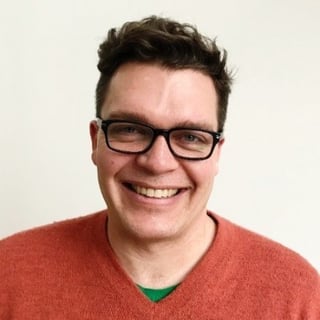
00:00:10 | Chris Nicholson Hi, everybody. Welcome to the OpenAI Forum. My name is Chris Nicholson. I'm on the Global Affairs team at OpenAI. And today I am welcoming Professor César de la Fuente. So he's a professor at the University of Pennsylvania and he's the director of the Machine Biology Group. So his lab is working on discovering new antibiotics to address antimicrobial resistance. He's going to explain to us what that means. We're going to talk about how his team uses ChatGPT and Codex in the lab. We're going to talk about where his work is going. So we'll save time for your questions at the end.
00:00:46 | Chris Nicholson So please add them in the Q&A tab throughout the conversation. Now, I'm going to bring on Professor de la Fuente to join us.
00:00:54 | Professor César de la Fuente Hi, Chris. Thank you so much for having me.
00:00:58 | Chris Nicholson So for somebody who hasn't heard of antimicrobial resistance, the term, how would you define it? What is this problem that your lab is trying to solve? And why does it matter?
00:01:10 | Professor César de la Fuente I think of it as probably the greatest problem facing humanity that only very few people have heard of. These are bacterial infections that are currently associated with about five million deaths around the globe every single year, and that number is only projected to get worse. So by 2050, the current projections is that it will double to around 10 million deaths per year every single year, right? If we do a quick calculation, that's around one death every three seconds. And so it's really this monumental problem. I can't think of something more consequential to be working on, more challenging, and at the same time more beautiful.
00:01:52 | Professor César de la Fuente Because we see a lot of beauty in the challenge of scientific discovery and tackling these problems. And so it's something that I feel like more people should know about.
00:02:02 | Chris Nicholson For sure. Well, so let's say I'm a patient, and I go through a surgery or something, and I get an infection, and the antibiotic doesn't work. Like what is life like for me if I've got drug-resistant bacteria? What changes?
00:02:17 | Professor César de la Fuente You essentially have no other choice, no other treatment option. And unfortunately, we are seeing that increasingly. You know, patients coming into the hospital with multi-drug-resistant bacterial infections that are untreatable. Even when we throw at them combinations of last resort drugs that we have, we can't really treat them. And so those patients, unfortunately, increasingly have no treatment option. So it can be a fatal situation for them.
00:02:49 | Chris Nicholson So we're in this modern era. There's new medications being invented all the time. But for a certain set of diseases and infections, which we used to have cures for, our approaches are failing now.
00:03:01 | Professor César de la Fuente Absolutely. I think it's also important to highlight that we haven't had antibiotics for that long, right? Like Alexander Fleming discovered penicillin in 1928. So we're approaching the 100-year anniversary of that discovery, but we haven't had these miracle drugs for even 100 years. And so it's important to kind of step back and think about what the impact of these antibiotic drugs has been, right? We've essentially doubled the lifespan of humans, thanks primarily to three pillars, antibiotics, clean water, and vaccines.
00:03:39 | Professor César de la Fuente And so imagine a future world where one of these pillars suddenly disappears. And so I think it's going to be very complicated for humanity. The other thing I will mention is that without useful antibiotics, without workable antibiotics, a lot of modern medicine will collapse because they're used routinely in things like childbirth, surgeries, organ transplantation. A lot of routine interventions that happen every single day in hospitals around the globe will not be possible without having these antibiotics as sort of the backbone of medicine.
00:04:22 | Professor César de la Fuente So I think we really need to take this, I think, a lot more seriously than we have been.
00:04:27 | Chris Nicholson What is actually happening inside these bacteria inside our bodies that's allowing them to resist powerful modern drugs? What's the mechanism?
00:04:38 | Professor César de la Fuente Bacteria are essentially, you can think of them as these super, super creatures. They have this super power where they can evolve in a time scale of minutes. And so if you think about humans, we evolve when we have kids. And so that happens maybe once, maybe twice, maybe never throughout our lifetimes. And that allows them in minutes to essentially mutate and recombine and evolve, right? The process of evolution. And from a practical standpoint, what that means is that if we're throwing antibiotics at them, what they can do is they can evolve little tricks, chemical tricks and genetic tricks to overcome, to become immune to the action of those antibiotics.
00:05:22 | Professor César de la Fuente And so that's why they can very rapidly kind of become resistant to a lot of the drugs that we're throwing at them. And, you know, more conceptually, I think it's important to think at sort of the origin of life on earth, bacteria are amongst the earliest life forms that have ever existed. And so you can imagine the amount of tricks that they've had to develop over time since the beginning of life on earth to kind of survive, right? And adapt. And so we're really going against these sort of amazing super creatures, if you think about it.
00:05:57 | Chris Nicholson So we're reproducing on the order of decades, they're replicating on the order of minutes. And did I understand you right, that they're also sharing little care packets of DNA amongst each other, do they communicate? Is that one of their tricks?
00:06:09 | Professor César de la Fuente Yeah, one of the ways by which they can spread the ability to become immune to antibiotics, to develop resistance, is that they can share circular pieces of DNA with each other to essentially spread that ability to become resistant to drugs, to the drugs that we throw at them. And so, yeah, they have mechanisms and ways of communicating with each other. They're not these sort of unsophisticated creatures, they're actually highly sophisticated. And they don't typically live in isolation, they actually live in like little microbial cities or microbial countries, if you think about it.
00:06:46 | Professor César de la Fuente And so they can really communicate with each other, they can say, hey, we're about to get destroyed with this antibiotic that this doctor is throwing at us. What can we do to survive? And then one way by which they do that is they share this little pieces of DNA with each other to kind of spread that ability to survive as a group. And so, that's one of the tricks that they have.
00:07:09 | Chris Nicholson So they're like us in a way, they have these social responses and they're sharing these tips and tricks to common problems. So it sounds like you're looking for some of the answers to these new drug resistant bacteria and parasites in the genes of woolly mammoths and giant sloths. How did that actually happen?
00:07:27 | Professor César de la Fuente Yeah, well we'll have to backtrack a little bit there. But I think one of the ideas that we've had that has changed a little bit the paradigm of the field is that, so traditionally, the way scientists have discovered antibiotics is that it's this very physical process where they literally go around nature and they dig into soil, they dig into water samples, and they try to find bioactive molecules by doing that. But that's an extremely painstaking process that is sort of unpredictable and unreliable. And it takes many, many years, right?
00:08:03 | Professor César de la Fuente So instead of doing that, we decided to think of all of biology as information, so to treat this as an information sort of theory problem. And if you think about it, all of biology, the nucleotides that make up DNA, the amino acids that make up proteins and peptides, that's just a bunch of letters. It's a bunch of code that is not very different from the alphabet that we use to communicate with each other, right? Humans. And so if you think about it as a soup of letters, then you can devise algorithms to mine that soup of letters and try to identify functional matter.
00:08:41 | Professor César de la Fuente So molecules, compounds that can be useful for humanity. And if you think about it that way, then you can sample all of biology, right? And so what we've done is we've initially applied that concept to the human genome and the human proteome. We identified antibiotics there, but then we went back to not only extant biology, but also ancient biology. And so we've sampled the genetic code of Neanderthals, of woolly mammoths, of giant sloths. We've done with AI systems, we've essentially conducted this journey through evolutionary history, and we've been able to identify functional molecules, functional matter all along, not only extant biology, but also ancestral biology.
00:09:29 | Chris Nicholson Wow. So you mentioned algorithms. So where does AI come in here? Like what has it been like for you in this discipline to watch AI have an effect, and what effect is it having?
00:09:43 | Professor César de la Fuente Well, some of the early algorithms that we worked on, they essentially relied on human handcrafted rules, like rules that we knew from chemistry, from physics, of what makes up a molecule that kills bacteria. So we would then relay that information into the systems that then would essentially mine the code of life, like genomes or proteomes to try to identify those things. But that was some of our earlier work. Since then, I think one of the advances that we've been able to make is that we've been able to train AI systems that can autonomously, without relying on human handcrafted rules, they can search through the code of life and identify functional matter.
00:10:33 | Professor César de la Fuente In our case, we focus a lot of our work on, by functional matter, I mean molecules that have antibiotic properties, even though now we are expanding that into other fields like immunology, metabolism, neuroscience, oncology. But I guess, well, I think one of our breakthroughs has been developing AI systems that can identify what are the organizing principles of life that make up molecules that have the function, the objective function that we are looking for. And so that's kind of some of our latest models, they're capable of doing that, which I think is pretty incredible.
00:11:10 | Chris Nicholson So I use ChatGPT to find like a factoid in the document, but you all are using AI to go in and find like genetic secrets and functional molecules to solve disease, is that right?
00:11:22 | Professor César de la Fuente Yeah, I mean, that's essentially right. And it's not a trivial problem if you think about it. Like how does life figure out, how does it go from disorder, essentially a bunch of code, nucleotides or amino acids in a disordered way that have no function, no functionality, they're not useful in the real world. How does biology through the process of evolution figure out how to arrange and rearrange those letters of the code of life, so that function emerges from that chaos, from that noise.
00:12:00 | Professor César de la Fuente And I think some of these systems are beginning to decipher some of those organizing principles. And I think it's truly exciting because this is just the beginning. Now, like I mentioned, we focused a lot of our work on trying to come up with things that can kill bacteria, but now you can expand that to many, many other problems facing humanity. And that's what we're doing at the moment.
00:12:23 | Chris Nicholson Right, so on the one hand, you have bacteria sharing little secrets on how to survive, and on the other hand, we have your lab looking for the secrets of survival in woolly mammoths and bacteria and Neanderthals and getting their tips and tricks to help us survive. Is that right? It's kind of two collectives. Go ahead.
00:12:42 | Professor César de la Fuente I was just going to say, I think one of the motivations for looking at ancient biology, ancient life, was, it reminds me of a quote by Carl Sagan, that he said, he said, extinction is the rule, survival is the exception. And actually, the vast majority of life forms that have ever existed on our planet are now extinct. And so, from a fundamental understanding perspective, how can we pretend to know anything about evolution or biology if we don't actually go back and try to understand what were the principles of ancient biological data?
00:13:18 | Professor César de la Fuente And so that was another sort of impetus for doing a lot of this work that we've done. But then on the practical side, Chris, is what you mentioned, we also believe that there is, we have this whole treasure trove in ancient biology where we can extract and discover new potential medicines, new potential materials to help in the world today, right? The world today is the environment, the world around us is very different today than hundreds, thousands of years ago. And so perhaps we can find new molecules that can help us solve present day problems.
00:13:55 | Chris Nicholson Now, you said, I think ChatGPT and Codex are a couple of the tools in the toolkit that your lab uses. What are some of the more interesting or impactful ways that your lab is using those? What do they make easier for you?
00:14:09 | Professor César de la Fuente Well, I would probably highlight two things. One is these systems, essentially they operate as a communal mind for the lab in the sense that many, many... So my lab is composed of this very transdisciplinary team. So we have computer scientists, chemists, engineers, physicists, biologists all working together, right? And so we all pour our ideas into some of these foundation models. And so they really kind of represent the communal mind of the thinking that comes from all these different individuals from the lab that think very differently about some of the common challenges that we're trying to tackle.
00:14:54 | Professor César de la Fuente And so they operate as a sort of mind, right? That represents the combined thinking of many, many, many, many people that, you know, they're all PhD level scientists. And then the second thing I would highlight is that, and I've actually experienced this, when I did my PhD, my PhD back then, for a biologist, or someone that had never really delved into computational biology, it was almost impossible to kind of transition into being able to program, right? But with tools like Codex and so on, that exist in the world today, it's actually possible, like that barrier has essentially been eliminated.
00:15:39 | Professor César de la Fuente And I have more and more, you know, biologists, chemists, engineers that perhaps haven't really programmed before, and now they are capable of doing that. So I think that empowerment and that ability to democratize, being able to utilize computers at that level, I think that has been pretty recent. I would say the last, what, three years or so. And so that's pretty great and pretty beautiful to watch, right? To see somebody that five years ago wouldn't feel very comfortable or empowered to write their own computer systems, and now they can actually do it.
00:16:23 | Chris Nicholson So you have these wet lab people and these non-coding scientists, or previously non-coding, they're confronted with massive data sets.
00:16:29 | Professor César de la Fuente Right.
00:16:30 | Chris Nicholson And it's because of these AI tools like Codex that they can actually find the needles in the haystack that might give them a lead in their scientific work?
00:16:39 | Professor César de la Fuente Yeah, exactly. I think it's a way of empowering people, you know, people that have never really programmed before, but also people that are computer scientists. It also sort of facilitates and speeds up their workflows as well. So I think it can go both ways.
00:16:56 | Chris Nicholson So we're in this race with fast replicating, drug-resistant bacteria. What is our chance of winning that race against them without AI?
00:17:05 | Professor César de la Fuente Well, I think AI is an enabler. Today it has essentially sped up our ability to discover new antibiotics. Instead of years, now we can do that in a few hours on the computer. I think that's already a success of AI in this field. Of course, that doesn't mean that those compounds are going to be a drug or a medicine tomorrow, right? They still have to go through the different regulatory steps to be able to achieve that, which takes time. But I think that the acceleration of discovery, where now something that used to take years, we used to have to do in the natural world, in this very painstaking process, we can now do it on the computer at digital speed.
00:17:54 | Professor César de la Fuente I think it's really this playground for me. I've been dreaming about this for a long time. Now, on a typical day, I can come in in the morning, I have a cup of coffee. By lunchtime, I have a lot more molecules that the team has discovered or designed on the computer. And then by dinner time, more of the same. And so, it's like doing science at an accelerated speed. And it can be exhilarating and it can be just the pace of progress, can be extremely exciting.
00:18:32 | Professor César de la Fuente And I often think of when you have these transitions in scientific discovery where you don't know what's going to happen at the other end, sort of having this sense of this feeling of vertigo. And I feel a little bit like that now with the pace of advances that we're able to make. Vertigo in a good way. Vertigo in the sense that, well, we're in the middle of this and it's sort of like being on top of a mountain and it's completely cloudy and foggy in front of you and you can't see a meter in front of you.
00:19:10 | Professor César de la Fuente But you have to jump to the other side and you have to continue progressing. And that's sort of the analogy that I like to think of when we think about pushing the boundaries of knowledge. And I tell young people, you know, I can't think of a better time in the history of humanity to do research, to do science. We have all these tools at our disposal. It's just a matter of using them well. Obviously, double-checking everything, making sure that things are correct, not just relying on these tools, but also relying on human intelligence and human creativity. But I think when you use both well, both our brains and some of these machine intelligence tools, I can't think of a better time in history to do research.
00:20:02 | Chris Nicholson It sounds incredibly exciting. Oh, okay, so those were my questions. We're going to go to some questions from the community. I'm going to read them out to you. So we've got one from Andra [surname unclear]. She's a member at Deloitte Global Boardroom, and Andra's question is, what part of the scientific workflow do you expect AI to transform most dramatically over the next five years? That's a great question.
00:20:26 | Professor César de la Fuente Yeah, that's a great question. I think I actually myself, I use it also to brainstorm. It's sort of like having a 24/7 brainstorming buddy that when I'm thinking late at night, I don't have some of my incredibly brilliant colleagues that I have here during the day, right? And so, but I can bounce ideas off of some of the systems. And so I think just the process of brainstorming to come up with new ideas, to interconnect or connect concepts from disparate fields to maybe create new fields or create new avenues for trying to try to tackle a particular problem.
00:21:10 | Professor César de la Fuente Those are some of the ways that I think it can really accelerate, it can accelerate our own thinking, right? And it depends on how you describe creativity, but one way of describing creativity is when you mix concepts from areas that are unlikely to mix in an organic way. And so I think, by interacting with the systems, I think that can happen pretty quickly.
00:21:38 | Chris Nicholson Yeah. We keep talking about mixing things that are organic here, even ideas. All right, we've got a question from Svetlana [surname unclear]. So AI is reducing candidate discovery for drugs from years to hours, let's say. What's the next bottleneck? So is it biological validation? Is it data quality, resistance prediction? Where do you, you mentioned regulations and approvals, but what do you think kind of holds things up and what can you tackle next with AI to maybe resolve that?
00:22:15 | Professor César de la Fuente Well, the first thing I would say is that, of course, we've accelerated discovery. What that means is that we have a bunch of molecules, a bunch of potential candidates. So we flooded the pipeline of the preclinical pipeline with potential candidates. But then the next question is which ones to validate in the lab, which ones to synthesize to actually validate experimentally, which we do. And so in order to tackle that, we have human machine meetings where we actually look at the predictions made by the algorithms that are typically ranked from one to 2 million or something.
00:22:52 | Professor César de la Fuente But then we meet with human scientists. So we're still incredibly useful and necessary for this whole process. And the human chemists and biochemists, we look at those lists of molecules and we make decisions. For example, the AI system may have missed or may have indicated that a particular molecule that is likely to aggregate was one of the candidates. But if a molecule aggregates a lot, that's not gonna make a good medicine, right? So we rule that out. And so we really sort of integrate in this tight collaboration, the superhuman capabilities of some of the systems, but also with human ingenuity and creativity and that aspect of the knowledge that the AI systems may miss.
00:23:36 | Professor César de la Fuente And so I think, the way I see the future is it's really the human in the center and some of the systems capable of performing at superhuman capabilities level, kind of enhancing the scientific discovery process. So that's one way, yeah.
00:23:59 | Chris Nicholson So there's a lot of tacit knowledge that these experts bring to like, how certain molecules tend to perform and help you choose better candidates after you've surfaced them. That's really interesting. Okay, we've got Ron Brinkman. What human and AI safety protocols do you use or have you developed to prevent catastrophic outcomes? I'm not sure what the catastrophic outcomes are but I'll bet you're thinking about them.
00:24:22 | Professor César de la Fuente Yeah, absolutely. I actually love thinking about the philosophical ramifications and the biosafety ramifications of our work. We've signed a number of petitions for the safe use of AI in biology and in life sciences. One thing that we do, for example, one of the guardrails is that if we identify sequences that may be capable of self-replication, we have a way of predicting whether they can self-replicate. We typically rule them out, but typically we work with molecules, not with living organisms.
00:24:59 | Professor César de la Fuente And so, in principle, a lot of what we do is inert, essentially, but we take that very seriously. I think it's very important to have conversations. We've had, particularly with our molecular de-extinction work, where we've discovered molecules that in ancestral biology, some of which are not present in the world today. They're not produced in nature. And so, one of the discussion points was, is it okay for us to kind of resurrect or synthesize some of these compounds? And we've had many, many discussions with people on this.
00:25:34 | Professor César de la Fuente And I think it's still very much an ongoing conversation. And I think as we move forward with some of these breakthrough technologies in AI and in biotechnology, I think it's critical to have these discussions, not only in academia, but also with the big companies and government and really the public at large. And I do a lot of lectures with young people or older people and general audiences to be able to come to common agreements, right? Like, how do we want the world to look like in the coming, not even decades, but like in the coming months?
00:26:13 | Professor César de la Fuente And I think that should be an ongoing discussion and we should come up with a number of rules or a number of guidelines that we all kind of feel comfortable or the majority of people feel comfortable with.
00:26:26 | Chris Nicholson I, for one, am okay with a world where woolly mammoths save us from drug-resistant parasites, but I'm sure there are lots of nuances to the discussion.
00:26:34 | Professor César de la Fuente Yeah.
00:26:35 | Chris Nicholson Okay, we've got one from Peter Bryant, adjunct professor at IE University. It's a related question about causes. Can AI help us address part of the origin of resistance in these bacteria and parasites by improving the precision and efficacy of the use of antibiotics?
00:26:54 | Professor César de la Fuente I think they can. We now have, we've developed multi-modal models that can actually, as the input, you have the genome of a pathogen and they can create molecules in seconds to minutes that are active against that pathogen. And this can be a completely unseen pathogen by the model. So to challenge the model, actually we did that experiment. We basically said to the model, can you come up with a molecule effective against this bacterial pathogen that you have never seen as part of your training process? And it was capable of doing that. So that tells me that, first of all, we can come up with countermeasures against future pathogens.
00:27:35 | Professor César de la Fuente I'm thinking about future outbreaks and pandemics, but also that it's learning something about the genetic, at the genetic level, about those microbes. And so we now have active projects in the lab where we're trying to figure out, yeah, what are the ways by which, the most common ways by which bacteria evolve resistance? And can we understand enough about that where we can predict future mutational trajectories or future ways that microbes might think of evolving some of those resistance mechanisms.
00:28:13 | Professor César de la Fuente And so I think it's still ongoing work, but I think we'll probably have a lot more progress in the coming months on that front as well.
00:28:21 | Chris Nicholson Amazing. Well, César, I would love to keep asking you questions. I've learned so much today. I'm afraid we need to wrap this up. So thank you. And thanks everybody in the community who joined today. Let's make sure that we all check out upcoming Forum events. There's one covering the Two Blind Brothers who are using ChatGPT to build a business. That's a virtual event on September 17th. And there's another AI at work in local news, how newsrooms are using AI today.
00:28:58 | Chris Nicholson So that's going to be on September 29th and it's in person in Los Angeles, California. So we're going to drop links to the comments. You've probably already seen links to Professor de la Fuente's works. Those links will also be on the replay of this event that we post publicly on the Forum site soon. So thanks again, everybody, for joining us today. And we hope to see you at the next Forum events.