

Event Replay: Leadership-Driven AI Initiatives
Speakers
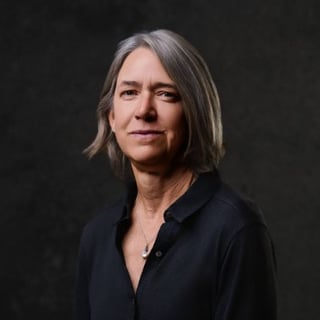
Ms. Dietze is Chief Investment Officer of the Investment Office of Brown University where she is responsible for managing the University’s endowment and other assets totaling over $8 billion. Ms. Dietze began her career at Goldman, Sachs & Co. as a Mergers & Acquisitions analyst after receiving her B.A. cum laude from Princeton University. Following Goldman, Ms. Dietze studied political philosophy at the University of Cape Town and later received her M.A. in International Economics and Russian Studies from The Johns Hopkins School of Advanced International Studies. Following graduate school, Ms Dietze spent several years working on privatization projects in Russia, and later investing in Albania, Macedonia and Turkey, as an Investment Officer at the International Finance Corporation, the private investment arm of the World Bank. Ms Dietze left the World Bank to found and lead a start-up software business. Upon the acquisition of that business, Ms. Dietze became a General Partner in two venture capital funds, first at Columbia Capital, an IT and communications focused private equity fund, where she was a member of the Investment Committees and held board roles in over a dozen companies, and later at Nextpoint Partners, an early-stage, technology focused fund. Following Nextpoint, Ms. Dietze joined Fortress Investment Group as a Managing Director in the Credit Funds group. From Fortress, Ms. Dietze transitioned to the endowment world where she became the Director of Private Equity at Bowdoin College. She serves on the Investment Committee of the National Geographic Society and is a member of the Board of Directors of the Wenner-Gren Foundation, Galaxy Digital, and Strategy.
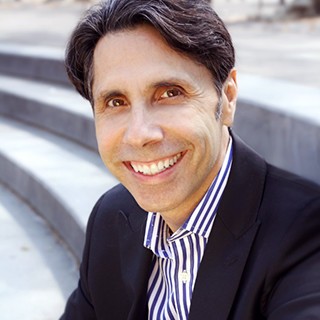

Dr. Siobahn Day Grady is an associate professor in the School of Library and Information Sciences at North Carolina Central University and the founding director of the Institute for Artificial Intelligence and Emerging Research (IAIER). In 2018, she became the first woman to earn a Ph.D. in Computer Science from North Carolina Agricultural and Technical State University — a pioneering milestone that continues to shape her commitment to expanding opportunity and advancing innovation in computing and higher education. As founding director of IAIER, Dr. Grady leads initiatives that connect artificial intelligence, digital education, and workforce readiness. Within the institute’s first year, she secured national partnerships with major technology organizations, launched a campus-wide seed grant program, and hosted public engagement events that deepened trust, technical capacity, and institutional agility. IAIER’s approach reflects her belief that emerging technologies should be accessible, human-centered, and responsive to the needs of all learners and communities. Dr. Grady’s research focuses on artificial intelligence, human-computer interaction, algorithmic bias, and creating effective systems that meet the needs of all humanity. She applies machine learning to address real-world challenges — including misinformation, autonomous systems, and healthcare bias — and explores how public understanding of AI shapes its adoption and impact. She serves as the faculty fellow lead partner for e-Learning Excellence at NCCU and also holds multiple Quality Matters certifications, including Master Reviewer, Peer Reviewer, and Facilitator. She is widely recognized for her leadership in digital pedagogy, instructional design, and institutional change. Dr. Grady is an alumna of the AAAS IF/THEN Ambassador initiative, and her statue — originally part of the largest exhibit of women’s statues in the U.S. — is now permanently housed at North Carolina A&T State University’s College of Engineering, honoring her enduring legacy. In 2025, she was inducted into the NC A&T Graduate College Hall of Fame, recognizing her contributions to STEM, education, and national academic leadership. A dedicated advocate for student access and success, she has established six merit-based, STEM-focused endowed scholarships across every HBCU in the University of North Carolina System. She serves on several advisory boards, including the Winston-Salem State University Foundation and the National Girls Collaborative Project, and is a life member of both the NCCU and WSSU alumni associations. She is also a member of Alpha Kappa Alpha Sorority, Inc., Alpha Zeta Omega Chapter. With a leadership philosophy rooted in innovation, service, and strategic collaboration, Dr. Grady continues to build systems and institutions that prepare learners for a just, technologically empowered future.
SUMMARY
The session on leadership-driven AI initiatives showcased how universities and partners are weaving AI into research, education, operations, and culture. Brown University highlighted its broad academic footprint, flagship institutes, and an associate provost for AI leading efforts that range from the Human RGNOME Project’s massive RNA-mapping work for new therapies, to governance work on the AI Bill of Rights, to biosecurity collaborations with the U.S. government amid fears of AI-enabled biological threats. Brown is also grappling with how to integrate AI into teaching—acknowledging that students are ahead of faculty, redesigning assignments with the assumption that AI will be used, and emphasizing fundamental knowledge and in-class, no-AI assessments—while deploying AI across operations from communications and HR to investment analysis and workflow efficiency.
Tim Kashani then traced his path from rock guitarist and filmmaker to AI educator, explaining how he uses narrative, comedy, and experiential learning to help students and artists experiment with AI as a creative and ethical tool, culminating in projects like Earth 3.0 and new programs such as Story Accelerator that support uplifting, impact-driven storytelling with AI in partnership with philanthropies.
Finally, Siobahn Day Grady described how North Carolina Central University, an HBCU, is operationalizing AI through its new Institute for Artificial Intelligence and Emerging Research, funded by Google.org and housed in the provost’s office, with the mantra “AI is for everyone.” She outlined efforts to change campus culture via AI literacy workshops, new academic programs, seed grants, and practitioner cohorts for students, faculty, and staff; to integrate AI into operations and state-level policy work; and to ensure that both the campus and surrounding community—including older adults and those on the wrong side of the digital divide—gain AI fluency and are not left behind as AI transforms every sector.
TRANSCRIPT
[00:00:00] Speaker 1: We are moving into the leadership-driven AI initiatives portion of our day. Please help me welcome Jane to the stage.
[00:00:05] Speaker 2: All right. So, Brown University, we are in Providence, Rhode Island. A couple things. We have about 11,000 students, about 7,300 undergraduates. We have seven different schools. In addition to an undergraduate school and graduate school, we have a school of public health, school of engineering, also a medical school. You can see the others. We also have 10 institutes. I'll call out two: the Carney Institute for Brain Science, where we do a lot of great research on Alzheimer's and ALS, and then the Institute for Computational and Experimental Research in Mathematics. For you math nerds out there, ICERM, you're probably familiar with it.
[00:00:55] Speaker 2: We also have an associate provost for artificial intelligence. This is a guy named Michael Littman. He is a computer scientist and was most recently the division director for information and intelligence systems at the National Science Foundation. He's really charged with implementing AI in research, teaching, and operations at Brown. In research, as you guys know, there's a ton going on—lots of really exciting things. I'll call out a few at Brown that I think are interesting.
[00:01:18] Speaker 2: The Human RGNOME Project is one of the most interesting that's happening right now. Like the Human Genome Project that mapped our DNA, they are focused on mapping the full-length RNA transcripts to create an inventory database that will be public to everyone. RNA is significantly more complex than DNA and creates an enormous amount of data, making it perfect for an AI application. There are about 20,000 human diseases that we are aware of, and there are only about 500 effective treatments. So RNA and R-gnome has the potential to understand disease mechanisms and really develop novel therapies. We're really excited about that project.
[00:02:06] Speaker 2: Questions of governance are also important. Professor Suresh Venkata Subramanian, who was the assistant director of the White House Office of Science and Technology, is focused on developing a blueprint to protect the public with the AI Bill of Rights. It's about safety, nondiscrimination, and data privacy—all those issues that we're all focused on. I think what it means to be a human in AI is also an interesting project we've been working on at Brown.
[00:02:37] Speaker 2: And then this last one relates to biosecurity. Ashish Jha, who is the head of the School of Public Health, has been working with the U.S. government on particular issues here. The biggest fear by our government right now is that adversaries are going to use AI to develop biological weapons. They've been working diligently to try to determine what actions we can take to protect the public. They actually think, and this is unfortunate, that they're going to unleash some biological weapon in the United States within the next three to five years. I didn't make that up, but it is quite scary.
[00:03:11] Speaker 2: Now, moving on to teaching—what's going on there? We're obviously implementing AI into the curriculum, both studying it—like the history of AI—and trying to leverage AI in actual classes. For example, in setting Euclidean geometry, what's really going on is that the faculty is completely freaked out. Half of them are actively engaged in using AI, while about 10% are resistant, so we're not exactly sure how that's going to play out.
[00:03:47] Speaker 2: But what we all know is that the students are much more advanced in their usage of AI than basically anyone in the faculty, and so we're all learning from them. We had five interns in our office over the summer. It was great to work with them, and they really helped us on a lot of different projects. The other thing that we all know is that chatbots are really good at homework. One of the things we're trying to do is assume that they're going to be using AI in their homework, which means we're expecting to see much more sophisticated responses.
[00:04:10] Speaker 2: While you can generate that information, we ask—what does all that information mean? Secondly, we’ve noticed a spike in orders for blue books. Students can do the work but have to write it down without using AI in the classroom. Lastly, there's a focus on fundamental knowledge. For example, we can all use calculators to do math, but we don’t start that way. We first teach people to learn addition, subtraction, and memorize multiplication and division tables before we let them use a calculator.
[00:04:58] Speaker 1: And then we let you use a calculator. And so, trying to figure out what is the fundamental knowledge for history, English, science, et cetera, physics, and then we can let you use AI, but that's one tact that people are going down. So, operations. I'll talk about the investment office last, but communications, obviously, that's the easiest way people are using it is just drafting communications, developing infographics, et cetera. All of this is mostly focused on efficiency. Our human resources department is really using it for updating job descriptions. Our real estate group is actually using it, obviously, information technology, using it for coding. I put two things in here, dining services, generating new menus, giving pricing and nutritional constraints. They are not doing that yet, but I'm going to show them how to do it. And then, facilities and campus operations, also not using it for predictive maintenance, but they need to be doing that too. We have a three-legged stool, is the way I kind of describe it. The first would be this portfolio analysis. So right now, we're kind of building the data lake and cleansing the data so that we can actually do reporting on demand. So being able to look into the portfolio and say, how much is our portfolio level exposure to Figma, and quickly getting that information that could take several hours to get it otherwise. Also using it for financial statement and account analysis. We're just starting to do that, and that will be very powerful for us. The second leg, this team efficiency workflow, summarizing meeting notes. We're actually looking at ways to do legal document assessment, obviously for presentation tools. And then lastly, I think this is the most powerful, really partnering with those investors that are using AI in their investment processes. So using all those big data sets of information about stocks or it could be commodities or pricing of different currencies, whatever the case may be, and then utilizing that in their processes. In addition to that, having quarterly calls with them or them allowing us to see monthly reading lists, etc. So really partnering to see what are best practices in investing, how quickly it's changing and how we should be investing with the best investors in the space. That's all I have. Thank you.
[00:07:10] Speaker 2: Thank you so much, James. It's James. Next up, Tim Cashoni.
[00:07:16] Speaker 3: Well, thank you very much. You've been sitting all day, so we're gonna start with a little thought exercise. What would you do if you can go back in time, any time in the past, and you can meet one person, have a conversation with them and bring it back and make it pertinent today? Who would that be?
[00:07:38] Speaker 2: Darwin, okay.
[00:07:43] Speaker 3: Asimov, educationers. We have a lot of education people. What's that?
[00:07:50] Speaker 2: Davinci, okay, an artist in there too.
[00:07:54] Speaker 3: Okay, well I'm gonna go quickly back into time machine. I started my life as a rock guitarist in LA playing at the Whiskey and the Starwood. This is a picture of our reunion tour. And then I saw Star Wars in 1977 and said, I wanna make films. So I got my eight millimeter camera, started making films. And then of course TRS-80 comes out and George Lucas used computers. So I had to use computers when making films and I talked my high school AP teacher into making a film as our senior project after we took our test. It was effectively Porky's Meets Halloween. You could not make this film today, believe me. And I'll tell you at dinner what it's about. But that led me to UC Irvine, film school of all film schools because I couldn't afford USC. Where I rode crew and then on a bet took a dance class and the next thing I was doing musicals. But most importantly, I was studying AI and that's how we come to this point. Now, AI back then was very different. We as humans were more involved. Can anybody name the programming language in this slide? Starts with an L and ends with an isp?
[00:09:01] Speaker 2: Lisp, thank you very much.
[00:09:07] Speaker 3: The key to this point is the computing power that we had back then was limited. The data we had was limited and we as humans made a lot of decisions. Well, after graduating I said, there's probably some money to be made in this and I started a technology company. We were lucky enough to be a partner and help Microsoft launch their Microsoft Learning Division and build systems at the same time, which is what led me to Wall Street. And while at Wall Street, I did what you normally do at Wall Street, which is to teach traders how to film. This is a project management class right here. These are for graduate trainees. Now, most of the time they complained that project management is boring, and it can be, but not when you're making a film because they have the same thing in common, time, scope and limited resources.
[00:09:56] Speaker 1: And limited resources. And that created the foundation of my view of education. If you can make it fun, make it interactive, and make it experiential, you, too, will get to meet Rapunzel on Broadway, which happens to also be my wife. We met in New York, and she was Edson McKnight on Star Trek. So I get some serious street cred. Now when we met, she was in Beauty and the Beast, which means I think I'm the only person in this room that is married to a feather duster.
Well, together we merged our worlds, and we created Apples and Oranges. I was down by the Trade Center during 9-11, said we've made enough money. Let's create a foundation and find ways to give it away, and we created this ambitious goal of taking the starving out of artists. And the way we went about that, thank you very much for the shout out, was to say let's treat artists like entrepreneurs. Let's give them the technological tools that we have with the cool storytelling that they do, and create a way that foundationally helps them take control of their career. All the while we did this, we were also still in the artistic world. We produced the following shows on Broadway, and we made feature films. But all of that made its way into our foundational programs. One of the key ones down there is theater accelerator. Think Y Combinator, or 500 Startups, I know in the Bay Area, meets Broadway.
Initially, this was going to be a traditional fund, and everybody said, oh, artists don't want this. Artists don't want that. So I was bet that it wasn't going to work, and see the trend. It works. We've taken a bunch of people through. We put it through our nonprofit. We underwrite the whole thing. And the only one thing that they sign is that they're going to sing it forward. They're going to someday pay it forward in a way that helps people.
Well, while all of this artist stuff's going around, the world of AI kind of changed, and it brought me back to my roots. The big difference that we have right now is massive compute power. We also have the way we talk to it; we don't really write big programs anymore. We look at goals when we train. We've got tons of data. We have different programming languages. We create pre-trained models out of things and create these probability engines that we feed inputs and outputs to. Now, all of this is the technical side, but this is really what AI looks like.
In the earlier talk today, we said that the emotional level of AI is somewhere around a young adult getting into an adult, and this is where I feel we're at. And so we, as parents or getting close to grandparents, look at this, and we ask, what can we do in the two most important areas? Which is the goals that we're giving it and the data that we're feeding it, or the food that you would feed your child and the education that you give your child. And if the education is maybe what I did when I was in the Wall Street days about creating algorithms for profit or for retention, as you've seen a lot of social media, we end up in a world like this.
But if we change the data and the goals, and instead, let's optimize for something else, well, we can get a world that looks like this. So how do we build that world? This is our goal right now. And yes, I am a trustee at UCI, and I've developed a lot of this through UCI, but I also work with Chapman University, with Boston University, and any university that's willing to explore how to do this; we create it.
So we launched the Narrative Initiative, and in narrative, we worked with Abeel Applied Innovation, and we ran workshops, classes, projects, and all of those have gone on to then have lives of their own. So the thought exercise that you did was a thought exercise that we built out of there, where we said, you are looking at where the future of education is going to go. And we would take students and pair them with mentors, adults, faculty members, and said, hop in your DeLorean, go back in your little mini Cooper electric car, and you're going to talk to your version of whatever you want. You're Doc Brown.
And we give them some parameters that they work through, and we said, come back with solutions that are multi-generational, based on those great people that you talked with, and oh, by the way, use every piece of AI that you can, because you have to actually create a trailer for it. And they didn't know they couldn't, so they did. They came up with imagery. You saw the young people and old people collaborating together. It was how we were teaching them, this is over a year ago, to actually start using chat GPT and not be afraid of it, because back then, especially older people had what we called prompt permission.
[00:14:54] Speaker 1: Other people had what we called prompt paralysis, like I gotta write it perfect. And so they wouldn't write it, but when they're doing it in an exercise, it just works. This all falls underneath our actionable hope, which came out of a TED talk from last year. And we have classes now where they're using different LLMs to look at the world's biggest problems and say how can we solve them? People can see you. We can't just teach it, we have to do it ourselves.
[00:15:22] This is a poster from a TV show we're underwriting. And since I knew that I was speaking today, I did what any normal person would do, which is to say, Sora 2 was just released. Let's see if we can create a trailer for the TV show right before I come up here to speak. In a world teetering between brilliance and self-destruction, a higher being plans for humanity's upgrade. The higher being's plan? Earth's most promising candidate.
[00:15:58] Meet Dawn, once designing the future, now trying to find her own. On her 60th birthday, she's about to get a delivery that will change everything. When Dawn opens that package, she's not just unwrapping a gift, she's unlocking her destiny. Now she's humanity's unlikely ambassador in a cosmic redesign project. But not everyone's thrilled with the human touch. Meet Vega, an AI with an attitude and its own ideas about perfection.
[00:16:34] As Dawn and Vega clash over the future of humanity, a ragtag team of higher beings engineer humanity's upgrade. Together, they must navigate the challenges of creating Earth 3.0. They'll beam up celebrities, activists, and world leaders for out-of-this-world consultations. With the fate of Earth hanging in the balance, can Dawn prove that being human is the ultimate superpower? Or will Vega's cold logic redefine life as we know it? Earth 3.0, united we stand, divided we scroll. Coming soon to a reality near you.
[00:17:25] Woo! That was from a class I taught at Chapman. One of my amazing students now works for us full-time, and she and I did that in two days. And you think a year ago it was not even close to possible to do something like that. But we use comedy. It's a way for us to say how we can talk about things like human and AI collaboration in a way. How do we unite the world by looking at differences? All of this is buried in laughter.
[00:17:57] And the last thing I'll leave you with is a call to action. We’re launching on the 27th a thing called Story Accelerator. And in Story Accelerator we're looking at the intersection between narrative stories that uplift, the rubric is they have to be entertaining, they have to uplift the artists, the storytellers, the philanthropists. They need to be willing to explore AI, and you gotta have some form of impact. This is in partnership with Forward Global, a large philanthropy group and the Melinda Gates foundation. We've put this thing together.
[00:18:34] It's open to everybody. There's three rounds. We give it away. You can have the curriculum after I finish writing it to use at your school if you want to. So in conclusion, this is where we're sitting today. We're the people in the room. We're training the next generation of people in the room. So let's get that teenager to go towards the brighter future rather than the dystopian future. Thank you very much.
[00:18:54] Speaker 2: Thank you so much, Tim. Last but not least today, we have Siobhan Day Grady.
[00:19:03] Speaker 3: Yes, thank you so much, Natalie. I'm excited today to share with you the work that I've been doing at North Carolina Central University since January of this year. I have literally been running. So this today is from vision to practice how you can operationalize AI at your university and your campus. The Institute for Artificial Intelligence and Emerging Research, last year, we received funding, a million dollars from Google.org to do this work. It's a two-year grant and it's allowed me the opportunity to work across campus to do this.
[00:19:35] I'm able to do it because I work in the office of the provost. And that is where this institute sits, which is unlike many centers or institutes on most campuses where it reports to a specific college. We already have talked about a lot of this today, but AI is transforming every sector.
[00:19:52] Speaker 1: It's transforming every sector, which we know. Also, we know that our universities are very complex, so even though I'm doing this across campus, you can imagine how that's going. It's not easy. I have to work with many different people, and I have to get their buy-in. One way that I've been able to do that is through an amazing tagline that I had to give myself credit for, but it is, AI is for everyone. That is how, yeah, thank you. Y'all can show me some love, okay? It's okay. It's okay to clap. It's okay to be interactive. Again, we're getting ready to have a party, but the one reason why I did that is because I'm a computer scientist, but many people haven't saw themselves in technology or AI. I just want, before I go through the rest of my presentation, to just ground my talk today, but there is still something called the digital divide, and even though many people in this room were all educated, tech-savvy, there are so many people in the world who still do not have access to technology or digital skills, so this is really real. The reason why I want people to know AI is for everyone is because I want my campus to not only be AI literate, but AI fluent. Thank you.
[00:21:06] Speaker 1: So how am I doing this? Well, first of all, I'm changing the culture. I'm showing everyone on campus what can be by doing AI literacy workshops. We have some other amazing things coming up; I'll show you in just a little bit, but it happens through exploration, through pilots, and also institutionalization. So even though I told you that this started as a two-year grant from Google, and I'm just in my first year, I'm happy to report my campus wants to institutionalize this institute. They want it to stay. I recognize that many universities are still in the pilot phase. California is a bold state, you all took a bold move. How many Californians in here, raise your hand? Okay, yeah, y'all gotta show me some love. I came from North Carolina, way over here to talk to you all. Y'all probably already know each other. But California took a bold move in getting AI on the ground. North Carolina, we're on our way. Our governor actually recently created an AI council, and I'm proud to say yours truly got appointed to be on that council, so I'm excited about helping to lead those policy discussions. We want to move from those isolated silos to total enterprise application. But as you all know, this requires strategy, leadership, and so many other things, not just infrastructure or technology.
[00:23:34] Speaker 1: So this is where my building will be. It's in process, it's almost done, and I’m very excited about that; it will be opening soon. But I forgot to mention to you, I’m an HBCU; how many of you all have heard of that before? Excellent. This is a historically black college university. Our background is we're a strong liberal arts college. Although I’m a computer scientist and I went to engineering schools, I’m here to tell you that this liberal arts background is gonna help be our strength. It’s not a deficit. When you have people from all backgrounds, and as I was listening to you talk, you need those kinds of people solving problems. We don’t all need to have the same mentality. The Institute, I'm very proud of. This is the first of its kind at any HBCU in the nation. So what I'm building is a national framework for not only how HBCUs can do this, but how everyone can do this. How many of you all, raise your hand?
[00:24:30] Speaker 1: And it might be just California, but AI is integrated all throughout campus with operations, with teaching, anybody? Okay. That’s what I’m doing. And I’ve already told you the mission. AI is for everyone. So, I started off January of this year as a team of one, and I was running a lot. I’m happy to report I have a team now. You already heard Nicole. Apparently, I’m a good boss, so happy to hear that. But North Carolina Central University is one of 17 institutions that’s in the University of North Carolina system. Because of that, we’re going through a formal process to establish our institute within the system. The mission is simple for the institute. It’s a research institute, but we want to advance ethical, inclusive, and impactful AI education and research. Our vision, I’m here to tell you, it’s already in process. I have something to share with you at the end of the presentation that I think you’ll all be very proud of. But I’ve already created this national presence for my institute. And also, we’ve done some national work with an amazing company. They didn’t pay me to say it, but a company called OpenAI.
[00:24:50] Speaker 1: OpenAI. Yes, it really happened. So I'm a tenured faculty member, and most of you know that includes research, teaching, and service. But the way that I'm seen to institutionalize this on my campus is through teaching, research, and operations. That's why I was asking how many of you all are doing this.
What I've done so far is created two programs. One is called the AI Emerging Scholars Program. That's where students could apply to work with me over the course of a year to actually gain some AI skills. They'll have a showcase in the spring where they'll present their projects. But we've talked about the students a lot today, but the truth is, who's teaching the students? Faculty. Are your faculty like mine, and say students are cheating? Is that yes?
Let me tell you what I say on my campus. I say raise your hands if you went to school with someone who cheated. I don't see any hands in this room. Raise your hand if you might have been one of those cheaters. This is just a reality. We're people. We're not perfect. If it wasn't you, I'm sure you know someone, unfortunately. But that's just life.
But I also have staff and faculty for the AI Emerging Leaders Program. They also will be working on a project over the course of the year, and also mentor the students in this program. Again, that'll be presented next year. We have an AI book club, have faculty fellows. We're also developing an AI minor and AI graduate certificate.
When it comes to research, I've been able to fund faculty through SEED grant funding to do research in AI. This is a time where I want everyone to see that they can use AI to help with their innovation. I'm so happy to hear a lot of these presentations today because it just demonstrates. It doesn't have to be computer scientists only doing quantitative data on machine learning. It can be librarians, it can be literature authors, everything, and so I'm very proud of that.
Next is operations. Even though I have AI literacy here, I've been able to do some cross-sector collaboration with the North Carolina State Treasurer's Office and doing a pilot study with OpenAI as well to see how that was able to help them with their productivity. But I'm bringing that to my campus as well to see how AI can help with different units like HR and Finance as well.
This is just a brief overview of how I'm doing this. This is a calendar of events, and by the way, so many companies love working with me. Today I'm just focusing on OpenAI, but I have a lot of partners from all the top companies. I have so many that people reached out to me, and I had to add more events to the calendar. But these events are open to faculty, staff, students, and also the community. NCCU is also a beacon in this community.
One of the other things I don't want to happen is I don't want anyone being left behind. I talked about the digital divide, and as academics, we have that privilege. Sometimes we forget that everyone is not in this room today. There are people out there who still don't really know anything about AI or what its potential is, and so that's why we have open day events to everyone so everyone can become empowered.
This is the model. I've worked really hard. We have a great strategic plan to align my vision with my chancellor's vision on how to do this. That first alignment with institutional mission and goals is key, especially if you want to do this type of thing. Also training faculty. Students are our primary focus, but we have to get faculty on board. Faculty need to understand that these skill sets are what are gonna help empower our students to be future leaders in this space.
Implement transparent policies for responsible use. Academia, things move extremely slow, but we have got to do something to try to keep up with these things so we can actually know where we're going with our students.
So I've talked a little bit to you about how we're doing this. I also have another program called the AI Practitioners Program. And again, I said AI is for everyone, but I also partner with every division on campus. I have lots of friends. You have to make friends when you're doing this type of work. We have faculty that are working specifically on integrating AI into their courses. I mentioned to you all research, but we also have students using AI to help do health disparities work. And then I'll talk to you a little bit about what we're doing from an operational standpoint.
[00:29:48] Speaker 1: From an operational standpoint, so what I'm saying is start small. This stuff is sort of heavy for some people. You need to start small, show them what is possible, what can be done, and partner. I can't illustrate that enough. Partner and help other people see your vision. Help them see why it's important to them, not just to you. And don't treat AI as a siloed IT initiative. Sometimes we can do that, especially in computer science. That's our thing, but I'm telling you, I've worked with ITS, I've worked with HR, everyone, because that's how critical this work is. It's literally changing the way we do things.
Scaling and impact. I told you I'm building a national model; I hope to expand that again with other institutions and also do more cross collaboration. We're in the process of developing some AI governance. With me being on the State Legislative Council, I'm hoping that can also help guide the decisions that we're going to make on our campus as well. So it's not just about automation, it's about amplification. And here you can see some of the great people who've been a part of this process.
I'm going to share with you a short video. AI is a tool, and at North Carolina Central University, AIER helps everyone. Students, faculty, and staff, and the community use that tool. I use AI for everything. I like to consider it a thought partner; it's just partnering the things that I'm doing. I use it for my research; I'm a PhD student. I use it for scheduling. I use it for my diet sometimes, and budgeting. It helps me be more efficient, streamline workflows, and just help me with day-to-day activities. AIER often welcomes all, creating space for community members to learn and gain hands-on use of AI alongside NCCU students, faculty, and staff.
It exposes the community, our community, to AI and all of the benefits of AI. AIER wants to, again, not only just have a hand in reaching and teaching AI for everyone in just North Carolina Central but the goal is to reach the world. AI is for everyone. Now, the reason why I wanted to share with you this video is I was able to work with OpenAI Academy, and we had this national summit for HBCUs, where really everybody was invited. We had everyone there, folks from the governor's office, folks from the legislature there; everyone was involved. I'm just here to tell you we had almost 500 participants from across the nation.
This was really exciting because community members were able to come. There was a session for AI for older adults. There was something there for everyone. And the truth is, as I've stated so many times, that's what this all is all about. I'll leave you with my tagline that I hope you'll take with you to your institutions, especially if you are looking to do cross collaboration. We also have a newsletter that is sent out biweekly, so don't sign up if that's too much for you. But we do a lot—lots of activities, lots of fun. I invite you to follow us on socials, and for any collaboration, I welcome the opportunity. I thank you all so much, and let's go party.
