
From8:30 AM
To9:00 AM
PDT
Tags:
Break
Check-in: coffee and arrival


In person event | Invite-only convening | Request invite via the OpenAI Forum
Frontier AI is moving quickly, but many institutions are still figuring out how to turn that progress into real-world results. This forum is about closing that gap: bringing together leaders across science, health, national security, policy, civil society, and AI to ask what today's systems could help us do, and what it would take to do it responsibly and at scale.
We'll focus on areas where the stakes are high and the upside is real: biology and medicine, national security, public good and philanthropic applications, scientific research, and the other economic and human factors that shape how new tools are used. Through a mix of discussion and working sessions, participants will identify ambitious challenges frontier AI could help address, then work through the practical questions behind them: compute, model access, data, tools, funding, governance, trust, and the partnerships needed to move from promise to progress.
By the end of the day, participants will have a better understanding of challenge areas, early pilot ideas, resource needs, and concrete next steps that we can collectively carry forward. The discussion will also set the stage for a follow-on meeting to be held early next year.
Forum members interested in attending can request an invite by registering for the event. Space is limited.
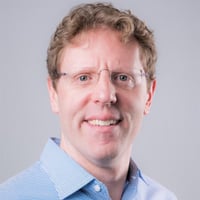
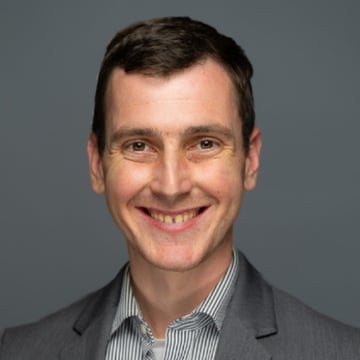
Joshua Achiam, Chief Futurist @ OpenAI
Josh Achiam is the Head of Mission Alignment at OpenAI, supporting the organization in defining and evangelizing the mission to ensure that AGI benefits all of humanity. He joined OpenAI in 2017 as a research scientist and has worked on AI safety research and operations, AI impacts research, and educational resources (including Spinning Up in Deep RL). Previously, Josh earned his PhD in Electrical Engineering and Computer Sciences from UC Berkeley and BS degrees in Physics and Aerospace Engineering from the University of Florida.
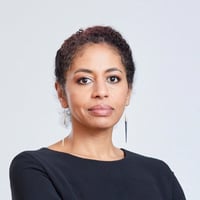
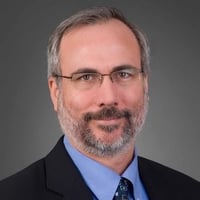
Anna Makanju, Head of AI for Civil Society and Philanthropy @ The OpenAI Foundation
Anna Makanju is the Head of AI for Civil Society and Philanthropy at The OpenAI Foundation, where she leads efforts to equip nonprofits, NGOs, and philanthropic organizations with AI capabilities that amplify their reach, effectiveness, and societal impact. Previously, she served as Vice President of Global Impact and Vice President of Global Affairs at OpenAI, helping shape the company’s international policy and engagement strategy. Before joining OpenAI, Anna held senior roles across the Obama-Biden administration, including positions at the National Security Council, the U.S. Department of State, the Pentagon, and the Office of the Vice President. She has also worked on global policy and technology issues at Facebook and SpaceX. A graduate of Stanford Law School, Anna has been recognized for her leadership at the intersection of AI, public policy, and global development, including being named to TIME100 AI.
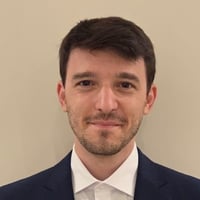
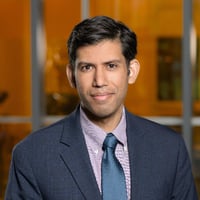
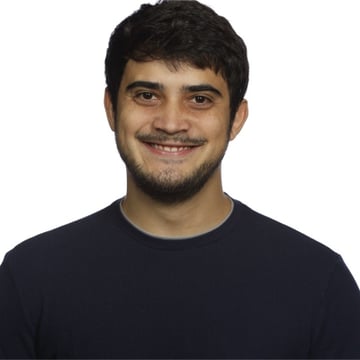
Gabriel Manso, Ph.D. researcher @ MIT EECS (FutureTech Lab)
Gabriel Manso is a Computer Science Ph.D. candidate at MIT, where he studies the limits of frontier AI systems and their implications for science and computing. His research focuses on reasoning, AI for scientific discovery, and the practical and technical constraints that shape how advanced models perform on complex tasks. More broadly, his work explores how frontier AI capabilities can be measured, extended, and applied to accelerate scientific progress.
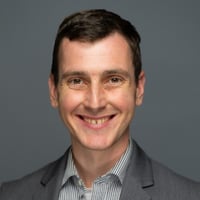
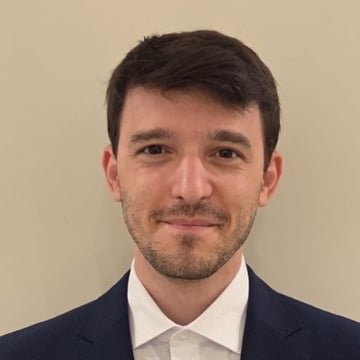
Adam Goff, Program Director @ Renaissance Philanthropy
Adam Goff is a Program Director with Renaissance Philanthropy originating philanthropic funds focused on global health and development, such as a fund on nutritional innovations to reduce cardiovascular disease. Adam was previously Senior Vice President of Strategy at 8 Rivers Capital, where he originated billion-dollar scale energy projects, led tech commercialization strategy, and invented a direct air capture technology. Adam has built and managed technical and policy teams and raised more than $25 million in grant funding. Prior to 8 Rivers, he served as Chief of Staff at the ClearPath Foundation. He was also a guest scientist at Los Alamos National Lab, and a Senior Advisor to Blueprint Biosecurity. He received a B.A. from Yale University and is based in Washington, D.C.
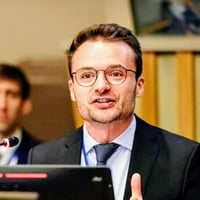
Tobias Peyerl, Head of Strategic Intelligence & Analysis @ OpenAI
Global policy and risk adviser with extensive experience in strategic policy-making, geopolitical analysis and predictive threat detection and mitigation. Skilled in leading executive level decision-making and global project management. Excited about new challenges in ambiguous spaces at the intersection of new and emerging technologies, geopolitics and governance. A curious learner who finds inspiration and thrives within diverse and high-pressure environments. Earned PhD in International Law at the Graduate Institute in Geneva; studied and researched at Harvard Law School, Sciences Po Paris and Humboldt University in Berlin. Currently immersed in learning Python, training first neural networks and building Deep Learning foundations.
Kim Budil, Director @ Lawrence Livermore National Laboratory
Kimberly S. Budil is the 13th director of Lawrence Livermore National Laboratory and president of Lawrence Livermore National Security, LLC. In this role she sets the strategic vision for Lawrence Livermore National Laboratory and leads the Laboratory’s programs and operations to enhance U.S. national security and ensure scientific leadership in strategic areas. She engages with the senior leadership at the Department of Energy, National Nuclear Security Administration and other government agencies, as well as senior leaders at other national labs, private sector and academic partners. Budil leads a workforce of approximately 9,000 employees and manages an annual operating budget in excess of $3.25 billion. In support of LLNL’s nuclear deterrence mission, she is responsible for providing the United States government with an annual assessment of the safety, security and effectiveness of the U.S. nuclear weapons stockpile and enterprise. This work is underpinned by a wide array of world-class scientific and engineering capabilities that enable support to a broad range of national security missions. Budil has held roles of increasing management responsibility at the Laboratory, previously serving as principal associate director for Weapons and Complex Integration. Budil served as a detailee twice in Washington, D.C. and was vice president for national labs at the University of California Office of the President. She currently serves on several boards and participates in numerous professional and community outreach activities. She is a member of the National Academy of Engineering. Budil holds a Ph.D. in engineering and applied science from the University of California, Davis, where she was a Hertz Fellow, and a B.S. in physics from the University of Illinois at Chicago.
Thomas Mason, Director @ Los Alamos National Laboratory
Thomas (Thom) Mason is the President and CEO of Triad National Security, LLC (Triad) and serves as the Director of Los Alamos National Laboratory (LANL). Prior to becoming LANL Laboratory Director Thom was the Senior Vice President for Global Laboratory Operations at Battelle where he had responsibility for governance and strategy across the six National Laboratories that Battelle manages or co-manages. Prior to joining Battelle, Thom worked at Oak Ridge National Laboratory (ORNL) for 19 years, including 10 years as the Laboratory Director. Under his leadership, ORNL saw significant growth in programs, new facilities, and hiring while achieving record low safety incident rates. Before becoming Laboratory Director, he was Associate Laboratory Director (ALD) for Neutron Sciences, ALD for the Spallation Neutron Source (SNS), and Director of the Experimental Facilities Division. During his time in Oak Ridge, Thom was active in the community serving as Chair of the Oak Ridge Public Schools Education Foundation as well as Innovation Valley, the Knoxville-Oak Ridge area regional economic development organization. He moved to ORNL from the University of Toronto where he was a faculty member in the Department of Physics and previously worked as a Senior Scientist at Risø National Laboratory and a Postdoc at AT&T Bell Laboratories. For the past 30 years, he has been involved in the design and construction of scientific instrumentation and facilities and the application of nuclear, computing, and materials sciences to solve important challenges in energy and national security. Thom has a Ph.D. in Experimental Condensed Matter Physics from McMaster University and a BSc in Physics from Dalhousie University.
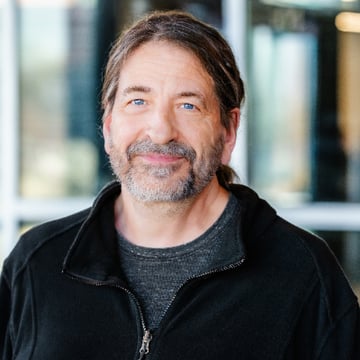
Rick Stevens, Associate Laboratory Director for Computing, Environment and Life Sciences, Argonne National Laboratory; Argonne Distinguished Fellow; Professor of Computer Science, University of Chicago
Rick Stevens is Argonne’s Associate Laboratory Director for the Computing, Environment and Life Sciences (CELS) Directorate, an Argonne Distinguished Fellow, and a Professor of Computer Science at the University of Chicago. Since joining Argonne in 1982, he has been a leader in high-performance computing, data science, and artificial intelligence. Stevens helps shape the national strategies in AI, leads pioneering research and advanced computing efforts, and drives solutions toward some of the most complex challenges in science, engineering, and biomedicine, including cancer, infectious disease, and radiation biology. A Fellow of the American Association for the Advancement of Science (AAAS) and the Association for Computing Machinery (ACM), Stevens is widely recognized for his contributions to computational science and his leadership in advancing AI for scientific innovation.
Donald A. Haynes, Jr., Ph.D.,Senior Director, National Security Artificial Intelligence Office @ Los Alamos National Laboratory
Don Haynes is the senior director of the Los Alamos National Laboratory’s National Security Artificial Intelligence Office. The leader for LANL’s AI strategy across the national security enterprise, he sets the vision, influences external ecosystems, and guides integration across mission spaces, and serves as the Laboratory’s Genesis Mission Leader. Haynes has worked at Los Alamos since 2003, when he joined the secondary design group to help develop and validate a modern computational baseline for use in W76-1 certification. He has since served the Laboratory in a number of line and program management positions, including leadership in each of the NNSA NA-11 RDT&E programs and as leader of a global security country assessment team. Prior to assuming his current role, Haynes was the senior director of the Laboratory’s Nevada Programs Office. In that capacity, he oversaw the execution of Los Alamos weapons and global security work at the Nevada National Security Sites led the strategic coordination and execution oversight of that portfolio including ECSE, the subcritical experiments program, and test readiness assessment. Haynes served as an advisor to Department of Energy Undersecretary Steven Koonin, and he has served as a member of the National Ignition Facility (NIF) Director’s Peer Review Panel since its inception. A recognized expert in the technical assessment of the weapons in the U.S. nuclear stockpile, Haynes provided seven years of service as a member of the Director’s Red Team for annual assessment at Lawrence Livermore National Laboratory and just completed his fourth year as chair of the Los Alamos National Laboratory Director’s Red Team. During his time at Los Alamos, Haynes has received six Defense Programs Awards of Excellence and a Los Alamos Distinguished Performance Award. Haynes earned a PhD in physics from the University of Florida in 1997. He then worked as a member of the research faculty of the University of Wisconsin-Madison in the Fusion Technology Institute of the Engineering Physics Department. His academic research concentrated on the use of x-ray spectroscopy to infer the evolution of conditions in inertial confinement fusion plasmas.
Pat Fitch, Deputy Director, Science, Technology & Engineering, Los Alamos National Laboratory
Pat is the Deputy Director for Science, Technology, & Engineering (STE) at Los Alamos National Laboratory (LANL). The 4,300 member STE team executes $2.3B in energy, science, global security, and nuclear weapons missions making contributions ranging from fundamental discoveries to production/operations. STE is comprised of four Associate Laboratory Directorates (ALD): Global Security; Physical Sciences; Simulation, Computation, & Theory; and Chemical, Earth & Life Sciences (CELS), as well as Programs for Science, Energy, Global Security, and Laboratory Directed R&D, and Offices for Partnerships & Pipelines and STE Strategy & Integration. Pat joined LANL in 2018 as ALDCELS. Prior to LANL, Pat was the founding Director in 2006 of the National Biodefense Analysis & Countermeasures FFRDC–home to the National Bioforensic Analysis Center. For over two decades he held leadership positions at Lawrence Livermore National Laboratory (LLNL). Pat holds a PhD in Electrical Engineering from Purdue University and BS degrees in Physics and Engineering Science from Loyola, Baltimore. Pat is a Fellow of the AAAS and the recipient of three Secretary of Energy Achievement Awards, two FLC Excellence in Technology Transfer Awards, an IEEE international best paper award, an ABSA national best poster award, and an LLNL S&T Award. He is an accomplished applied scientist with over 35,000 citations for R&D in biodefense, genomics, medical devices, imaging systems, and computer algorithms and architectures, including artificial neural networks. He was part of an LLNL team that developed and demonstrated the world’s fastest computer.
Neil Thompson, Director, MIT FutureTech; Principal Research Scientist, MIT CSAIL; MIT Initiative on the Digital Economy
Dr. Neil Thompson is the Director of the FutureTech research group, and Principle Research Scientist at MIT’s Computer Science and Artificial Intelligence Lab (CSAIL), and at MIT’s Initiative on the Digital Economy (IDE) within the Sloan School of Management. Guided by Dr. Thompson’s leadership, the FutureTech group researches the cutting edge and most important trends driving progress in computing and AI, how these trends underpin scientific progress and economic prosperity, and produces rigorous insights that broaden humanity’s knowledge, and inform policy and industry decisions. Since founding MIT FutureTech in 2019, Dr. Thompson’s research group has attracted over $25M in funding, and has grown to be one of the largest research groups at MIT with over 110 researchers. Dr. Thompson maintains research partnerships with leading organizations such as Google, IBM, Amazon, Accenture, Microsoft, Los Alamos National Labs, and others.
Lav Varshney, Co-Founder and CEO, Kocree, Inc; Della Pietra Infinity Professor and Inaugural Director of AI Innovation Institute, Stony Brook University
Lav R. Varshney is the Della Pietra Infinity Professor and Inaugural Director of the AI Innovation Institute at Stony Brook University. He is co-founder and CEO of Kocree, Inc., a startup company building novel human-controllable AI for discovery and creativity, and chief scientist of Ensaras, Inc., a startup company focused on AI and wastewater treatment. He holds appointments at RAND Corporation and at Brookhaven National Laboratory. He was previously on the faculty of the University of Illinois Urbana-Champaign, a visiting scholar at Northwestern's Kellogg School of Management, a principal research scientist at Salesforce Research AI, and a research staff member at IBM Research. He is a former White House staffer, having served on the National Security Council staff as a White House Fellow, where he contributed to national AI and wireless communications policy. His research interests include information theory and artificial intelligence. He received his B.S. degree from Cornell University and his S.M. and Ph.D. degrees from the Massachusetts Institute of Technology.
Brian Spears, Director of AI @ LLNL
Brian Spears is the director of Artificial Intelligence (AI) efforts at Lawrence Livermore National Laboratory (LLNL). He is responsible for setting vision for development and deployment of AI methods for national security missions while driving LLNL excellence in AI for science. He is a principal architect of Cognitive Simulation – artificial intelligence (AI) methods that combine high-performance simulation and precision experiments to improve scientific prediction. He is also leads the LLNL AI Innovation Incubator, AI3, which develops strong public-private partnerships on collaborative research projects to advance scientific AI in the national interest. Brian served as the Deputy for Inertial Confinement Fusion (ICF) Modeling where he guided the scientific simulation half of the ICF program at the National Ignition Facility (NIF) through its historic achievement of nuclear fusion ignition. His team used novel AI methods to predict fusion ignition for the first time in history. In his personal research, he applies cognitive simulation techniques to stockpile stewardship missions with emphasis on quantifying uncertainty in inertial confinement fusion (ICF) experiments and developing a new generation of self-driving laboratory systems. He received the LLNL Mid-Career Recognition for career achievements in research. He is the recipient of two Secretary of Energy Achievement Awards, multiple National Nuclear Security Administration Defense Programs Awards of Excellence, the Hyperion HPC Innovation Award, and the HPC Wire Editors’ Choice Award for Best Use of High-Performance Computing in Energy. Brian completed his PhD at the University of California, Berkeley where he was a National Defense Science and Engineering Graduate Fellow and studied topological methods for high-dimensional dynamical systems. He also holds a BS in mechanical engineering and a BA in liberal arts from the University of Texas at Austin. When not doing science, he can be found racing his bike or chauffeuring his two children to swim practice.