

AI in Newsrooms: Responsible Innovation and the Future of Journalism
Speakers

Shira T. Center is the Vice President of Innovation & Strategic Initiatives at Boston Globe Media Partners, where she leads enterprise AI adoption across four newsrooms and 800 employees, integrating AI into editorial workflows, governance, and revenue-generating products. She previously served as the Globe’s Political Editor. Before joining the Globe, she was a Washington-based political journalist whose work appeared in The Washington Post, Roll Call, Politico and National Journal.

Sarabeth Berman is the Chief Executive Officer of the American Journalism Project (AJP), the first venture philanthropy dedicated to local news. AJP makes grants to nonprofit local news organizations across the country, supporting the successful launch of new enterprises and partnering with existing news organizations to grow and sustain their businesses. Since launching in 2019, AJP has raised more than $243 million and built a portfolio of 54 nonprofit local news organizations. Fast Company recognized AJP as one of the most innovative companies of 2023 for its work building a future for local news.
Sarabeth joined the AJP team in 2020, serving as the organization’s first CEO. Previously, she was global head of public affairs at Teach For All, a network of social enterprises in more than 50 countries, where she led communications and marketing, public-sector partnerships, and research and evaluation. Before joining Teach For All, she spent seven years in China, where she helped build Teach For China and managed a Chinese contemporary dance company. She was a 2006 Henry Luce Scholar based in Hong Kong.
A graduate of Barnard College, she and her husband, journalist Evan Osnos, live in Washington, D.C., and have two children. Sarabeth serves on the board of Capital B. She is also a member of the advisory council for the Center for Democracy & Technology and serves on the Steering Committee for the Rebuild Local News Coalition.
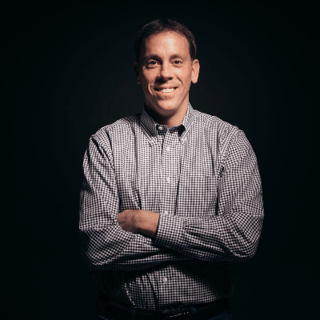
Jim VandeHei, co-founder, CEO and Chairman of Axios Axios is one of the most celebrated digital media success stories of the past decade. Before founding Axios, VandeHei co-founded and was CEO of Politico. Prior to this, VandeHei spent more than a decade as a reporter, covering the Presidency and Congress for The Wall Street Journal and The Washington Post. He was named National Editor of the Year in 2016.

Former Senior Correspondent at CNN
SUMMARY
AI is already reshaping how newsrooms operate. At this OpenAI Forum conversation, leaders from Axios, The Boston Globe, and the American Journalism Project discussed how AI is being integrated across journalism, from business operations to reporting workflows, and what it means for the future of news.
The discussion highlighted that AI is not replacing journalism, but transforming how it gets done. Newsrooms are using AI to automate repetitive tasks, analyze large datasets, and improve marketing and audience engagement, allowing reporters to focus more on original reporting and storytelling. At the same time, organizations are investing in training and experimentation to build AI fluency across teams and embed these tools into everyday workflows.
Looking ahead, speakers emphasized both urgency and opportunity. While AI can lower costs and help sustain local news, it also raises questions around trust, transparency, and workforce change. The conversation underscored a clear takeaway: the future of journalism will combine AI-powered systems with human expertise, where technology enhances reporting, but trust and original storytelling remain at the core.
TRANSCRIPT
[00:00:00] I'm so happy to have these panelists here who are really at the forefront of so much technological change in this industry. And I think that there are a lot of nuances to explore in exactly how AI is impacting journalism and how it should impact journalism. But I think that there's been a notion that when you think about AI in journalism and media, that it's just, you spit some information or a prompt into ChatGPT and you have it write the article or aggregate the article for you. And that is I think a misconception and there's so much more to just the capabilities of this technology and how you can run and manage a newsroom and manage the real people who are doing this work. So it's such an important conversation.
[00:00:41] I wanna start with you Jim, because it seems like we are now as an executive yourself, we're sort of getting beyond the trial and error part of AI and now getting into the actual tried and true use cases for AI and managing a company and managing a newsroom. What tools do you use and how do you find that they're working?
[00:01:03] Yeah, well first off, thanks for having us. I mean, I think at Axios, we're probably in the upper 5% in terms of like all in, been using it, and have been working with OpenAI for a long time, just thinking about different applications of it at every single layer of the company. And we were early to basically telling our staff that you don't have a choice if you're scared, if you don't like it, we don't care. Like you have to embrace it. And what we're gonna do, our end of the bargain is, we're gonna make these tools available to you. OpenAI was kind enough to make it available to the entire staff so they have industrial use of the product. We do it with others. And we take the time to teach people how to utilize it for their very specific work. Like how you could use this technology now if you're in marketing is a lot different than a reporter.
[00:01:53] And so basically, we went through and we sort of systematically looked at, how do you engineer a media company? And let's look at the areas that you can automate first. And journalism really isn't one of them. Research, stuff like that, it can help with. But there's other parts, the coding, the technology. Our head of technology says in the last two months, we're doubling productivity and our ability to build different products that power journalism. You're able to utilize it in marketing. You're able to utilize it in research. We have an entire team that thinks about this each and every day. I'd say 80% of my meetings now are about AI application.
[00:02:30] And I think there's a big divide. We have to be honest in journalism. I think there's a lot of media companies that are scared of AI and they're not doing a damn thing. And my personal view is that it's insanity and it's suicide. This technology, anybody who says it's overhyped is on drugs or just not using it correctly. There are so many applications right now that when I use it myself, testing it, it is way better than the smartest person that I know and I feel like I know a lot of smart people. And so then you just have a job to figure out, okay, how do you get that and start to implement it.
[00:03:02] And I think you're right. I think we're now in the implementation phase. And it's not gonna happen overnight. I think the smaller the company, the newer the company, the easier it is to do. But you sort of take it and you start to work it into your workflow. But we're already seeing a lot of results. And the coolest thing, this is the coolest thing for people who are pessimistic about it and worry that the rank and file will just throw up in protest. I've had five different employees at the individual performer level send me cool use cases in the last three weeks that we are now turning into operation wide uses. That is awesome.
[00:03:40] Five people, by the way, we have 450 people. I never would have known who they were maybe in many of the cases, but they're showing me things. Now they're getting the attention of the leadership team and their innovation is going to be the company's innovation. That's awesome.
[00:03:52] Shira, the Boston Globe has 800 employees. Only about 250 I believe are at the Boston Globe newspaper itself, so I imagine that there's a variety of use cases for AI, which is your purview internally at the company. Tell us what the most concrete applications you're seeing on the editorial side and the business side have been.
[00:04:11] You know, they're mostly behind the scenes, right? They help reporters do their work more effectively or more quickly. We're probably on the other end of Axios in terms of being a little bit more conservative about, let's say experimenting in public about things, but we are doing things behind the scenes. They start, like most of these things, with the more mundane projects, such as an alt text generator or headline writing or optimizing copy for SEO.
[00:04:41] I'm here today in part because we are doing great work with LenFest, supported by OpenAI, to have an AI engineer. And his project is not very flashy, but it's going to drive incredible insights for our business. It's basically using AI to tag and categorize our stories in a way we could never.
[00:04:58] in a way we could never do a few years ago. [00:05:01] In the past, it was a very subjective process where reporters would just affix a couple of tags to their stories before they filed, and it really couldn't tell us much about why readers were subscribing to those particular pieces. And this is going to completely open up our insights. And again, that's not forward-facing. In fact, if we're doing it right, the reader will never know this is going on, but it's going to improve the product for them, and it's going to improve our bottom line. I know that we're going to have a deeper conversation about the editorial side, too, trust, transparency, accuracy. But I want to focus just for this initial portion on the business side, truly.
[00:05:36] And Sarabeth, I know that you have such a good line of sight into local news organizations across the country, and I'm wondering where you are seeing them use AI genuinely relieve financial pressures of running some of those organizations.
[00:05:49] Sure. Thanks so much. Very happy to be here. We support a network of news organizations all across the country, now in 37 states serving 100 communities. And their use of AI starts with the mission, which is that they want to serve communities with trusted, accurate, local information that makes people more connected, makes the community more accountable. And so that's the starting point for how they're thinking about how to use these tools.
[00:06:19] And we're seeing them use it in sort of three categories. The first is on the business side, there's lots of applications that we're seeing for the ways in which AI can support the businesses of these news organizations, which is, of course, as we all know, a huge focus of importance for local news, which has suffered a really catastrophic market failure across the country. So in terms of business use cases, we're seeing people use this to support their appeals to audiences to become members, become monthly members, to become donors. That work is really about appealing to your audience and making the case for why local news matters. AI has really helped supercharge that.
[00:07:01] You can generate copy, different kinds of copy for different people. You can draw insights from why it is that people are donating. A lot of people submit why they've donated to an organization. You can call information from that and say, okay, this is why people are inspired by local news. We're going to use that messaging to appeal to audiences. We're also seeing people use it for marketing and sponsorship packages. You can pull your stats much faster. You can pull relevant stories for sponsors in ways that just makes a small newsroom able to engage with many more sponsors using these technologies. That's on the business side.
[00:07:39] On the editorial side, there's both audience-facing but there's also journalist-facing as Shira was talking about. Tools that journalists can use to just make them do a lot more with a lot less. That's everything from synthesizing huge amounts of public data, public meetings, to using it for translation. These news organizations are small and they have big missions. Their focus is okay, how do we use these tools to allow us to do our mission more effectively and more efficiently?
[00:08:15] Let's move to the editorial side. Sarahbeth's talking about smaller newsrooms, but Jim, take us into a large newsroom. I recall during the first Trump term when the Mueller report came out, we had dozens of journalists in the room, we divided up. You get these 20 pages, you get these 20 pages, you get these 20 pages, and it was all analog work. How are you utilizing AI on the editorial side to make things faster, simpler, more straightforward for your journalists, or to free them up to do more reporting elsewhere?
[00:08:47] I'd actually say that's probably the area we use AI the least right now. Really? You can use it for research and obviously it's much better at sorting through large masses of data to be able to guide you through complex stories. But in terms of using AI to write a story or AI to replicate what a human can do, especially for a company like ours where you're writing for a very sophisticated audience, it's useful but it's not that useful.
[00:09:10] Where it's super duper useful is everything beneath that. I truly believe, and listen, I'm very clear-eyed about AI, we write about it all the time. There's good and there's bad parts of it. I will say one of the good things that I feel certain about, AI will save local news. Without it, you would not have local news five or 10 years from now. With it, I think there's a very clear path where you're going to have a very vibrant, hyper competitive local news environment because it changes the cost calculation. It's not that people didn't want local news or don't want local news. It was really expensive to be able to produce, to have a building, to have a lot of employees, to print something on a piece of paper, to roll it up, toss it at someone's house, cost a lot of money.
[00:09:49] But imagine that none of that exists. Imagine that all you have to do is be able to have smart reporters on the ground doing reporting and everything underneath that.
[00:09:56] Reporting and everything underneath that is automated. Everything that none of us as media companies actually specialize in is handled by a technology that could do it better than people. Once you have that, now your cost is really low and you're able to go into these communities, whether you're a not for profit or for profit in our case, and be able to do real journalism. Like we're building a local supersystem. We've been very public about this, that the goal is that everything other than the reporter is done by robots, is done by AI. It's not done by us, including coming up with the ad copy, including sending it to a small retailer, showing them what it looks like, how much it will cost, allowing them to place it, allowing them to pay for it, allowing them to track it. AI can do each and every one of those pieces right now. It's all about how do you put those things together and then how do you start to build businesses above it?
[00:10:46] And so in terms of reporting, like with time, it definitely is a super researcher. I find it personally very helpful for me to think more deeply about a column I'm writing or to maybe challenge me on a different angle to think about, but I don't know that it makes me an exponentially better writer or thinker when it comes to the reporting. And I also think that it's just not that interesting. Everyone's like, the idea that you're gonna have robots just spitting out content, great. So you're gonna have a commoditized thing that nobody really cares about because it's a commodity. What will have value is anything that has true human expertise, human sourcing, human nuance, human history and knowledge. I believe that that content on the national level becomes exponentially more valuable. I would not want to be a company that's producing generic, generalized, commoditized content. I don't think you'll exist. I don't think you exist five years from now, but unless you're producing something that is truly vital for somebody in their community or vital nationally, that probably gets washed away because we're gonna have these machines that are smarter than we are.
[00:11:48] So Shira, within the newsroom, how do you think about where to apply AI on the editorial side and where to lean into that human expertise?
[00:11:54] Right, so we're never quite sure whether to brag about this, but the Boston Globe has the most expensive digital subscription in the country for a regional news outlet. We have 250,000 paying digital subscribers, which is excellent for a region of our size. That said, we know that they value what we produce, right? They are getting value from it. And in that case, we want to make sure trust is inherent in the brand, right? They want articles from humans right now. That's what our surveys tell us, that's what we want. But we know their tastes are gonna change, right? So we have that in mind. So that's just forward facing.
[00:12:30] Going back to newsroom use cases, if I can just build off of something Jim said for a second here. We have education, big in Massachusetts, right? We have a bot in our newsroom that surveys the school board notes from every district in Massachusetts. As you can imagine, this is tedious work. If you were a human to go to a school board meeting and you would sit there, maybe 20, 30 years ago and take notes and try and write a story about it afterwards. Now we have a bot that effectively does this for us. And my favorite thing about this is not only that we can expand our coverage and be a better local news provider for the region, but it's that the person who built this is an intern, right? They were our summer intern last year and they built it for the entire team. Now she's a computer science major at Harvard, okay, but still, she didn't need that degree to be able to build this. And I think it's a fabulous use case of us being able to strengthen local news through AI that we couldn't do before.
[00:13:34] So when you use that bot to produce content about education matters in the state, in the city, how do you disclose that to the audience? Do you disclose that?
[00:13:44] Well, we don't use it to produce content. We use it to monitor news and to find stories. So, for example, if there's a hot-button education issue going on in the state, for example, when critical race theory was coming up at a lot of school board meetings, right? We were able to track that much more methodically than frankly a human would, or being able to send reporters out to just the largest school districts. We do disclose when we use AI in a story, in a material way for sure, because we think that's important to the reader, but that is evolving as well. I was joking earlier with Sarah Beth that in five to 10 years, maybe that's unnecessary. Maybe it would be like today, saying, huh, I used email to produce this story and disclosing it to the reader. We'll see where it goes.
[00:14:29] We're actually finding that that tagline, like AI was used in this story, actually causes more confusion to audience rather than being helpful. It kind of like makes people feel icky, and better to just publish your policy and then also just in your reporting, be transparent about how you use AI. So we work with the Marshall Project, which is an outstanding Pulitzer Prize newsroom that covers criminal justice. They used AI to clean up federal data.
[00:14:54] To clean up federal data about death in prison system. [00:14:57] And they wrote in the story, [00:14:59] here's how we used AI to help us do this. [00:15:03] And we've seen many examples of that. [00:15:04] Sahan Journal, an excellent newsroom in Minneapolis. [00:15:08] They used AI to help them go through charter school budgets. [00:15:12] And in their story about the charter school budgets, [00:15:15] they also talked about how they used AI. [00:15:17] We're finding that to be really useful. [00:15:19] We do think publishing AI policies is important, [00:15:22] both internally it's important, [00:15:24] and also for some audience members who care. [00:15:28] And too few newsrooms have that.
[00:15:32] So the AP did a study in 2024 [00:15:34] that found that 70% of journalists were testing AI tools. [00:15:38] And only 20% of newsrooms had AI policies. [00:15:42] Let's assume both of that has grown, [00:15:43] but there's still a big delta. [00:15:45] We think it's really important that newsrooms do the work [00:15:48] of not just like one person sitting in an office [00:15:50] and coming up with a policy, [00:15:52] but really figuring out with people across your newsroom, [00:15:56] on the editorial side, on the business side, [00:15:58] a robust policy that helps people [00:16:01] think about this holistically.
[00:16:02] And when you think about using AI for stories like that, [00:16:08] even if you go into detail about using AI, [00:16:11] what is the role of fact-checkers? [00:16:13] How do you fact-check information [00:16:15] that's provided to you by AI? [00:16:16] We use the vocabulary human in the lead, [00:16:18] not human in the loop. [00:16:19] Like, the people who are publishing [00:16:22] these stories own the story. [00:16:24] They are responsible in the way they always are [00:16:26] for the credibility of the story. [00:16:28] And in the same way that if an intern [00:16:30] gives you a topic of research or gives you material, [00:16:33] you're gonna check it. [00:16:35] You should absolutely be doing that [00:16:36] when you're using AI as well.
[00:16:38] Jim, when you talked about some of the ad content [00:16:41] that was now being created by AI, [00:16:44] are those processes that are now being leveraged by AI, [00:16:49] are those supplementing humans for you? [00:16:51] Or do you see those as replacing humans in your company? [00:16:54] I think it depends in what area. [00:16:57] I think with all of this, [00:16:58] the best thing that news organizations right now can do, [00:17:01] where I think most are falling down, [00:17:03] is cover these topics in a clinical way [00:17:07] and bring your reader along with you.
[00:17:10] We did a piece the other day [00:17:11] that was a little controversial, [00:17:12] but we basically, we wrote to our readers [00:17:15] about how we're doing twice the work in technology [00:17:19] with half the employees. [00:17:20] I don't say that in a cold way. [00:17:22] People, we've lost jobs over the last couple of years, [00:17:25] and yet we're producing twice the amount of content. [00:17:29] The reason that we're doing that [00:17:30] is to show readers who are skeptical [00:17:32] that this is really unfolding inside of companies, [00:17:36] showing them this is what's happening.
[00:17:38] And there are some jobs, [00:17:39] and I don't think it's that hard to figure out, [00:17:41] that are probably much more easily automatable than others. [00:17:45] The role of the company [00:17:46] is to be able to work with those people, [00:17:49] to use the technology, [00:17:50] to make sure that they can force multiply [00:17:52] the work that they do using the technology now.
[00:17:55] And if they're gonna be automated out of a job, [00:17:58] quit BS-ing them. [00:17:59] I just think that that's where media companies [00:18:01] make such a mistake internally. [00:18:03] Your readers are adults, and your employees are adults. [00:18:06] If you level with them about what's going on, [00:18:08] even in scary times, [00:18:10] you'll get their confidence, [00:18:11] and you can bring them along, [00:18:13] and you can give them the best possible chance [00:18:15] of being successful.
[00:18:16] But for companies just to sit there and be silent, [00:18:18] and be like, oh, nothing will really happen, [00:18:20] or, oh, trust your labor union will protect you, [00:18:22] you're not doing anyone a service [00:18:24] if their job is gonna be easily automatable. [00:18:27] And I don't think any of us know exactly [00:18:29] what will be automated and at what level. [00:18:31] It's definitely the velocity in the last two months [00:18:34] is startling.
[00:18:35] And if you don't have people in your company [00:18:37] telling you how startling the advances are [00:18:39] in the last two months, [00:18:40] Houston, you got a real problem. [00:18:42] You have a lack of expertise internally. [00:18:45] And then you have to figure out, [00:18:46] okay, now where do we start to put that into action? [00:18:50] And that will be scary.
[00:18:52] But I think on the other side of it, [00:18:54] I fully anticipate we'll employ more people than less. [00:18:58] I think that we'll create new jobs. [00:19:00] We'll have a lot more reporters, probably, than we do now. [00:19:02] But five years from now, [00:19:04] are you gonna have as many copy editors? [00:19:05] Are you gonna have as many people doing data visualization? [00:19:08] Are you gonna have as many people creating visuals, [00:19:10] creating market copy, doing the function [00:19:13] of what a traditional BDA does right now? [00:19:16] Well, no, no, no, no, no. [00:19:18] But that doesn't mean you can't train those people [00:19:20] to do something else and have them ready for this.
[00:19:23] And so that's where I worry, in general, [00:19:25] that as a society, I think government's letting people down. [00:19:27] I think media companies are not doing their part [00:19:30] in getting people ready for a shift that's not, [00:19:33] like we're talking five, 10 years. [00:19:34] No, you're talking a year for a lot of these. [00:19:37] You're talking months for some of these.
[00:19:40] Sarah Beth, I see you nodding your head. [00:19:41] Well, I have a lot of conviction [00:19:43] that the future will need trusted original reporting [00:19:48] in communities across America. [00:19:50] And there's a lot that reporters do.
[00:19:52] A lot that reporters do that AI will, I genuinely believe never be able to replace. Of course, I think we're all trying to figure out where the edge of that is.
[00:19:58] But I think about Anna Wolf, a young reporter in Mississippi who saw a statistic that said that 1% of Mississippians were getting approved for welfare funding in the poorest state in the country and spent years trying to understand why that was the case. It was ultimately a source that she had cultivated that helped her understand millions of dollars of misuse in the welfare system in Mississippi.
[00:20:26] AI couldn't have done that. A human could have done that. But there's a lot of things that I think AI can do to support that work and enable journalists to do, hopefully, the reason why they got into this work, which is to get out, do the shoe leather reporting, build the relationships, understand what questions your community has and try to go ask those questions.
[00:20:45] I agree with that so wholeheartedly. I actually just taught a class at my Alma Mater on developing sources and on the human element of journalism and how that is the one thing that will not be replaceable, and I know Mike touched on that as well.
[00:20:57] But, Shira, within the newsroom, how do you draw the line between what should be automated and what should be done by humans?
[00:21:03] It is incredibly hard and tedious work to go into the workflows of employees at an 800-person company where the average employee tenure is 15 years. You have to ask them questions. Frankly, you have to be a reporter and talk to them about their workflows and figure out the best places where the machine can plug in and augment what they're doing.
[00:21:26] I am very passionate about this work, AI-enabled in newsrooms, because I came up in the industry in the mid-aughts when big tech companies really changed our business model and the resourcing was affected.
[00:21:40] So I am very passionate that journalists should learn to use these tools. 20 years ago, we gave social media to a 24-year-old and put them in a corner. We cannot afford to do that. The evolution and the impact of this technology is tenfold or more than that. We cannot afford to do that as a newsroom or even as a society.
[00:22:02] So I'm quite passionate about this work for that reason. I will say we have said that we have no intention of replacing our reporters with bots. We believe in human journalism.
[00:22:16] And I think that is a little different from where Axios is and where other news organizations are, but that is where we are today. That is not part of our plan at the Boston Globe.
[00:22:23] So when you think about the number of people that the Boston Globe will have, I know Jim was saying that he anticipates having more employees as the technology supplements the business. Do you expect the same thing for the Boston Globe?
[00:22:35] Or do you think that, and Sarah Beth I'll throw this to you too, but do you anticipate more content with the same amount of people? More content with fewer people, same amount of content, fewer people? Where do you think this is going?
[00:22:48] I mean, the nature of content's gonna completely change. There's a really, really smart AI newsroom expert named Nikita Roy, who likes to say that the next era is news as a companion, right? We're gonna be engaging with news as liquid content.
[00:23:01] The form is gonna match our needs, the personalization is gonna match our needs. So I think that's gonna not be more or less content, I think the nature of content is just gonna completely change, but the reporting, the source development, right? The information that goes into that, that is gonna stay the same.
[00:23:20] Sarah Beth. Local news, 70% of journalists lost their job over the last two decades. We are in the process of rebuilding local news across the country. We're gonna have more journalists and more content, and we need more journalists all across this country.
[00:23:37] And what about training? You talk about how important it is to train journalists in how to use AI. I mean, OpenAI has done the Lord's work to try to get journalists in a room and teach them how to use their own tools, but there are so many more tools than that.
[00:23:49] And I'm wondering how you guys actually train your journalists and what the process is to do that. The head of our product in AI studio at the American Journalism Project studio, the American Journalism Project, often says that building on AI is like building on water.
[00:24:07] And so when you think about training journalists, this is really not about training journalists on specific tools. It's around training journalists on mindsets, words, flows, policies, how to think about using this technology so that they can continue to evolve and incorporate into this work.
[00:24:21] I think Jim and Mike are setting a culture that encourages folks to use these tools in ways that enhance their work, their journalism. And I think that's the work in front of us rather than thinking about these as tools people need to understand.
[00:24:37] Jim, what does training look like at Axios?
[00:24:39] Yeah, I mean a couple things that I think any organization could do today. Number one is making sure that you're making these tools available to everyone, that you're making it clear you want people experimenting.
[00:24:50] Speaker 1: Clear, you want people experimenting with it. I agree, you have to have a policy and you have to have limitations, but I'd rather pull people back than push them.
We have somebody on staff whose job it is to work with any individual on how to use AI for their specific job. We're probably going to hire another person to do that exact same thing. We asked everybody to raise their hand if they wanted to be the person in their domain or wanted to be one of the people in their domain who are going to be kind of lab rats experimenting with it. Anything that they learn, they share it with their peers who do the same job. So anybody could do all three of those things, and if you just did those things right now, within two months you'd have a much different culture inside your company.
You need that experimentation. A problem you're going to run into is that on the technology side, if you're a really good technologist who can truly 10x utilizing these technologies, you're not going to work for a media company unless you find a black swan. They're going to go make billions of dollars working for one of these AI companies, and so you have to be very creative about the type of people you're bringing into your organization.
A good example—we just posted for a job where I just wanted to hire one or two or maybe more young AI wizards like people who are in their dorm all night learning how to utilize these technologies. They don't necessarily have to be in the media; they don't necessarily have to be a trained technologist because these technologies speak English. They speak gym, right? So you can work with them so that you have people who understand how these technologies are working and then can start to work with people who are trying to apply it in a specific domain. That’s a ton of work, right? But that it's almost a re-engineering and it's interesting.
I think you're seeing a lot more innovation with local and not-for-profits than you would with big companies who are going to get all snarled up with their unions and their bureaucratic ways and the old-timers who don't want to change. That's going to be really hard to overcome.
The thing I will say about OpenAI, they've been very hands-on. When we're trying to work on a specific problem that we're trying to solve, like Allison's here, Liz from our shop, they've been very good about getting on the phone. We also write about this stuff and not always in a positive way. We’ll kick the shit out of OpenAI or other companies in a story, and yet they're still doing really good business advice in terms of how to put this into action. I think it comes from the right place.
It's not that other AI companies are doing the same; they have to find use cases. They have to show the public that there are upsides to this technology because right now people are scared. People don't like the technology; it’s too new. It freaks them out. The stories that they see are all sci-fi and weird. Again, I think that's where journalism is going to matter more than ever. Bring your audience into that conversation. Don't spend weeks in meetings getting spooled up about the language of your policy and how do you disclose that in each and every story. Think about how do I bring my audience into this conversation of discovery so that you can help them. That is a societal favor. It's a chore that you're doing for them.
You mentioned kicking the shit out of OpenAI and stories that you guys write. We write honestly about the stuff. I do want to ask about the conflict of interest or impartiality in these stories. AI is increasingly a very prominent beat in newsrooms. Just last week, there was front-page news about Anthropic CEO and discussions with the Pentagon. There's also coverage of the environmental impact of artificial intelligence. It is growing as this 800-pound gorilla that is in our society that reporters are covering.
As you teach them fluency in these tools, what is the discussion about how they are covering AI?
[00:28:36] Speaker 2: Can I just take a quick crack at that? Because we've covered the hell out of that, right? We've probably led the way on Anthropic versus the defense from both sides. And what I’ll say is it’s all about trust. So many of these meetings or so many institutions get all spooled up on these like technical little things.
At the end of the day, do people think that you're writing truth in a clinical, trustworthy way that makes them smarter or makes them feel like they have a better understanding of their community or their world? If you do that, people can sniff out if you're a fraud or if you're doing a favor for somebody.
And I think on AI, we need more coverage of it, not less. I am shocked that some of the things that are happening in the AI world that aren't even making the front page of the New York Times or the Wall Street Journal some days. I think you could say maybe we over cover it, but I think we're trying to overcompensate for what I think is a lack of coverage of it.
The stuff is rippling through companies. It's the entire market. Almost every investment dollar is going into this technology. There's not a single company that's not having some version of the conversation we're having in this room each and every day. I've never seen any technology or any topic that has this broad base of tentacles and reach in interest, but in proportion is getting very little.
[00:29:48] that in proportion is getting very little coverage, and that's where I just think that all those things, us using it, us writing about it, is really, really important.
[00:29:56] Shira?
[00:29:56] Yeah, so this is one of the cases I make to our journalists, some of whom may be more skeptical about AI or not as fluent in it yet. I say, look, even if you don't want to use the technology personally, you need to learn about this because it is affecting the beat you are covering. I look at Boston where Ed's in meds, right? It is undoubtedly impacting higher education in a multifaceted way. It is absolutely changing medicine. We're also a tech hub. It is changing the valuations of companies all over our region. If you want to understand your beat now, AI is a prerequisite. If it weren't for many of the news organizations we work with, those communities wouldn't know about huge, multi-billion dollar developments under discussion for data centers in their communities that have huge impact on their communities. So AI is really affecting communities across this country and journalists that cross our portfolio of organizations have a lot of conviction that this is the story they need to be on and are covering.
[00:30:59] Have you found bias in any of the models as journalists are trying to cover some of those stories?
[00:31:06] I don't think they're necessarily using the models in the coverage of those stories or they may be in some remote way for research or translation. But I think they very much separate this as a tool and this as a story.
[00:31:22] Interesting, I wanna spin forward just a little bit. Jim was talking about how this is not gonna be a five to 10 year horizon where AI is gonna change everything that we're doing as journalists, but rather one year. And I'm wondering where you think will be one to two years from now and how AI will be utilized and harnessed differently.
[00:31:40] Sarah Beth, I'll start with you.
[00:31:42] We've definitely transitioned from the what is this to how do we use this stage. I think where we wanna get to is that we're just, all of us are starting with our missions of what we're trying to accomplish and then using these tools across the organization, not as individual partners, but as organizational workflows that help enhance the work. That's where we want to be.
[00:32:02] Shira, what do you think high functioning integration of AI across the newsroom in a perfect world would look like in two years?
[00:32:09] Yeah, so when I put together a strategic plan for this, I did a three year horizon and I thought maybe that was even too conservative speaking to the one year. And at the end of three years, I wanted us to be an AI fluent organization and I use the word fluent carefully because we are a language based model, right? In terms of we use words to communicate things. I want our employees to all be fluent in the way of using AI in their jobs, whether that's reporting or marketing or sales or even in our print production plant, we still have one of those and be able to utilize it to their best purpose so they can shift up the value chain and do higher value work.
[00:32:47] I think when you're in a period of change or you're confused, what you need to do is you need to anchor yourself in the known known. It's like what we know for certain is look at Chetchi PT usage now versus six months ago. Like, we've not seen a surge of consumer use of a technology like this at this scale before. Look at the same dynamic with Anthropic within inside businesses, inside of how they're operating. So we know that those two things are true.
[00:33:13] We know that OpenAI and probably others are working on a device that will probably be the start of a different platform. So where our journalism or how people get our journalism probably sometime next year starts to change perhaps profoundly. We don't know if it's gonna be a chip in your brain, a bracelet, whatever the hell that you guys are coming up with, that that will change. I would guess sometime it's because all other companies are in the implementation phase, you're gonna benefit from the implementation phase because you're gonna start to realize what works, what doesn't work and how do you integrate it even if it's not in a like-minded space.
[00:33:45] So my guess is a year from now, all the things that you think you can automate will be automated or at least you'll be able to automate those things. So I think that will undoubtedly be a reality. You can be certain that the technology will be exponentially better today than it is today. And right now I think it's pretty darn good. So you just, you have to extrapolate that that's gonna be that much better than adoption will be that much higher.
[00:34:07] And I don't think it's a year period, but my guess is sometime in the maybe three to four year period, there's gonna be some kind of massive holistic platform shift where the way that people are getting their content is highly, highly personalized. That that means that the way you create the taxonomy of your own information probably has to change to match the LLM brain, which is gonna be how people are getting their own content as everybody has essentially a personalized LLM that's living on some device that maybe Varun will tell us what it is so we can walk away with some kind of scoop here.
[00:34:43] But that's a lot of change, you know? And again, in terms of the reporting, which we keep coming back to, I just don't think it changes that much.
[00:34:46] I just don't think it changes that much. [00:34:47] I think we have new tools. [00:34:49] And do you disclose it or not? [00:34:51] I don't know. Did you disclose when you googled something? [00:34:53] Did you disclose when you used LexisNexis? [00:34:55] At the end of the day, you either have a really good story that's tethered to fact and is useful to someone, or you don't. That won't change.
