

Building an AI-Ready Workforce: A Conversation with Randi Weingarten and Sean McGarvey
Speaker
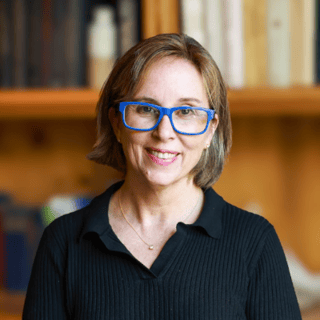
Ann M. O’Leary is the Vice President of Global Policy at Open AI, where she leads high impact policy strategy at the nexus of technology and governance. A seasoned lawyer and policy leader, she spent decades shaping legislative and regulatory outcomes across state, federal, and global arenas to advance policies that promote growth and enable responsible innovation.
Prior to joining Open AI, Ann was a Partner in the San Francisco office of the international law firm, Jenner & Block, where she served as Co-Chair of the Government Controversies and Public Policy Litigation Practice. There Ann established herself as a leading authority on complex government matters and policy litigation, counseling clients on high-stakes regulatory and policy challenges at the intersection of law, government and technology. Ann also led a robust pro-bono practice focused on assisting non-profit clients working to open opportunities for economically disadvantaged workers and improving reproductive health access.
Prior to joining Jenner & Block, Ann served as the first Chief of Staff to the Governor of California, Gavin Newsom, during an unprecedented time of challenge for California in which she worked with the Governor to address the COVID-19 public health and economic response and managed the worst wildfires in the state’s history. Additionally, she led the development and implementation of the Governor’s proactive agenda to expand opportunity and affordability in California, including notable expansions of California’s Earned Income Tax Credit and Paid Family Leave.
Ann previously served as Senior Policy Advisor to Hillary Clinton’s 2016 presidential campaign and Co-Executive Director of the Clinton-Kaine Transition Project. She was a Deputy City Attorney in San Francisco; Executive Director of UC Berkeley Law’s Center on Health, Economic, and Family Security; Lecturer-in-Law at UC Berkeley Law and Stanford Law; Legislative Director for Senator Hillary Clinton; senior fellow at the Center for American Progress; Vice President at the Center for the Next Generation; and a Policy Advisor with the White House Domestic Policy Council under President Bill Clinton.
Ann serves on the Board of Directors of the Silicon Valley Community Foundation, the Latino Community Foundation, and Demos, and she currently serves as co-chair of the California Health Care Foundation’s Future of Medi-Cal Commission. Ann received her law degree from Berkeley Law, her master’s degree from Stanford University, and her undergraduate degree from Mount Holyoke College.
SUMMARY
AI is beginning to reshape how people work across industries. OpenAI's Vice President of Global Policy Ann O'Leary sat down for a conversation with Randi Weingarten, President of the American Federation of Teachers, and Sean McGarvey, President of North America's Building Trades Union (NABTU) about how workers and institutions are responding to that shift, and what it will take to prepare millions of Americans for an AI-driven economy.
The conversation focused on the importance of moving from resistance to adoption, with both leaders emphasizing training, certification, and lifelong learning as critical tools for helping workers adapt. They highlighted the growing demand for accessible AI education and the role trusted institutions can play in guiding workers through this transition. At the same time, the discussion underscored the need for stronger coordination across the public and private sectors. As AI accelerates change, investments in reskilling, clear guardrails, and policies that address displacement will be essential to ensure workers can adapt and continue to thrive.
TRANSCRIPT
Ann O'Leary: Sean McGarvey is a president of the North American Building Trades Union and one of the great leaders in our country who everyday is working with tradesmen and tradeswomen all over the country, thinking about their jobs today, their jobs tomorrow, and leading with intentionality. So really grateful to have you here today, Sean. Please join me. And my friend, dear friend, Randi Weingarten, who is the president of the American Federation of Teachers. Randi is somebody who I've known and worked with for years and years, really trying to open up opportunities. She leads one of the largest teacher unions in the country and so happy that she's here as well. So thank you. Please help me welcome them to the stage. Thank you.
O'Leary: Great, can you hear me? Okay, excellent. First of all, thank you again for being here. I'm so grateful. One of the things I want the room to know is that we have really been working with intentionality to think about not only how can we work with workers, but how do we make sure that we're having real conversations with leaders who have the pulse of the people that they're working with and we can really think about moving forward. And there really are, these are two of the greatest leaders in the country on this issue who have been working with us, thinking about it. And I wanna thank them. Sean, we just announced last week with Sam Altman, the President and CEO of our company, actually CEO, sorry, I shouldn't say that. He's CEO and founder of our company that we are forming a partnership with NABTU to be able to really work on training and making sure that we have opportunities for workers all over this country to be able to take advantage of AI. And I wanna talk about that today. I wanna thank you for that leadership. Months ago, we also announced a partnership with AFT in which we are really also working on AI training with relation to teachers and making sure that teachers have the tools that they need. So I wanna actually start with a place of optimism. We are gonna get to the worries, so we'll come back to that. But I wanna first start with why do this? In some sense, there is this concern and mistrust. And so you're putting your own leadership on the line by partnering with the likes of us. So I'd love to just hear maybe, Sean, from you first, and then I'll come to Randi just a little bit about what this partnership means and what you think it means for your members and what you're hearing from them with regard to the opportunity to do this type of training.
Sean McGarvey: Well, thank you, Ann, first of all, for having me here with my great friend and colleague, Randi, who I've worked with for decades now. I would say that, you know, for us in the building trades, we've learned hard and valuable lessons over the last four or five decades. Way before artificial intelligence, there were advances in technology where, quite honestly, a traditional way of thinking about collective bargaining for us in the trades was if we adopt this new technology, that's going to require less people. Our obligation as leaders is to look out. The number one obligation is to look out for the economic security of the members and the families that we currently represent, and those we hope to represent. And that led us down, quite honestly, a disastrous path as we resisted the advent of technology in our industry. And to give you one example, which would, I'm out of the painters' union, so to drive home the point, this room we're sitting in right now, 30 years ago in a collective bargaining agreement for the painters, it would have said that you had to use a brush and a roller to paint this room, while spray machines had been out for 20 or 25 years. And our competition in the open shop was using spray machines with less people covering more wall with paint, which ultimately led to our contractors bidding against that, being less competitive, losing work, us losing members. Those lessons that we learned fast forward to today, you know, our position on changes in technology is we wanna embrace it, we wanna bring it into our training centers, we wanna teach it, we wanna be certified as the purveyor of whatever that technology is out in the competitive construction industry, you know, where we operate. So I think for us, the opportunity to work with OpenAI and others in the information technology industry, we look forward to it.
We know we're going to be affected by it, whether we're participatory or not. So, as the old saying goes, if you're not at the table, you're on the menu. We want to be at the table and have the opportunity to talk about the things that are important to us and the people we represent, how these changes affect their lives, and how we can have our input on how to best use it in the construction industry. Quite honestly, we want to take advantage of the capital investment, which is pretty much unheard of in our history.
We thought the last administration's capital infusion of public dollars into the infrastructure of the country was a once-in-several-generations opportunity. Well, now, right on top of that is this combined with that. So, we're looking like any other business to grow our membership, our market share, and partnering with OpenAI and others in this technology is an opportunity. But we have to understand it, work our way through it, and make sure our members and our members' families understand it and are comfortable with it. There is a tremendous amount of disruption already happening; you hear it every day. Whether it's rightly or wrongly, when a new company announces a very large layoff, it tends to be blamed on this new technology. In some cases, it might not be the case, but that's the narrative that's out there.
O'Leary: Thank you, Sean. I want to come back to that in a moment, but I also just want to say thank you. I think this is about how we make sure that we are, you know, and I've been around the labor union movement my whole life. My dad was a member of the labor unions, and there has been this notion of resistance to technology. I really love everything you said about how we get to a place where we embrace it but are also smart about that. So, with that, let me turn it to Randi with her thoughts on this first question.
Randi Weingarten: First off, it's great to be with Sean on this, and I really appreciate the invitation, Ann. It's been interesting because we sit at the intersection of both labor and education. We're now one of the big unions, not only in the AFL but in the country. We've organized a lot in the last few years. We're now the second largest nurse union and the largest higher ed union, as well as our traditional K-12 space. Frankly, Sean and the building trades are also a big education union now, too. In some ways, what they've done with their employers is so much better and more important; it's embarrassing that we and our employers cannot figure out how to do the same kind of training and professional development centers as Sean and their employers have done. The only place we have that really is in New York City, and I'll get back to that in a second where we have a system of teacher centers that do the kind of work and training that's absolutely important and what help can drive trust and navigation of this kind of new technology.
So, when I say we're at that intersection, it felt obvious to us that if there is a new technology that is going to be transformative to the world, educators have to know it, regardless of what you think about it. It doesn't matter what you think socially about it; it's here. As educators, you have to have the confidence—not just to ask, "Okay, what's the prompt we're going to ask?"—but to understand what it means and what it means to your kids when they come into your classroom. You have to know how to use the tool. There was an absence of that knowledge. I'm looking at Debbie as she's laughing at me. There was an absence; I mean laughing with me, there was definitely an absence.
A couple of school systems said, "Okay, you're now going to have this tool. It's going to be the most super-duper tool ever," and on the first day, somebody looks at it, and it doesn't work. That's what happened in a couple of school systems. Then you had a whole bunch of other school systems that said, "No, don't let it come in." And so the kids are then 20 steps ahead or 100 steps ahead of the teachers. So we felt like if we don't try to harness, again, whatever one's particular societal view is, then how do you have the teaching force then teach families and kids? So that was overriding number one. And that's how we started the National Institute that we've done with OpenAI, with Anthropic and with Microsoft. I would say we chose our partners as opposed to our partners coming to us, which was also really important. There are some really bad players in this space. And so that has been the first thing that we've done.
And what I'm seeing is this, and then I just wanna talk about higher ed and nursing for a second. What I'm seeing is this. There's a lot of distrust. There's a lot of fear, and there is a huge appetite to learn. So one of the webinars that we just did, 1200 people signed up for the webinar. That doesn't happen with teachers in this, you know, virtually these days. There's too much going on, and we do not have enough capacity to do what actually our members want to do. We housed the Institute in the place where we actually have a training center which is remotely close to what you do. That's New York City. That's why we housed it there because we had the capacity.
And so what we're seeing in K12 where we represent is more trust in us that we're navigating this right as opposed to the complete fear that we see everywhere else. In nursing and in higher ed, not so much because of the complete disruption and displacement that we're seeing in terms of the health industry and in terms of higher education.
O'Leary: Yeah, Randi, that's a perfect segue to my next question. So I think that, you know, in some sense it makes a great deal of sense that you were our first partners because we're always going to need tradespeople, we're always going to need teachers. And so there's really in some sense, you know, kind of two different types of workers that are experiencing this right now. Those who see that their jobs really are not going to go away, but they do need to look at the technological advancement; they need to look at how they can use this to be able to take advantage of it and to do more and better. And then there are going to be workers who are frankly, there's automation that occurs in which their job categories may no longer be in place. And so we have two very different things happening. I'd love to hear from you to think about both of these issues distinctly, which is, you know, I do know the models that you have about apprenticeship and training are best in class. How do we think about this from both perspectives, given that this isn't your first time at the rodeo, you've seen this before, you've seen disruption happen before.
When you have workers who are on both sides of that line, one who can take advantage of it and keep thriving and those who are going to have to be retrained into potentially an entirely different category of work, I'd love to hear how you think about that and any advice you have for us as we work with you.
Weingarten: Can I just say one other thing about Sean? Look, if I can have a moment of personal privilege, which is what you have in Sean McGarvey and in the North American Building Trades is someone who doesn't shy from the future, but someone who embraces it. And I have learned a lot from Sean, not only to be on time, but I've learned a lot from Sean about how you do that in terms of how to be a labor leader. I just wanted to say that to you.
McGarvey: Thank you, Randi. And I did make a mental note that in the building trades, if work starts at seven, that means you're at the gang box quarter to seven, having your coffee and being ready. And I noticed that our meeting scheduled to start at nine started at nine on the button. So I was very impressed and Randi was only one minute late, which was really, really good for Randi. Now I forgot the question.
O'Leary: It's about two types of workers. There's gonna be workers who embrace this and thrive and there's gonna be workers who are gonna have to think about an entirely new job.
McGarvey: I think in, look, in our business, our business is different than most unions. The way our collective bargaining is structured is we have, in our contracts, no paid holidays, no paid vacations, no bereavement pay. Your mom dies, you have to take three days off to bury your parent. You don't get paid those three days. You don't get your birthday off. You don't get paid for Christmas. So it's in our members' interest to make themselves as employable as possible. That means achieving skillsets that when the manpower curve starts to go down, where you need less people, where contractors have to make decisions on reduction in force, they're going to look at productivity, particular skillsets that they still need when they make those decisions.
In our training centers, 1,600-plus in the United States, not only do we teach the next generation of craftspeople in those training centers as registered apprentices, but we do ongoing craft training teaching new skills, new technologies to journey-level people who are coming back either to get new certifications or to meet minimum standards they have to meet. So it's an ongoing education. And not everybody is the same in our world and they shouldn't be, but I can tell you from experience, you know, I can remember working in the early nineties. Work was really, really bad in the United States. I'm from Philadelphia and we had really heavy unemployment and we have an unemployment list that your name goes on and you first in, last in is last out, first in is first out. The only thing that undermined that list that you were on was the call for special skill set.
So if they call for somebody, they wanted a certified welder, and the first 25 people on the list, none of them had a certified welding qualification. They went down the number 26. I might've been out of work for six weeks, while number 26 might've been out of work for three days, but number 26 went because they had the skill sets. I think for our members, they'll embrace this. Like Randi said, we're laggards. Our members are so much ahead of us technology-wise out there in their daily lives, what's happening in their households, not just our job sites. The equipment that we use today is completely different than the equipment we used 15 years ago. We still teach the base skillset the same way before we move them on to the new technical skills, just so it's embedded in their mind that if they ever get stuck and the power's out and they don't have the equipment, they still have a way to do their job and be productive by knowing the way we traditionally did it for 100 years.
O'Leary: Yeah, I love what you said. Two themes, which is one, we have to be lifelong learners, and your members already are. They know that they have to be scrappy, they have to keep doing it, they have to keep going back to the apprenticeship training, they have to keep going back to the lifelong retraining and learning. We also know that it's going to be critical that we provide some type of certification and certainty that people can say, not only did I do it, but I have the certificate to prove it. I am actually certified, and you can trust that I know how to do this. I love those two things; those are really, really important. Randi, do you want to add to kind of your thinking in those areas?
Weingarten: Well, you know, I want to say two things. One, we have actually learned a lot about how we need to teach and educate in the future from being deeply involved and engaged now in pathway programs, not just in college programs, but in career and technical education programs. In that, what kids actually need to do, and I would actually argue adults need to do in this moment in time, is application, critical thinking, problem-solving. Those are going to become the most important skills, and all the relational skills around them. Anyone who still calls any of this stuff "soft skills," these are the most relevant.
These are the most relevant skills: the relational skills, the working together, the communicating, but really critical thinking, problem-solving, and application. Our schools are completely ill-equipped, and I'm not talking just about public schools, private schools. They're completely ill-equipped because for the last 25 years or 30 years, we have been focused on essentially memorization and knowledge acquisition as opposed to knowledge application. What we've learned, and you see it in the building trades training centers, you see it in career tech ed, is that that skill of application is what's going to create confidence of employees and their futures, particularly in this kind of hugely disruptive environment.
So that's one of the things that you see then in terms of a certification because what a certification then says to you, to the world, is that somebody knows how to do that. Somebody knows how to do a project. Somebody knows how to be a welder. Somebody knows how to be in that culinary program. We don't actually have an analog to that in most K-12 education or in college education other than a college degree. This is going to not only be a fundamental shift in terms of employment, but if we're going to get it right, it's going to be a fundamental shift in K-12 and in higher education. That's the challenge, and that's the opportunity.
The problem is, and you can see it from the way in which I framed it, is that this administration, I'm sorry, I'm going to have to say it -- But this administration, the Biden administration, was really trying to wrestle with all of this, and it actually requires guardrails. This is what Michelle was bringing to me as well. The way to deal with the trust issues, the way to deal with the skepticism issues, is we have to actually have guardrails on safety, guardrails on privacy, guardrails on disinformation and misinformation, as well as not just new training, but what to do with all of this displacement. This administration has done nothing to that. They're focused on the technology, and they're focused on trying to win the technological race, but they're not focused on any of the human aspects of this. That has made the trust issues go through the roof.
We are dealing with both of these situations. The challenge, the opportunity is hugely there to change, to actually navigate the disruption and to change it in a way that kids should have been able to be critical thinkers and problem solvers. But there is no infrastructure, there is no apparatus, other than being scrappy, to actually do this work. That's why there is huge, huge, huge distrust. The last thing I'll say is we've been through many, many... as a history teacher, we've been through many industrial changes and we've done all of them poorly, and we're about to do this one really poorly as well.
O'Leary: I love that you always tee me up for exactly what I want to talk about. So thank you, Randi, because this is where I wanted to go, which is that we've been around this town, this country for a long time. We've seen things that haven't worked well. We can look back to the trade adjustment assistance program; we can look back to retraining programs that don't do enough. I think that all of us are coming to this both with eyes wide open, with some lessons learned from the past, with enthusiasm for what this could provide, but also with a kind of steeliness of what can we do differently this time.
One of the questions that I have is just about democracy and how we think about our democratically elected officials all over this country. Not just the federal government, but state and local governments. I spent some time working for the state of California for Governor Newsom. I see this at the state level. I see it at the local level as well as at the federal level. We need to work more quickly to think about how to make sure that companies like ours put private capital on the table to try to develop partnerships and try to work with really important institutions like both of yours. What is your advice as you think about whether it's Congress or the administration or state and local leaders all over the country who do want to get this right, who do see, you know, no matter what political stripe you have, everybody needs to feed their family. Everybody is thinking about this issue. Everyone's worried about displacement. What advice do you have, and what do you want to see from governments as kind of first order of business as we work together on this agenda?
McGarvey: I want to see them get started. Quite honestly, there's no plan. And the only thing in recent history that I've experienced and I can point to is when we killed coal across Appalachia. And it's gotten a little better lately, but in the late teens, early 20s you drove through West Virginia, southwestern Pennsylvania, southeastern Ohio and eastern Kentucky. And you saw the absolute apocalypse of a combination of an industry going away and the influx of opioids that destroyed whole communities, families, towns, counties. Once had Mike Bloomberg, once upon a time was running for president, came in to meet with me and my board and he was pretty proud of his efforts there. Of course, we maintained and built coal plants so it wasn't exactly what we wanted to hear, but we actually had a good conversation about the deficiencies in their plan, which was there was no plan for when they achieve victory and what was left.
Randi spearheaded some low-income housing that we financed through our pension funds in one of those communities, which hadn't had new housing built in decades. I say that as a backstory because what we're looking at now is that on steroids. I don't hear any public policy makers up on the Hill, in this administration, quite honestly that much in the last administration, that are planning for the day after. When you have people that have a bachelor's degree or maybe a master's degree, the blue collar workforce has been through this, this is why they're so distrustful, but the white collar workforce has never been through this and they're starting to go through this. So you got somebody that's 47 years old, married, two kids, two household income, college educations, maybe a master's degree, still dealing with school loans, in their home and all of a sudden their job is eliminated and there's no horizontal move, economically. It's a cliff. Where's the net? There's no plan so I think that the advancement of technology in the industry is fantastic and we have to embrace it but we are way, way, way behind whether it's at the federal level or at the state level. People have written books, universal income and all kinds of other things that are going to happen but there's no real planning.
There should be a non-partisan group of very smart people from all walks of life in this country working on policy for the policy makers to look at and implement so that we not only win the-- maintain our status as the economic superpower by winning the AI race, but we don't burn down half the country when we do it.
O'Leary: I appreciate that. And I think it's the kind of act now mentality that we want to, the reason we put this room together, the reason we have a kind of forward looking of we need to do something right now. So I appreciate that. Randi, final thoughts from you and then we're going to close and we have to move on.
Weingarten: Let me do it really quickly using the D's, which is we can't keep on cheering on the disruption without actually dealing with the displacement and the disinformation. And this is where government has a role. The companies in the private sector will do what companies do. But in the absence of the government doing any kind of guardrails, in the absence of a government doing any kind of dealing with the effects of the disruption, with the effects of disinformation, with the effects of displacement, then what's going to happen is that human beings are not gonna be in charge. So, yes, we have to fight against preemption so that states had some roles, and I'm glad that states like New York are doing something about safety. And as you know, your company and others, we have basically said we want a gold standard agreement on safety and on privacy.
But for everybody who is here, if government does not play its part, we're gonna have a worse industrial revolution this time than anything else in history. The disruption is real, it can be fantastic in terms of what it means for this country, but if we don't deal with displacement, we don't deal with disinformation, we're gonna have what Sean just said, in terms of a have and have-nots, the likes of which we have never dealt with before.
O'Leary: Thank you, Randi, for always being fierce, and I also think that, if I've learned anything in my many years, that if you're looking for a leader, you just need to look to yourself and to those to your left and to your right. I'm so glad you're all here, I'm so glad that we can have this honest dialogue, and I look forward to continuing, please help me thank Sean and Randi.
