

Event Replay: Building the Future of AI: Fireside Chat on National Security with Thom Mason, Kim Budil, Donald Haynes, and Brian Spears
Speakers

Kimberly S. Budil is the 13th director of Lawrence Livermore National Laboratory and president of Lawrence Livermore National Security, LLC. In this role she sets the strategic vision for Lawrence Livermore National Laboratory and leads the Laboratory’s programs and operations to enhance U.S. national security and ensure scientific leadership in strategic areas. She engages with the senior leadership at the Department of Energy, National Nuclear Security Administration and other government agencies, as well as senior leaders at other national labs, private sector and academic partners.
Budil leads a workforce of approximately 9,000 employees and manages an annual operating budget in excess of $3.25 billion. In support of LLNL’s nuclear deterrence mission, she is responsible for providing the United States government with an annual assessment of the safety, security and effectiveness of the U.S. nuclear weapons stockpile and enterprise. This work is underpinned by a wide array of world-class scientific and engineering capabilities that enable support to a broad range of national security missions.
Budil has held roles of increasing management responsibility at the Laboratory, previously serving as principal associate director for Weapons and Complex Integration. Budil served as a detailee twice in Washington, D.C. and was vice president for national labs at the University of California Office of the President. She currently serves on several boards and participates in numerous professional and community outreach activities. She is a member of the National Academy of Engineering.
Budil holds a Ph.D. in engineering and applied science from the University of California, Davis, where she was a Hertz Fellow, and a B.S. in physics from the University of Illinois at Chicago.

Don Haynes is the senior director of the Los Alamos National Laboratory’s National Security Artificial Intelligence Office. The leader for LANL’s AI strategy across the national security enterprise, he sets the vision, influences external ecosystems, and guides integration across mission spaces, and serves as the Laboratory’s Genesis Mission Leader.
Haynes has worked at Los Alamos since 2003, when he joined the secondary design group to help develop and validate a modern computational baseline for use in W76-1 certification. He has since served the Laboratory in a number of line and program management positions, including leadership in each of the NNSA NA-11 RDT&E programs and as leader of a global security country assessment team. Prior to assuming his current role, Haynes was the senior director of the Laboratory’s Nevada Programs Office. In that capacity, he oversaw the execution of Los Alamos weapons and global security work at the Nevada National Security Sites led the strategic coordination and execution oversight of that portfolio including ECSE, the subcritical experiments program, and test readiness assessment.
Haynes served as an advisor to Department of Energy Undersecretary Steven Koonin, and he has served as a member of the National Ignition Facility (NIF) Director’s Peer Review Panel since its inception. A recognized expert in the technical assessment of the weapons in the U.S. nuclear stockpile, Haynes provided seven years of service as a member of the Director’s Red Team for annual assessment at Lawrence Livermore National Laboratory and just completed his fourth year as chair of the Los Alamos National Laboratory Director’s Red Team. During his time at Los Alamos, Haynes has received six Defense Programs Awards of Excellence and a Los Alamos Distinguished Performance Award.
Haynes earned a PhD in physics from the University of Florida in 1997. He then worked as a member of the research faculty of the University of Wisconsin-Madison in the Fusion Technology Institute of the Engineering Physics Department. His academic research concentrated on the use of x-ray spectroscopy to infer the evolution of conditions in inertial confinement fusion plasmas.
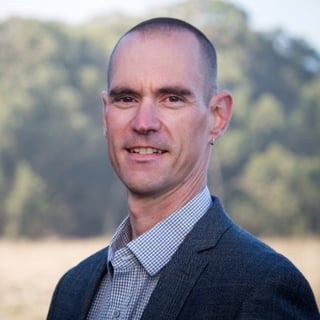
Brian Spears is the director of Artificial Intelligence (AI) efforts at Lawrence Livermore National Laboratory (LLNL). He is responsible for setting vision for development and deployment of AI methods for national security missions while driving LLNL excellence in AI for science. He is a principal architect of Cognitive Simulation – artificial intelligence (AI) methods that combine high-performance simulation and precision experiments to improve scientific prediction. He is also leads the LLNL AI Innovation Incubator, AI3, which develops strong public-private partnerships on collaborative research projects to advance scientific AI in the national interest. Brian served as the Deputy for Inertial Confinement Fusion (ICF) Modeling where he guided the scientific simulation half of the ICF program at the National Ignition Facility (NIF) through its historic achievement of nuclear fusion ignition. His team used novel AI methods to predict fusion ignition for the first time in history. In his personal research, he applies cognitive simulation techniques to stockpile stewardship missions with emphasis on quantifying uncertainty in inertial confinement fusion (ICF) experiments and developing a new generation of self-driving laboratory systems. He received the LLNL Mid-Career Recognition for career achievements in research. He is the recipient of two Secretary of Energy Achievement Awards, multiple National Nuclear Security Administration Defense Programs Awards of Excellence, the Hyperion HPC Innovation Award, and the HPC Wire Editors’ Choice Award for Best Use of High-Performance Computing in Energy. Brian completed his PhD at the University of California, Berkeley where he was a National Defense Science and Engineering Graduate Fellow and studied topological methods for high-dimensional dynamical systems. He also holds a BS in mechanical engineering and a BA in liberal arts from the University of Texas at Austin. When not doing science, he can be found racing his bike or chauffeuring his two children to swim practice.
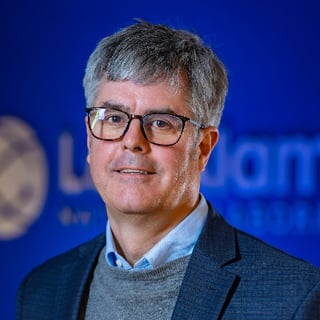
Thomas (Thom) Mason is the President and CEO of Triad National Security, LLC (Triad) and serves as the Director of Los Alamos National Laboratory (LANL).
Prior to becoming LANL Laboratory Director Thom was the Senior Vice President for Global Laboratory Operations at Battelle where he had responsibility for governance and strategy across the six National Laboratories that Battelle manages or co-manages. Prior to joining Battelle, Thom worked at Oak Ridge National Laboratory (ORNL) for 19 years, including 10 years as the Laboratory Director. Under his leadership, ORNL saw significant growth in programs, new facilities, and hiring while achieving record low safety incident rates. Before becoming Laboratory Director, he was Associate Laboratory Director (ALD) for Neutron Sciences, ALD for the Spallation Neutron Source (SNS), and Director of the Experimental Facilities Division. During his time in Oak Ridge, Thom was active in the community serving as Chair of the Oak Ridge Public Schools Education Foundation as well as Innovation Valley, the Knoxville-Oak Ridge area regional economic development organization. He moved to ORNL from the University of Toronto where he was a faculty member in the Department of Physics and previously worked as a Senior Scientist at Risø National Laboratory and a Postdoc at AT&T Bell Laboratories. For the past 30 years, he has been involved in the design and construction of scientific instrumentation and facilities and the application of nuclear, computing, and materials sciences to solve important challenges in energy and national security.
Thom has a Ph.D. in Experimental Condensed Matter Physics from McMaster University and a BSc in Physics from Dalhousie University.
SUMMARY
This Forum event featured Thom Mason and Kim Budil in conversation with moderators Donald Haynes and Brian Spears on how AI is reshaping national security, scientific leadership, and the role of the U.S. national laboratories. The discussion explored how a rapidly changing global security environment, including competition with China and evolving nuclear deterrence dynamics, is converging with a major computational and AI revolution. The speakers emphasized that AI creates enormous opportunities for the labs to accelerate scientific discovery, strengthen resilience, and improve mission execution, while warning that existing institutions, infrastructure, classified environments, and workforce culture are not yet prepared to fully capitalize on these capabilities. A major theme was the “AI overhang,” or the gap between what frontier AI can already do and how slowly critical institutions are able to adopt it. The conversation also highlighted the need for closer partnerships between national laboratories and frontier AI companies, recognizing that many important AI advances are now being driven by the private sector. The session concluded with a call for the United States to invest at greater scale, modernize its scientific infrastructure, empower technical experts, and move with greater urgency to translate AI leadership into long-term strategic advantage.
TRANSCRIPT
[00:00:00] Speaker 1: What we are gonna talk about today is the unique perspective that the lab directors have on the question of AI uptake and also the opportunities and challenges risks associated with the existence of the AI overhang.
[00:00:25] Yeah, thanks Don. We also wanted to frame it in a national security perspective to begin with. I think a good framing is that there's a confluence of two sets of events right now. The first is the global security pace is changing in a ridiculous way. So we have an emerging China as a near nuclear peer, a pace of work for tripolar operations and nuclear deterrence, and a shifting set of international alliances that have made global security dynamic, which is the thing we probably don't want in the world against the confluence of a computational revolution and AI. So we wanted to reflect on the way that that changes what's called of our institutions, the pressures it puts on infrastructure, the capabilities, and then focus really on what it means to have AI capabilities, be at some place in the frontier and maybe have our institutions taking only partial advantage of that. With that idea of a dynamic national and global security landscape against the computing revolution while sitting at the intersection, the national laboratory directors are by the nature of their jobs, forced to reckon with that. We wanted to start very big because we have some folks from philanthropy, some folks from social science, people from national security academia, just at the very top, a question for you both, and I'll start with Kim. Can you just frame what you think is the biggest opportunity and the biggest threat that AI presents for national security?
[00:01:51] Speaker 2: Sure, so I think it's hard to overstate the pace of change in the global environment and how much more dangerous and unstable it is than we anticipated even 10 years ago. This pace of change has been accelerating over that time and it's forced us to think about what does strategic advantage mean for the United States? And so we have a mighty military capability and we have dominated in that sphere for a long time, but that's not necessarily the advantage that you need in this type of environment, right? So what are the capabilities that are really making a difference in the global security environment? It's ability to be faster and smarter than your adversaries to anticipate and respond rapidly to emerging threats. It's the ability to be resilient and fight through, so if a new threat emerges, that ability to either absorb or counter very rapidly. And this idea of smarter, faster, more agile, more adaptable is perfectly suited to a new technology stack where you say we're gonna use new tools and really change the way we think about capabilities in this environment.
[00:03:03] So I think that's one thing that's a huge opportunity for us, the confluence of this changing way of doing science and technology, not just compute, but how we'll do experimental science, how we'll do manufacturing, how we'll deploy capabilities, and then how we'll operate, because you can be smarter in how you deploy your capabilities or how you plan your capabilities with these tools, because you can plan in many more dimensions than the average human planner could do without them. So I think there's a huge opportunity space. I mean, the thing I worry about day in and day out is the fact that our institution is doing a lot and changing very fast, and it's still too slow. We are not anywhere near ready to take full advantage of the capabilities that are coming our way, nor are we tooled to take best advantage of them. You mentioned we don't have the right infrastructure. We don't have things that are instrumented in the ways we need them or automated. We operate in classified environments, so we buy really smart machines, and then we take all the smart parts out of them that talk. We want the data, you can't even get it off the machine. So there's a whole host of very practical limitations to how quickly we can adapt.
[00:04:20] So that's my big concern. And of course, culture is the last piece of that. We've trained people to think about our work and how we operate in these high-consequence missions in a very deliberate and thoughtful and conservative way. There's good reasons for that. It's not really fit for purpose in this environment. So how do we have trusted approaches and systems that can move at the pace of the threat? So Tom, if I could specialize it for you, the opportunity and the threat. Could you also answer, what would you say would make the labs have seized the opportunity over the next five years? What would it look like? And what would it look like to have failed into success?
[00:04:58] Speaker 1: And what would it look like to have failed and to succumb to the threat? Well, you know, I tend to think of AI as just the natural extension of computing, which has always been part of what we do. And, you know, that's enables the research we do, it enables the design that we do, and the opportunity to do that faster is really important in this environment. And it's also, you know, in terms of the threat space, you know, what will others be able to do? I think there's, I kind of come at it from two points of view. There's specific things that we have to do in pursuit of our national security mission, which requires science and engineering tools, and to the extent they get better, we'll be able to do our things more quickly. And on the time scale of five years, we should definitely see the ability to do those things more quickly. But there's another piece of it, which is also important in terms of national security and geopolitical dynamics, which is that science is, you know, it's a feedback machine, right? Breakthroughs lead to improved capabilities that make it easier to do more breakthroughs. And so, you know, if you remember your calculus, that's the model for exponential growth. And it means that small differences compounded over time can make a really big difference.
[00:06:30] If you think about the Cold War and the success that the U.S. and its allies had in prevailing over the Soviet Union in the Cold War, there were, I would say, two components. One was the component of, you know, you have a military, you have a deterrent, there are things that we built, our two labs and others, that were part of that deterrent that caused the Soviet Union day after day to decide not to send the tanks through the Fold-a-Gap. And what that did was it bought you time. And then the other thing that was going on over the course of the Cold War is every year the U.S. was pulling, and its allies, Western European allies, Japan and so on, were pulling further and further ahead of the Soviet Union technologically. And so what happened is we bought sufficient time for our economic technological model to completely overwhelm them. And, you know, the Soviet Union fell apart. And I think AI has the potential to advance both threads in the sense that there are things that we want to be able to do faster in pursuit of our direct mission deliverables and so forth. We ought to be able to do that. But I think it also has the potential, or the risk, depending on how this plays out, to give you that incremental advantage over time that compounds that means not five years from now, but 20 years from now we're in a very different space.
[00:08:00] And it's a bit like the discussions that you see where people talk about, you know, in the AI race. And thinking about the AI race, how, you know, if you can get to the ability to self-improve, you're going to take off, no one will ever catch up with you. I think you can apply that same sort of model to this technological economic competition between countries, or between civilizations, or however you want to characterize it. It's not just applicable in the sort of very limited space of, you know, can someone ever get a model that's as good as yours if your models are self-improving and you got there nine months earlier.
[00:08:52] Speaker 2: I'd like to ask about the role of the laboratories in this era as we have the either the threat or the opportunity of closing the AI overhang quickly. The labs are dense, highly networked collections of subject matter experts. You might say that they're a town of geniuses on a lab campus. AI is about to provide a country of geniuses in a data center. Part of the capability overhang might be that we already have that for some important practical purposes. What's the unique value proposition of the national lab construct in that new world?
[00:09:26] Speaker 1: I'll start. My observation is that these tools are extremely useful in the hands of someone who knows what they're doing. What we have is a bunch of people who know what they're doing in a bunch of different disciplines. That ought to be a big strategic advantage. I do think that it's an interesting question. I was actually a little surprised that in the discussion this morning about the...
[00:09:56] Speaker 1: This morning about the philanthropic interest potentially of the OpenAI Foundation. The topic of education didn't come up, because it seems to me like one of the biggest challenges that we have as a society is how are we going to develop a bunch of people who know what they're doing when all the questions on the qualifying exam for your PhD are easily answered by AI? Because as a physicist, the only way you learn physics is by doing the damn problems. Humans are lazy. If all the problems can be done, you're not going to learn. So I think that's a very interesting and important question because we have right now this collection of people who know what they're doing, who I think are well-positioned to use these tools to move faster. But I don't know what that looks like when the people who are graduating high school now wind up coming out with their PhDs and working as postdocs. How are we going to maintain that capability of people who know what they're doing?
[00:11:07] Speaker 2: So I guess I'll add, particularly for our labs operating in the national security space, we have a unique opportunity to work on the positive opportunity side of the capabilities in AI and what that could mean for the way we do scientific research or advance fields or advance our mission capabilities. But we also work on understanding the potential bad uses of these tools and the implications and risks that may go along with them. One of the things we can do is be a part of the ecosystem because of that unique perspective on the world and the threat space that we're confronting in the world today to ensure that we don't restrain the technology in ways that slows innovation, but we have a very clear-eyed approach when issues and concerns arise and we can be proactive to understand what those potential bad use cases may be and what reasonable mitigations might be in place for that.
[00:12:56] Speaker 2: Some things are going to be very hard to avoid because there's a lot of knowledge out in the world and there are a lot of smart people in the world and there are a lot of models that we don't control and aren't controlled by necessarily the most responsible people, so there will be some bad outcomes that feel inevitable. The idea that we are going to build a tool that really gets the best advantage of the innovation, bringing together that public sector perspective and long-term view on what the tools are for and where we might want to think about these different use cases so that we can have those positive benefits is going to be an important part of the ecosystem going forward.
[00:13:54] Speaker 2: I think there's another potent piece, which is actually the experimental capabilities and historical data that we have. We've been using computers to help us for a long time and one of the important things is we don't actually believe what our modeling and simulation tells us, or at least we have to convince ourselves that it's real. And so the validation and verification part, I don't think that's fundamentally changed by AI. It's still going to be a really important piece, particularly in cases where you may not, at least at the moment, we have very poor understanding of how it actually arrives at its conclusions. I would say that even adds a premium to the validation and verification piece because, you know, at least if you have a microscopic model that you've put into a computer, you can have some sort of first principles understanding of how it gets to its computational result. And if you don't have that, then having an actual ability to validate is going to be really important.
[00:14:53] Speaker 1: OK, so maybe a slightly related question, but I kind of want to turn to the idea that labs might be stabilizers in the current environment regardless of overhang. So maybe we can reflect on two lanes that the culture workforce pacing issues that you two can direct inside the laboratory against an observation of mixed AI fluency. The notion of that overhang that the workforce, you know, Tom said it's dangerous or useful in the hands of someone who's really knowledgeable in maybe their skill in condensed matter physics doesn't translate completely into AI usage. So how would you think about what is the role of the laboratory in trying to stabilize operations in the world? And how do you get there?
[00:14:54] Speaker 1: And how do you get there if AI fluency is variable?
[00:15:01] Speaker 2: So, I'll take a stab at this. I'm sure I'm not going to get it quite at the issue that you're trying to get at. What I observe is we have sort of multiple populations at various levels of fluency. If you look at our R&D community, they're all in and they're way out at the frontier, because that's what scientists do. What's the latest, greatest thing, new approach, new tool? I'm all in, let's go figure out what we can do with this. You were an example of this. And so, that's a driving term for the whole lab, because those people are visible and they're developing knowledge and tools that others can utilize. Sort of behind them are the mission people. Again, necessarily more conservative, a little more slow-paced, because there's a high consequence of error component there. So, it has to be right, so that leading-edge capability has to pull the mission people along behind them. I think that's a really important thing we have to optimize for. You can't let, I mean, historically what we do is let the mission adopt at their own pace and their own level of comfort. I don't think that works in this environment. I think that we have to exhibit, put a driving term behind that. I'm really worried about the next two populations. One is the interface to the physical world, which you put a big focus on for us. We're somewhere between not ready or it's incompatible with what we're doing. So how do we get our data from all these big experimental facilities in a place and format where we can exploit it at scale? How do we get systems that can actually control and show the possibility of things like automated labs and automated systems? How do we operate our infrastructure in this better way so that we can spend more money on tokens and less money on maintenance of systems or whatever?
[00:17:00] Speaker 2: And then all the enabling infrastructure is basically very enthusiastic and at zero knowledge of what's possible. So the capability overhang is actually the biggest in what you would say are the commodity systems. But those are gonna exert, again, they're gonna exert drag. So I've got scientists pulling on one side, mission people resisting, and all of the enabling stuff pulling the system backwards. So if we can accelerate that backside and put a driving term on the mission people, I think we have an opportunity to make much faster progress. So you'll get the best advantage of having us as part of this ecosystem. If I recap that, because I think it's a helpful framing, you'd see a stratified layer of overhang in the terms that we're using today and a top-down strategic impetus to push from the bottom, pull from the top, and elevate the whole thing.
[00:18:10] Speaker 1: Yeah, I mean, from a very simplistic perspective, what I hear from the research community is we want more compute, we want more and better access to data, we want easier, smoother partnerships with frontier labs so we can get access to the latest, greatest tools, and more tokens so we can do more. And so that means I need to find a way to shift resources from one side of that equation to the other as quickly and efficiently as possible. It's interconnected. I mean, somehow, AI is both the endpoint goal for the one community and the driving term that will enable that shift of resources to get me to that point.
[00:18:39] Speaker 2: I think within those kind of thought-organizing principles of you've got the sort of R&D side, you have the operations side, and then in the middle, you've kind of got the mission execution. The mission execution is the one where I think we probably have the biggest challenge because on the operations side, I'm reasonably confident that the commercial endeavors that are driving all the investment in AI are gonna result in tools that we'll just be able to adopt because if you look at running the lab, it's not that different from running any large organization. And so there's a big market out there in the commercial world that's gonna give us AI-enabled tools for our financial management system, human resources, facilities, maintenance, all that sort of stuff.
[00:19:23] Speaker 1: So I don't think we need to develop that; we just need to be willing to make use of it as industry makes it available. On the science side, the scientists will drive that as fast as we let them go. We just need to sort of get out of the way to some extent. They’ve been doing this for longer than it was cool. If we can give them more tokens, they'll do more of it. I think where it gets a little bit tricky is in the mission execution space because there you have many.
[00:19:52] Speaker 1: There you have many use cases that there aren't commercial drivers for the development of tools that will solve our problems. There are tremendous bureaucratic impediments in terms of classification and all sorts of stuff that make it really, really hard and an appropriately built-in conservatism that Kim mentioned. So when you combine those three things, that's going to be really tough. And as I said, unlike for the kind of normal operations stuff where there are companies knocking on our door every day telling us they can solve our problems and we just need to figure out which one of them are not lying and then we'll be able to take advantage of the technology. That's not going to be true in some of our national security mission space. Fortunately, there is no commercial market for nuclear weapons. So we can't expect industry to develop the tools to solve all of those problems.
[00:20:57] Speaker 1: Kim, you've noted a qualitative change in the nature of the lab's relationship with private enterprise, especially with the AI, the Frontier AI labs. So what happens when the overhang is in private hands? What does this pretend for national security and the lab's role?
[00:21:16] Speaker 2: Yeah, so my observation is the following. It's true with the Frontier labs, but also with the emerging fusion industry. So we have always worked with industry. One of the great features of the National Labs is that we have a great interface both to the academic, long-term foundational research, which we participate in that community, and a good impedance match to industry because we're practical. We like to solve problems. We develop technology. We commercialize technology. We work with industry partners all the time. But the way we do that is either with industry as a service or technology provider or we're trying to move technology from our environment out.
[00:21:56] Speaker 2: The relationship with the Frontier labs is more like an academic partnership because it's a peer institution. We're not working with people who are providing a service to us. We're working with people who are at the very frontier of this emerging research area, and our best researchers want to be a part of that ecosystem. So we need to find ways to entrain these two communities together more seamlessly. As Tom mentioned, there are rules in our environment, lots and lots and lots of rules, and so we spent all our time worrying about conflict of interest and fairness of opportunity and who gets what in these relationships. I think that model is just dumb in this environment.
[00:22:41] Speaker 2: We need to think more about what's the shared benefit of these relationships, where we're working with many companies on different problems. The companies are getting something from that relationship. The labs and the public sector are getting something from that relationship, and we move fluidly between those two worlds. There are people in this room, Jason, who used to be in the lab environment who are now in the private sector. That's great, bringing talent into the right places, but we need to keep people in these critical national security missions. So I need people to stay in my environment and still be at the cutting edge of these tools and technologies.
[00:23:17] Speaker 2: I think there's a real opportunity to think about a new model for that to allow that kind of motion back and forth, to have people from the private sector working in our environments, people from my environment working on problems of mutual benefit in the private sector. And I think we need to do it fast. We have not been in the position of having this kind of powerful technology emerge fully outside the government sphere before, and I think we do not yet understand the implications of that. For me, this thing where the public sector has a really compelling mission to be engaged in and ensure that a set of public benefits that do not have a business model are still achieved is really important.
[00:24:07] Speaker 2: I think, in a way, we solved the inverse problem in the post-World War era. The inverse problem was coming out of the Second World War, famously codified in Vannevar Bush's Endless Frontier. The U.S. government had developed a lot of scientific capabilities that were anticipated to have significant industrial and economic benefit. The question was, given the fact that the government is developing, had developed and was continuing to develop all these things, whether it's nuclear energy, radar, computing,
[00:24:50] Speaker 1: Radar, computing, space, right? Those are all examples of technologies that were, you know, started with government funding. And then the question was how can we have companies use nuclear to build reactors for electric power? How can the investments in aerospace turn into, again, commercial activities? And so there was a whole methodology that was developed of doing that and to do with, you know, protection of intellectual property and where it's appropriate for the government to invest and where the private sector should take over. And you know, we got good at that. Better than anyone else. Hence, you know, the collapse of the Soviet Union. We now have this inverse problem, which is that, you know, there is this technology and others I think where the government is not driving it and developing it and then trying to figure out how to hand it off to industry. It’s being developed with private dollars at a very rapid pace. And the question is, how can the government benefit from that? I do think it's a tremendous, you know, the innovation that's happening in this space in largely U.S. based or U.S. based multinationals is a huge strategic advantage if we can figure out how to solve the inverse problem. It took a while in the post-war era to develop all those institutions of, you know, public funding of fundamental research. We had to invent the National Science Foundation. We had to invent the National Labs. We had to have, you know, Atoms for Peace and the development of export controls. We had to have licensing of, you know, it took a long time to build that up. I don't think we have as much time this time around to figure out the solution to the inverse problem.
[00:26:50] Speaker 2: OK, why don't we turn to the notion of strategic surprise? So, in the national security space, we think about that a lot. The idea that an adversary who we thought was behind might have had some kind of breakthrough and innovation and will be shocked, either that they did it before we did it or that we might not understand that. If we reflect on AI as a new capability, with new relationships we're building with industry, new ways of using it, and we admit that AI fluency might be varied inside our organizations and there's this capability overhang which might extend to an overhang that's different for an adversary relative to us. What would you both think about what this means in terms of the opportunity for either strategic surprise, which we would see as a negative, or strategic advantage because we think we've made better use of the capabilities than others?
[00:27:44] Speaker 1: Well, on the strategic surprise side, which is always a risk, there are sort of two approaches to that, three approaches. One is to always be advancing and try to be the one who’s creating the surprise. The other is to be watching very carefully what others are doing so you have the best indicators and warning something is happening or there's some signal that a new technology is emerging or a new approach is emerging. The third one is applying your skills and capabilities to understand how to be more resilient as a society. And so if you think about the things that would be really undermining to civil society in the U.S., it's not military systems, it's critical infrastructure and water systems and food security and all the things that we sort of count on as the foundations of our way of life. You could very rapidly destabilize a country by taking away those things quickly. So neutralizing those kinds of threats, bio-threats, so we have a big program in rapid development of therapeutics and countermeasures to engineered bio-threats. If you could respond in days to weeks to an emergent threat, that's a very different calculus than for an adversary coming after you with those threats.
[00:29:06] Speaker 2: So I think the use of these, spending some cycles, thinking about the resilience side of the equation and the ability to take away an adversary's advantage, not just, you know, counter the advantage, but really negate the advantage that they might have should be an important part of our thinking because the pace of change is going to be so fast that the likelihood we get the right indicator or warning that something new is coming is just getting lower, I think. And the tools are more powerful. I think in some areas, the barriers to entry have already been very low. Again, in the biospace, the barrier to entry is essentially zero. You don't need large, industrial-scale facilities. There are a lot of commercial tools. The technology is easily, you know, shielded from.
[00:29:48] Speaker 1: is easily shielded from other eyes and it's dual-use inherently. So very hard to distill good uses from bad uses. But the pace at which you can innovate and the scale at which you can gain knowledge and sophistication is just, the potential is really off the charts on that front. So I think the biggest impediment to us in strategic advantage is changing the way we think about what that means, particularly in the military sense. The U.S. has a very mighty military capability and we've always been a leader in the world and our might is unquestioned. Is that the right metric? So Ukraine has held Russia at a standstill for all these years through smart, cheap, very rapidly adaptable technology like drones. So the way that you can achieve advantage in the world is changing and because our systems are big and because we have a predilection for more complex, more sophisticated, more scale, it makes it harder to really change in fundamental ways how you’re gonna approach the problem. I worry that we need to be more adaptable in how we think about what's needed and I mean, don't even begin to add how the government funds programs or develops capabilities or how long it takes to F35. I mean, there's foundational flaws in our current approach that we could change, we could change. I think, again, it's another place where the labs can potentially show a very different way because we can do these things at small scale that could then go out into industry and be taken up to large scale. But I worry about our ability to fundamentally rethink what it means to have advantage in this environment.
[00:31:44] Speaker 2: Yeah, I think just picking up on one thing Kim said, I think there's a possibility that the watching what others do piece I think is going to get harder. You can argue that AI will help us figure out what others are doing. That's probably true to some extent, but I think that because we've already seen examples where with AI-enabled kind of tools for research, you can move much, much more rapidly than we did historically. Normally we could kind of, if someone's trying to develop some new capability, materials for hypersonics or whatever, there are lots of indicators and sort of what are they interested in, what's the research they're doing that can give you hints as to what they're working on. If now you have this ability to kind of bypass a lot of that through AI, I think there's a greater risk of being surprised. So where that lands me is the only way I know to not be surprised is to just be pushing as hard as we can to use it for our own purposes. That's the best way we're gonna learn what others might do. Doesn't mean we should give up on trying to monitor and understand what they're doing, but I think it's intrinsically going to be more difficult.
[00:33:08] Speaker 1: If we're concerned that China is gonna be able to use AI tools in the classified environment to... You get background music occasionally. Yeah, to advance their science. How can we understand that? Well, we need to use it to advance our science. The thing that's playing in the background is a tool that we've developed called URSA, which is the Universal Research and Science Agenetic System. It just does the stuff that everyone knows about in terms of agentic systems, but developed for scientific applications. And the thing that's being illustrated is trying to optimize the design of an explosive charge, which could be used, say, for mining. Given this environment, that's what I'll say that it's for. And what it does is surveys the literature, comes up with some ideas. There's some modeling and simulation tools that are actually pretty efficient because there's surrogate calculations that have trained a neural network based on multi-physics tools, and then comes up with design hypotheses, runs calculations, and is able to push forward the performance frontier in the case of explosive jets that penetrate, go further. And so that's an example of a kind of scientific workflow that's highly relevant to national security. And I'm pretty sure that in other countries, people are working on this as well. And if we wanna understand how far can it go,
[00:34:46] Speaker 1: We, you know, there's only one way to find out. We're not going to get, you know, they're probably not going to be issuing press releases. In fact, in general, in this country, we issue a lot more press releases. And in the AI space, in particular, where people are trying to raise vast capital sums, they're being very public about their capabilities and trumpeting them. It doesn't work that way in other countries. And so the level of visibility is going to be lower. But that's why I think we need to be as aggressive as we can in terms of making full use of the tools. And, oh, by the way, we'll get our missions done anyway, which is what we're supposed to be doing. But in the back of our mind, we can be thinking, ooh, that's scary. I want to make one plug for something you said. I think leadership matters. And I think visible signals of our capabilities and capacity are really important because you don't always reveal the actual strategic capability that you developed, but the tools, the use of the tools, the applications, the scientific leadership that we demonstrate, I think is an important part of signaling U.S. intent and capacity to innovate and that we should be doubted at, doubt us at your peril. So, and I think there's tremendous deterrent value in being able to do really incredible things.
[00:36:12] Speaker 1: So achieving ignition on NIF, no one else, no one else has done that. Tom said it first. No, I mean, it's really hard, it tells the world we really understand what's going on in these systems that are highly relevant to our national security. I would say the James Webb Space Telescope has that accomplishment has tremendous deterrent value. I mean, if you think about the ability to go through whatever it was, 200 single points of failure to get to the Lagrange point. And of course, unlike NIF, which is explicitly tied to nuclear deterrence, you would say, well, the James Webb Space Telescope, that's for looking at like origins of the universe, very fundamental science has nothing to do with national security. The ability to maneuver in Cis lunar space in that way is highly relevant to national security. And don't kid yourself, the fact that we could do that sends a signal to the world. And I think in the AI space, being able to demonstrate we can do cool and amazing things without necessarily talking about the really scary things that we're doing, people can connect the dots and that has value.
[00:37:24] Speaker 2: Okay, I think we've come to our end. I want a lightning comment just to let everyone wrap it up and pull it back to overhang and it goes to just what you guys were saying, you've led laboratories with a seven pushing eight decade history of using some of maybe the most stabilizing and certainly very dangerous technologies. Can you just give a quick thought against the backdrop of approaching AI overhang? Is there a governing principle from that history that is a pithy approach that you would say something we need right now in the AI moment?
[00:37:56] Speaker 1: That was a lot of words. I kind of lost it halfway through. Well, you said you've met Tom and I pithy. Yeah, let's just, if you were to aggressively take your experience from leading a weapons laboratory, big scientific endeavor, and you were charged with minimizing AI overhang, building a skilled workforce, attacking the AI problem, what's the thing that you've learned from your experience that you would do?
[00:38:24] Speaker 2: Well, to be honest, it's what we're actually trying to do. You know, so we're, you know, we're all in on this. I would say the most important lesson we've learned at this point is that we're not at the scale we need to be. And that's my biggest concern. We have really smart people. We're doing really amazing things. And the most important lesson we've learned is that we're not at the scale we need to be. And I, you know, just as I, we are gonna hit a wall. We're not there yet, but we're gonna hit a wall in terms of our scientific infrastructure pretty quickly. And how we get over that, I'm not sure.
[00:39:06] Speaker 1: I think the lesson, where we've been successful in the past, we bring the technical and mission community together to create a plan, a vision for what's possible and a plan to execute against that. We give them resources and we let them run and you get amazing results. I think we're in an era where there's too much top-down engineering on how we do that and who gets to decide what gets done and how every dollar gets spent, and it's a huge disadvantage. It's just a huge disadvantage. So the lesson is if we're gonna be serious about this as a country, you've gotta put resources against it at scale and you've gotta let the technical community.
[Speaker 1] [00:39:44] To let the technical community shape how those resources get spent. I think we ought to offer training to the Chinese on how our political system works and the appropriations process. That's right, forget the five-year plan. You could have the US budget.
[Speaker 1] [00:39:59] So I'd like to thank you all very much for being with us, listening. Jason for the invitation, and Brian, Kim, and Tom for participating in this Fireside Chat.
