

Event Replay: How ChatGPT Helped an Olympian Balance Work, Life, and Training
Speakers
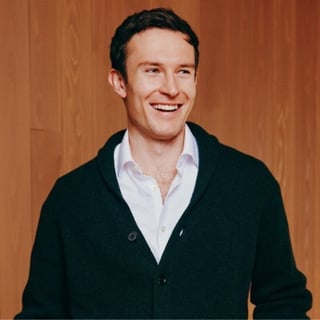
Liam Corrigan is a Partner at Sequoia where he helps early-stage founders build legendary companies. Prior to joining Sequoia, he was a deep-tech startup operator at Fuse, an private equity investor at Alpine, an astrophysics researcher at Harvard, and a competitive rower, representing the United States at two Olympic Games.
He has been an avid user of OpenAI's product suite from Dall-E 2 to GPT-5.5 in Codex. ChatGPT was invaluable in his preparation for the Olympics, where the model intelligence helped surface research in physiology, nutrition, and supplements, that helped him optimize all aspects of his training.

Natalie Staudacher was an early employee at OpenAI, where she launched, scaled, and shaped products that brought AI from the research frontier into the hands of hundreds of millions of people. Her work spanned OpenAI’s early API platform, DALL·E 2, ChatGPT, and most recently Model Behavior.
Before OpenAI, she conducted heliophysics research on Mercury’s magnetosphere and earned a bachelor’s degree in economics from the University of Michigan. Outside of work, she loves reading Greek philosophy, learning about Egyptian history, and exploring the map with her fiancé.

Mark Murray is Editorial Director at OpenAI, bringing nearly three decades of experience covering American politics as a veteran editor, reporter, and storyteller. Before joining OpenAI, he spent 21 years at NBC News, where he served as Senior Political Editor. In that role, he directed the network’s political coverage, managed NBC’s Political Unit, oversaw its extensive polling operation, and wrote the lead stories on election results and public opinion trends.
A trusted voice in political journalism, Mark has reported on every U.S. presidential election since 2000, appearing regularly on television, radio, podcasts, and digital platforms to break down polling data and explain the dynamics shaping American politics. Earlier in his career, he served as Deputy Political Director, Off-Air Political Reporter, and writer at National Journal, where he covered Congress, immigration, labor, and education policy.
Throughout his 27-year career, Mark has been recognized for his ability to translate complex political developments into clear, accessible narratives. Known as a collaborative leader and skilled communicator, he has guided teams of reporters and researchers while providing audiences with thoughtful analysis across media.
SUMMARY
This conversation framed ChatGPT as a tool that helped Liam Corrigan move from managing the noise of daily life to focusing more fully on the things that mattered most. Liam described using the models to reduce friction across training, work, and relationship logistics, from nutrition research and scheduling to travel planning and everyday decision-making. Natalie Staudacher added a product-side perspective, emphasizing how the breadth of use cases surprised her and how the models became useful in both professional and personal contexts. The discussion repeatedly returned to the idea that AI is most valuable when it helps people become more present, protect time, and stay connected to human judgment, discipline, and teamwork rather than replacing them.
TRANSCRIPT
[00:00:00] Speaker 1: Hello, everyone. Welcome to the OpenAI Forum. I'm so glad you're here. I'm Mark Murray, the Editorial Director at OpenAI, filling in for my cuddly Natalie Cone. Today's conversation is about competitive rowing at the highest level. But it's also about something bigger, what it actually looks like when AI becomes useful in everyday human life. So much of the public conversation about AI understandably focuses on the biggest questions: jobs, safety, trust, competition, the future. Those conversations all matter. But sometimes the clearest way to understand a technology is through the lived experience of a person using it in ordinary, practical, deeply human ways. That's why I'm excited for today's discussion with Liam Corrigan and Natalie Staudacher. Liam is a gold medalist, part of the U.S. Men's Four that won gold in Paris. But what makes his story compelling isn't simply that he won. It's how he managed the complexity around the pursuit. Liam was simultaneously training at the highest level in the world, working professionally, maintaining relationships, and trying to preserve enough balance to stay mentally healthy through years of pressure and uncertainty. And one of the recurring themes in his story is that ChatGPT helped reduce friction across all of it. It didn't replace discipline, or coaching, or judgment, or teamwork, and it certainly didn't replace rowing the boat, but it helped with the countless smaller problems that accumulate in daily life: researching nutrition and supplements, organizing training information, saving time at work, planning travel, coordinating schedules, even helping create more room for a relationship and a life outside of sport. Speaking of, I want to introduce our other guest today, Natalie Staudacher, who was an early employee here at OpenAI, where she launched, scaled, and shaped products that brought AI from the research frontier into the hands of hundreds of millions of people like you, me, Liam, and so many others. Her work spanned OpenAI's early API platform, DALL-E 2, ChatGPT, and most recently, Model Behavior. She also happens to be Liam's fiancée. At OpenAI, we often talk about AI expanding capability. Liam's story, as well as Natalie's, is a very human example of what that actually means in practice. So please join me in welcoming Liam and Natalie. So glad to have you guys here.
[00:02:41] Speaker 2: Liam, first question to you. Walk me through how you use ChatGPT when training for your competition, from scheduling a new training routine to thinking through a training plan.
[00:02:49] Speaker 3: Yeah, well, thank you so much, and thank you for having me. It's wonderful to be at the offices, to be with Natalie here. It was pretty invaluable to me. So I had been rowing for a long time. Natalie and I actually started dating, and our first date was about two weeks before the release of ChatGPT. I had been deep into rowing—I had been to one Olympics and was basically preparing for the next one. She had mentioned, you know, I work at this company called OpenAI. I had heard of DALL-E, and she said, "We're about to release this thing. I don't think it's going to be too big of a deal, but, you know, who knows?" And, of course, it turned out to be ChatGPT. Now, four years later, we're talking about the ChatGPT moment for everything else. It was very cool just to see that technology in the midst of my rowing career. I think what I realized quickly was that it could be beneficial to me. To your point, I think there’s a lot that AI will never do for you. It will never put in the hard miles that any rower or athlete needs to do to get very proficient at their sport. It will never wake up early and show up to practice and, you know, move your body for you. But when you reach a certain level, there are things that you can really seek to optimize, right? Things like your nutrition. I remember asking the model, ChatGPT, how much protein intake I should have based on my weight and figuring out what the best way of getting to that number is. You're having about a gram of protein per pound per day, you know, if I weigh something like 200 pounds, it's actually quite a lot of protein. I probably need to drink some protein shakes. So that was actually a big change for me, going through something like that. And then also, and perhaps we can get into this, is just the scheduling of my life around training. I was working a job in addition to training.
[00:04:58] Speaker 2: Maybe this will talk about using ChatGPT to help assist with everything, with the role at work, with training.
[00:04:58] Speaker 1: And then most importantly, spending meaningful time with Natalie when I wasn't at one of those two things. Really those three things were my entire life for that period of time. I think Chat GPT was pretty invaluable for that as well.
[00:05:12] Speaker 1: Liam, give me a specific example of kind of how you were managing all the training, the relationships and using Chat GPT, like kind of walk me through your interactions with the technology.
[00:05:23] Speaker 2: Yeah, for sure. So like I said, on the training side, I think it was really around optimizing things like nutrition and figuring out what are the optimal supplements to use. I had actually, pretty towards the end of my training career, a pretty sophisticated supplement routine and regimen. Again, optimizing that was very helpful with the model with Chat.
[00:05:46] Speaker 2: Being able to really excel at work while I was also rowing was a pretty critical part of the model. This was in the early days, right? I think a lot of my colleagues and other people in the industry I was working in—the financial services industry—weren't familiar with the model, right? This was sort of, this is 2023. People knew about Chat GPT certainly, but it wasn't ubiquitous for services professionals the way that I'd say it is today.
[00:06:11] Speaker 2: Just doing basic things like market research, understanding who the competitive dynamics of a given company are, their landscape, even doing some amount of personal research in someone's background—things like that were all very, very useful. But then most importantly, I think it was like helping me just align and configure the time that I had with Natalie.
[00:06:30] Speaker 2: So I remember early on, as we were dating, we did a trip to Hawaii with Natalie and I, and then a few very good friends of ours who will all be at our wedding and are in our respective bridal and groomed parties at the wedding. Basically, the entire trip was organized with Chat GPT. We went to Kauai in Hawaii; we did this wonderful hike. I figured out what hotel to book, we went on a whale watching tour.
[00:07:06] Speaker 2: I think all of that, really, I just, you know, I basically figured out what to book and what to do with Chat GPT. So it was just this way of, let's say, making everything in my life maybe 10 to 20% easier and to some degree more successful. I think had I not had the capability to do that, I'm not sure I would have been able to sort of balance rowing and work and then do that while really building a relationship with Natalie.
[00:07:34] Speaker 1: Now Natalie, you spent years at OpenAI. When Liam started using Chat GPT during his Olympic prep, what did you notice that felt familiar from your work and what kind of surprised you?
[00:07:44] Speaker 2: Yeah, and just to give some context, at this time it's 2022. A lot of the customers at OpenAI I was working with were in the copywriting industry, and we had a lot of researchers at the company who were focused on a lot of STEM problems. What really stood out to me was how Liam started to incorporate chat in all of these different aspects of his life.
[00:08:03] Speaker 2: I would say in the early days, again, we didn't think that anyone was going to use Chat GPT. To see that we were actually going to pay people to try out the service and let us know what they thought and give us more feedback—it felt surreal that it kind of blew up in the way that it did.
[00:08:18] Speaker 2: Doing a lot of user interviews—just figuring out that you would have someone like a doctor, a lawyer, an engineer, and talk to them all in the same day—and just figuring out how they're using these different models in different aspects of their life, whether it was in their professional life or something more personal like planning a date night. I think the breadth really kind of took all of us by storm, and it was really cool to see that kind of up close with Liam. I don't think we ever would have expected an Olympic gold medalist would have used our product, so just to see that firsthand was really special.
[00:08:56] Speaker 1: Liam, when did Chat GPT first shift from being an interesting tool to something that really helped your life? What was the aha moment that you ended up having?
[00:09:05] Speaker 2: It was pretty quick. I think the initial stage of the model, it wasn't useful because it had so much depth or so much intelligence, but it was useful because it could scale what you would be able to do as a person otherwise, at least at a basic level. Again, for me, a lot of this was just in the work that I was doing, oftentimes in the investing world or something where you just need to intake a lot of information.
[00:09:33] Speaker 2: Again, you're learning maybe new vocabulary—there's jargon that's specific to an industry. I'm just asking the model, "What does this mean? What does this mean?" And you just have this rapid-fire assistant. And now we take this for granted because all these models exist. What I'm saying sounds so mundane, but truly in 2022 and 2023, of course you had Google, but it wasn't instant. You would Google something, you click on a website, you click somewhere else.
[00:09:56] Speaker 1: You click on a website, you click somewhere else, you click three links, you wouldn't find it. It'd be very frustrating. And it would just work. And again, it's just interesting to talk about it now because it sounds like, of course, we can do this anywhere. This is mundane. But like, truly, at the time, it was a pretty remarkable capability for me, on the work side.
[00:10:15] On the rowing side, I think it became, because I was more advanced, I would say, in my rowing career than I was in my professional career, where provided value was when really the model's capability began to excel. So I think it was in the later days of GPT-4, and then even the early days of O1. And I remember asking you these very specific questions about things, like dosage of supplements, a question about how to optimally dose beta alanine, which is a supplement that a lot of rowers will use to buffer lactic acid, basically. When you're working very hard, your body develops lactic acid, and beta alanine can essentially inhibit the production of that and allow you to push a little bit further at the very edge of your physical capability.
[00:11:02] So asking it, you know, what's the optimal dosage of that, asking questions around what are the scientific studies of other kinds of supplements that we might be using, things like sodium bicarbonate, things like creatine, making sure that if we're going to use these supplements, there's some scientific grounding for what we're doing and having a really good concept of what some of the studies in the state of the art of the science were.
[00:11:31] Now, what I found with the model—and this is a bit of an aside—what I found with some of that science is there's not a lot of great science actually about the very highest level of athletes using these supplements. A lot of these studies are small sample sizes and, you know, athletes who aren't quite elite truly using these supplements. And so the significance of some of these methods is, I would say, unclear because it's such a small study.
[00:11:57] So actually using the models to uncover what was basically a limited amount of science over some of these questions gave me a degree of confidence to, in some sense, experiment with some of these things on myself because I felt that there was just no good data out there and you have to kind of be an N of 1 experimenter to really push the bounds in some ways.
[00:12:30] Speaker 2: Now, Natalie, kind of this question from your side of the equation. So, you know, for Liam, the models were getting better. They were kind of changing from the moment that you guys started dating through the run-up to the Paris Games.
[00:12:34] Walk me through, like, is your work at OpenAI kind of like all the models and people are going to say, “Oh my gosh, this is getting better. We're able to have our reasoning models. The writing is fantastic.” Kind of just describe from your vantage point.
[00:12:54] Speaker 1: So from my perspective, you know, my background, I initially joined OpenAI and the go-to-market team. When I joined the ChatGPT team, I was talking to hundreds of customers a year, and it was just so fascinating to see kind of be able to bridge the gap between what researchers and on the product side, we were prioritizing and then being able to understand what people were actually using the models for.
[00:13:18] And so if you're in the AI community, you might've heard of evaluations—or we call them evals—or different benchmarks like GPQA or Amy, which are often focused on different types of math or even other kinds of science questions. But then if you talk to anyone that's kind of using ChatGPT in their daily life, these tasks that people are doing typically don't have a ton of math or a lot of science in them.
[00:13:39] And so it was really interesting for me to see as more and more people started to use ChatGPT how we could actually bridge the gap and start to develop different evals focused around different walks of life. And that was a really special journey for me.
[00:13:56] Speaker 2: Liam, we've walked through how you were able to use ChatGPT for your training. Obviously, you guys have talked about your wedding planning and your honeymoon trip. But what are other things, like going forward? How do you kind of incorporate it into work and even things beyond your wedding planning?
[00:14:14] Speaker 1: Yeah, well, I mean, the other major use case in this sort of pre-Olympic era that I used it for was towards the end of my time rowing. I knew I wanted to move into a new industry. I wanted to start working in startups and I was working after I finished rowing at a company that was in the nuclear energy space, actually.
[00:14:31] And so I was just a huge— I think maybe one of the most beneficial things for me was helping me prepare for that process. I'd studied physics in college. I had some technical understanding of the space, but really had no applicable operational understanding. And so as I was interviewing—which was in the midst of, I was still working my job, I was preparing for the Olympics, and now I was interviewing for a new role as...
[00:14:54] Speaker 1: Interviewing for, you know, new roles as well, basically using the model to get up to speed on working in nuclear fusion, the state of the art in nuclear fusion, which I didn't there, but the state of the landscape, let's say. You know, what were the different technical approaches? What were different companies doing? How much money have they raised? How are they looking to commercialize some of these basic questions that again, there just isn't great information, you know, that you can find on the internet. And again, now, it seems so obvious, like, of course, you would use ChatGPT to go answer these questions. But at the time, it was immensely beneficial for me. You know, today, the model capabilities obviously are not what they were in 2024. And so, I guess I'm probably using, you know, I'm probably using Codex more than I'm using ChatGPT, but I'm using it very effectively. And so I mean, there's a tremendous amount that you can do. More often than not, it's like running overnight. I'm working at, you know, in venture capital now, and I'm often asking our IT system administrator, can you bump my token usage because I'm running out of tokens, because I whatever, some tasks overnight. And you know, there's always things where the capabilities aren't quite there and there's things where the capabilities really are there. But it just makes me much better at my current role. And honestly, the current role that I have is meeting people, understanding what they're building, and asking them really well-informed questions to get to the heart of, you know, the challenges and the ways that you can support them in doing that. There's a lot of things that the models allow me to do where I can come prepared to a conversation with another person and just have the best, clearest understanding of what they're doing that's possible because a lot of the basic knowledge work that I would have spent hours doing beforehand, you know, the model might be able to turn out for me. So that's how I've been using Codex more recently.
[00:16:59] Speaker 2: Awesome, Liam, and I love the range of this discussion going from rowing and nutrition to nuclear fusion, as well as physics. So that's absolutely awesome. Natalie, when you were at OpenAI, how did you think about the line between useful support from your end and over-reliance, especially as something as high stakes as Liam's Olympic training?
[00:17:23] Speaker 3: I think we kind of touched on it a little bit in the beginning where, you know, agents are never going to get on the erg with you, you're never gonna, like, be kind of in the boat as you're rowing, at least not in the near future, I don't think. And so I think, you know, watching Liam's rowing career, it's been incredible to see just kind of how many different stakeholders there are, as he was training. Like you had the athletic director, he had his individual coach for his boat, a nutritionalist. I think I remember you telling me that you made a charter with the other guys in the boat about what you were going to do to, like, fully prepare for the Olympics. And so I think our models were like one other voice as you were preparing. But ultimately, it rested on you. And I think other people on the team had access to the same resources. But at the end of the day, it really took Liam kind of having the agency to know what he needed to do and then use the models to help him take it a step further. But at the end of the day, it was Liam kind of driving that progress.
[00:18:24] Speaker 1: It was all about you balancing your entire life and competing at the highest level. You know, talk about how having meaningful work and a fuller life made it easier to handle good and bad training days, as well as like the high stakes of an Olympics.
[00:18:42] Speaker 1: Well, I think it was really crucial. So most of the people in our boat, in the men's, all of us had had other jobs throughout the time that we were training, which isn't necessarily the norm for a lot of Olympians and for a lot of rowers, where the norm might be more, you're only focused on your athletic career and you aren't able to do work outside. Now, most sports, I think there's sort of a ceiling to the amount of hours that you can spend doing a sport just because there's a ceiling to what your body can do. So we were probably rowing for something like 28 hours a week of actually physically moving your body rowing, which is a lot. I mean, maybe it doesn't sound like a lot because people work for 40, 50 hours a week, but you know, most of that time your heart rate's like 150, 160. So your body feels it. It's definitely different than being behind a laptop, but it's hard to do much more than that. And probably you risk injury if you get much more than that. So the remainder of your time, there's some time that's spent in recovery and nutrition. But you actually have maybe 40 hours a week where if you're diligent with your time, you can do something. And so for us, we were working, and I think the biggest thing was, it allows you to shift off, you know, out of this mindset of, okay, I had a...
[00:19:52] Speaker 1: Out of this mindset of, okay, I had a bad practice, I'm able to go to work and I'm able to forget about it and come back in the afternoon with kind of a clearer mind because there's this whole other set of problems that I'm thinking about at work. I can come back to rowing in the afternoon and think about it clearly. And, you know, vice versa with work, like you're at work, you can think very clearly about the problems you're dealing with there, but you can be excited about, you know, going to a boathouse, working very hard, exercising in the afternoon. There's actually just a really nice synergy between the two and ultimately what our boat would joke, you know, when we're at these competitions, the world championships and the Olympics, you know, we were asked, like I remember there was, we were standing on the medal podium one time with the British and the British asked like, oh, you know, you guys going on holiday after this? We said, no, we're going to work on Tuesday. Like we're flying back home, we're going to work. And they were like flabbergasted by this. For us, we always joke like, it's just a hobby for us. The rowing is just a hobby for us, which certainly was a joke. It was more than that. It wasn't just a hobby, but it gave us that little bit of mental permission to ease some pressure off of ourselves. So it wasn't life or death. We could approach it, we could row joyously and we could approach it joyously. And that was really important. That was a very important part, I think of, you know, why we were successful.
[00:21:12] Speaker 2: And Natalie, the kind of the flip side of the question to you is like, you know, obviously people who work in OpenAI were incorporating the AI into our own workflows. But also, and I found this in my own personal life, like it actually helps like planning vacations and other things. And so while Liam was kind of talking about how it was helping him be well-rounded, kind of walked me through, it's like you kind of had the experience of being an OpenAI person, like here's how this technology is helping me in my personal life as well as professional.
[00:21:44] Speaker 3: Yeah, it feels like Chad Shabiti is one of the wedding planners as we're like planning our wedding. There have been endless use cases, I feel everything from giving the constraints of where we want our wedding venue to be and then having deep research kind of go off and find where it is that we're gonna get married to even kind of helping me design the wedding dress. Like I went and tried on a bunch of dresses, had certain features that I liked from some and then kind of put this Frankenstein image together that I could then use image gen for to create the new design and take it to the atelier to kind of have a bespoke kind of custom design. So everything from wedding planning, we also just bought a house and it's been a lot of fun to take a picture of like the foundation and say, is this okay? We have like over 100-year-old house in San Francisco, so it's kind of fun to like triage different house problems with that too. And then everything to also kind of planning a date night, Liam and I love watching movies and so sometimes I'll pick the movie that we're gonna watch, Night of the Hunter as an example, and then ask Chad to kind of come up with a menu and a playlist for us to kind of like really enjoy the movie that we're about to watch. So it's hard to think of certain use cases that we don't use models for. And obviously the OpenAI forum has 70,000 members. A lot of them are AI aficionados and using AI in ways that our brains can't comprehend, but it also has some actually beginners and people who are kind of looking for new hacks and interesting kind of prompts, things that might actually help them either in their professional or personal lives.
[00:23:14] Speaker 1: Do you guys have a couple of go-to you would actually recommend to a beginner on? Have you tried this in Codex or have you tried this in ChatGPT to really make your life a whole lot easier?
[00:23:26] Speaker 2: I would say that my biggest advice and I find myself giving myself this advice is if I'm unsure about a problem, I just ask the model to solve it for me, to ask Codex to solve it for me. Oftentimes you might need to do that one or two times, you might need to say, I wanna solve this problem, how can I solve it with Codex? You ask Codex that question. And it might say, well, you might break it down into a few steps and then you go implement those steps. But it's not, I think, again, we were kind of talking earlier in the conversation, like it's not just, okay, I have a question. Can it answer this question? Can it retrieve this information? I think that's what the model was in 2024 and was very useful for that in 2024.
[00:24:10] Speaker 3: But today I find that increasingly what I'm doing is automated where I have scheduled things that are running, again, multiple times a day in the evenings, reading my emails, sending me summaries of meetings that I'm gonna have that day, sending me drafts of people that I should be trying to get in touch with or things like that. Or even just sending, like whenever I have an issue, like I need to go fill out a form, just sending it to Codex, say, hey, Codex has a lot of my contacts, saying, hey, here go fill out this form, submit, send back a PDF, doing things like that, right? So, and even now I have all my notes integrated and in Obsidian, it goes like.
[00:24:50] Speaker 1: In Obsidian, it goes like every night it goes, cleans up my notes, integrates those with what I'm oftentimes recording meetings in another software, Granola, and so it records those things and all that's being handled through Codex, which is kind of integrating all of this. I think there is still a bit of optimization that everyone needs to do depending on the things that they're solving every day. But I would just encourage people to say, if there's something where you're doing something more than once manually, just ask the model, hey, can you do this? And oftentimes it can. That's a great hack.
[00:25:24] Speaker 2: Natalie, what's yours?
[00:25:26] Speaker 3: Yeah, for me, every Sunday or Monday, I kind of think about all the tasks that I need to do. Then I use our voice-to-text feature where I just kind of ramble and go through everything that I'm trying to get accomplished that week and then ask it to kind of prioritize and then kick off different tasks given all that we're trying to accomplish in the next couple of months. It's just having the ability to triage the problems and then figure out how we're gonna plan to tackle what it is that we're working on. That has been so helpful.
[00:25:52] Speaker 1: Those are both great. All right, we're gonna now start taking some of the questions from our community who's been listening in, and they have some really good questions. The first one is from Svetlana or Lana, and she wanted Liam to kind of know about, like, walk you through how you were using ChatGPT and how, obviously, as it was helping you, but where human judgment, discipline, intuition, and emotional presence still have to remain central. You know, we were kind of talking about earlier how the human still has to be there, but you're having the AI help you in other places.
[00:26:28] Speaker 4: Yeah, well, I think you put it very well, which is there's no AI when you're in the boat. Everything that you're doing in the boat, every stroke that you're taking, not only obviously it's not a robot doing it for you, but there's no communication with any kind of computer at all, right? In fact, in rowing, in a lot of sports, it's banned to have external communication. Even something like a radio is part of the sport. So the things, you know, there's a lot that we did. We would do a lot of visualization prior to the races. You know, we'd close our eyes, imagine we're at the start line, the race is about to begin. You imagine the crew next to you, you imagine the crew on the other side, and you're actually just feeling yourself taking strokes in the boat. You're really physically, viscerally feeling that sensation. The four of us would sit in a room and go through that process. We did it many times before our final. That's like a very introspective, very human thing. I think there was some guidance from Chad in terms of how to operate that. But again, when you're closing your eyes, you're in your own mind and you're visualizing a race, there's no model there. Ultimately, we get to the start line; you can't rely on Chad or anything else.
[00:27:53] Speaker 4: I think the last part that's really important about rowing is just the communication between four guys in a boat. At the end of the day, the most important thing with the sport of rowing, which I think is maybe hard to appreciate if you haven't seen it or been involved in the sport, is just the degree to which everyone needs to be doing the exact same thing. You really need the exact same stroke because you're moving in the boat. It’s less about is your stroke this kind of optimal, theoretically perfect thing, and it’s more about are four people doing it in exactly the same way. It’s really hard because how do you actually get to row in the same way? Generally, it requires some kind of language. You tell someone; either a coach talks to you or you talk to the people in the boat, you know, hey, you should be moving your hand in this way or we should be thinking about moving our bodies in this way or elbows in this way or here's how we want the front of the stroke to be or the back of the stroke to be. But these are all just words, and the words need to be translated into physical motion. And there’s no good one-for-one perfect translation. These are all approximations.
[00:29:00] Speaker 4: So the skill to do that is a very human skill, I think. The very best rowers have that skill. They’re very good communicators. I think it’s true of all sports—there's just the leadership and the communication that's required to bring a team together is pretty crucial.
[00:29:18] Speaker 1: Now, Liam, here's a great follow-up question from Jim who asks, how did other rowers feel about this after hearing about all your usage? So here you're having, like, your ChatGPT use; were they also big-time users? Or were they saying, hey, what are you actually doing? And did you convert them?
[00:29:36] Speaker 4: Well, I’d have to ask Natalie. At the time, Natalie was in, you know, again at OpenAI, so she was very generous with some of my rowing friends and some of...
[00:29:48] Speaker 1: Rowing friends and some of our friends, and giving them access to the model for free. And I think even in some cases, you know, trial models before they were like fully released. So I think most of my friends had access through Nathalie. I think that's right. Maybe not all of them did. They were very curious. I mean, for most people, there was a moment of they don't really, maybe they haven't used the model. They don't understand exactly what it's capable of or why you're using it. But I think once they get their hands on it, they realize how incredible it can be for them specifically. Oftentimes, when AI is an abstraction—when it's something that might happen or it's happening to someone else—it’s very hard to reason about it clearly because you don't really know what it is that you're talking about. But I think once you use the model, you see, okay, there are all these little problems—these little frictions in my life—that are real pains for me that I'd like to solve. And now here's this tool where I can solve them. For me, that might be optimizing my training or figuring out my schedule or doing as best I can at work. Once everyone else in my boat and the team kind of saw that, they were pretty enthusiastic about it.
[00:31:10] Speaker 1: Nathalie, this question is for you. Do you see some similarities in how athletes and founders and people who are working at basically frontier AI labs can use AI well?
[00:31:23] Speaker 2: Oh, definitely. I think when it comes to excellence, people can use the models, one, to work on tasks that they find repetitive or kind of want to automate away with maybe an agent, but then two, being able to wear many different hats that maybe you couldn't before. I feel like when the Chat GPT team was so small—maybe 10 people—and then talking to founders, there are only so many different things that you can do yourself. Having a model that you can ask like, okay, how do I set up a user research program like this? Or what is maybe the best way to start kind of a cold outreach program? If that isn't your natural skill set, being able to rely on our models and figure out what skills you can learn and how to actually execute is something that I feel people striving for excellence are always trying to teach themselves new things.
[00:32:11] Speaker 2: Yeah, this is a similar kind of question we got. From your product perspective, what does the story suggest about how AI tools can support people in high-pressure personal contexts?
[00:32:23] Speaker 2: Yeah, I would say high-pressure, even personal context. I find at least when I'm using it in those situations, it's really helpful for me to articulate what it is that I'm trying to do or go after. It's again, like I love the voice-to-text mode where I can just lay out everything that I'm thinking through and then use our models to kind of speak back to me what it is that we could then use as kind of like a next step. While also making sure that you don't replace any of the friends in your life. You still need to have those conversations in person, but before you have maybe a tough conversation, being able to practice that with the model is really helpful.
[00:33:06] Speaker 1: Liam, this question comes from Daniel Green. What do you think becomes possible when every athlete and student has access and understanding of AI, like you do?
[00:33:16] Speaker 3: I think athlete and student are different categories here where I think student probably changes the dynamics of what a student should know, right? What really is the true and valuable thing to know. If all facts are easily accessible through AI—which, you know, we're getting close to that point—I think the things that matter more and things that schools ought to prepare people for are our judgment, our character, our integrity. There is a deep tradition of this historically in education. So I think education maybe becomes a little bit less about facts, although I think there's still an important place for factual recall. Certainly, I don't have a model in front of me now, but I think also character and integrity become very important parts of education.
[00:34:16] Speaker 3: On the athletic side, I think that it allows athletes to optimize their training. The reason I think that matters is because for me, the most rewarding part of the whole experience was getting to a point—which took about 10 or 11 years in rowing—of really feeling like I had deep mastery of what I was doing. There were about 10 or 11 years where I was kind of flailing around, including time at the Olympics essentially; it was basically flailing.
Speaker 1: [00:34:46] Flailing but you get to a point and you really begin to understand I know sort of everything not everything but I know at least know what I don't know and there's very few things that are unknown unknowns if that makes sense. That's a very rewarding point because then you can begin to push your body and you really feel this incredible fitness and you feel this incredible just ease and fluidness to what you're doing. I don't know what that feeling is like in other sports I can only speak to rowing. I assume that athletes who are performing at a very high level in football, soccer, basketball, baseball, or any sport have a similar feeling. But to me, that was like a very beautiful thing and I don't think many people get to experience that. If it's the case that models and ChatGPT help people get to a point where they can achieve that sooner in their athletic careers, I think you're just like optimizing the space of what a human being can experience. Honestly, I felt like I experienced that but it took 12 years. In a world where I could have done it in six, it would have been great. Who knows what's like beyond that, right? Like you talk to Usain Bolt or something who has way more gold medals than I do and is a way, way better athlete than I am. He would probably have some even higher plane of achievement to talk about that I've never accessed. There are levels to this and I think that hopefully, AI can help humans access more and more levels. I believe it can.
Speaker 2: [00:36:24] Now I'd love for you to answer the same question and you know we now know that more than 900 million people use ChatGPT. The numbers of people are using codecs are skyrocketing; AI use is on the increase. What does the world look like when everyone in their professions, personal lives, either on the athletic competition field or in your own personal weight room, ends up having access to this?
Speaker 1: [00:36:48] This might sound cheesy, but I feel like by using the models more and more, I've become more present in my life and it has allowed me to kind of take in my surroundings a lot more. So even if I was traveling for any of the world championships in a country where I didn't speak the language, being able to take a picture of a menu and translate that into English and understand what it is that I'm ordering has really helped me connect to different cultures. Using the models is like talking to someone that's read every book or seen every movie. So when we do something like plan a date night with a custom recipe or a custom menu, it truly feels like I'm being fully present and kind of taking in the everyday moments that I feel like make life worth living.
Speaker 2: [00:37:29] That's awesome, Natalie. All right, Liam, we got this question from Jason. He asked, did using ChatGPT reduce your mental fatigue from daily planning, allowing you to focus more energy on your Olympic performance?
Speaker 1: [00:37:34] I think you kind of got it with your answer, Jason. Yeah, I think it did. I mean, it wasn't the case that the model, especially at that point in time, was structuring or answering emails or anything like that. In 2024, again, this is what we're talking about. So in 2023 and 2024, the models were most useful for just allowing me to do more at my job, allowing me to edit text quicker, edit emails quicker, or access information which basically just freed up time for me. I think for most people, time is a major constraint, and so increasingly I was freed up time and it allowed me to balance those things. So I think yes, I don't think it was necessarily the case that it was managing my calendar at that point, and now there's probably a little bit more of that with agents. But at that moment, it was really just a matter of giving me back valuable time.
Speaker 2: [00:38:48] All right, so Liam, I have a question for you. Is your Olympic career over? Are we gonna see you potentially compete in the 2028 Games?
Speaker 1: [00:38:52] It's a great question. I think it's over unfortunately. While the prospect of competing at a home games on U.S. soil is just immensely riveting to me, I would love to earn another medal for the United States on home soil. I think there are other things I want to pursue in life, and I'm currently doing that. I'm pretty happy with where I am. Natalie and I are getting married this summer and are very happy about the life that we're building here. So I think that at this moment, rowing seems like it would be a path that's a little bit of a distraction from that. I guess you might say never say never; there's always a possibility, but at the moment I think I've hung the oars up.
[00:39:44] Speaker 1: Moment I think I've hung the oars up and retired.
[00:39:48] Speaker 2: Natalie, once the planning is done, the big date ends up occurring, are you guys going to start focusing on the 2028 games, potentially attending in person, or is that something that's interesting or something on the agenda?
[00:39:57] Speaker 3: Oh, yeah, I would love to go to the games in 2028. And after all the planning, I think it would still be fun to maybe like go and watch more rowing regattas. I feel like I was someone who, before meeting Liam, didn't know anything about sports and certainly nothing about rowing. But they're in incredible places like Lucerne, Switzerland or Belgrade, Serbia was a lot of fun to travel to. And I really love traveling and watching rowing now, which I never thought I'd say five years ago.
[00:40:28] Speaker 2: Well, that's awesome. I hope you guys get that opportunity and I hope a lot of other people get that opportunity also in 2028.
[00:40:33] Speaker 2: I'm going to wrap things up Liam, Natalie. Thank you both for this thoughtful conversation. This was great. One thing I appreciated about today's discussion is it made AI feel concrete and relatable. What came through is the value that these tools show us up in different moments, that's saving time, reducing stress, improving preparation and making decisions easier. And importantly, today's conversation also reinforced something we believe strongly in OpenAI, that AI works best when human judgment stays at the center.
[00:41:01] Speaker 2: For many people still asking, well, why should I want AI in my life? Stories like this matter because they show AI not as a substitute for human effort or meaning, but as a tool that can help people navigate the growing complexity of modern life while staying connected to what matters most. And if you enjoyed today's conversation, we have several more upcoming events for you to be sure to pay attention to.
[00:41:30] Speaker 2: On Thursday, May 7th, we're having our big event on compute and the infrastructure race competitiveness in the AI era. On Wednesday, May 13th, we're actually talking, having an edition on why Codex matters beyond code. And on Tuesday, May 26th, we'll host models that matter, how AI flattened the COVID curve with the Gates Foundation. Thank you all for joining us. We really appreciate it. We'll see you next time.
