

Event Replay: Youth Wellbeing in the Age of AI
Speakers
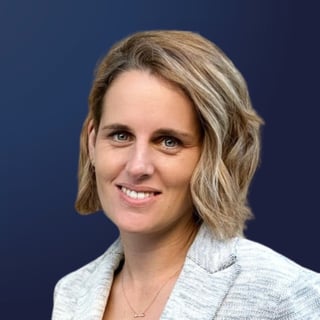
Mathilde Cerioli holds a Ph.D. in Cognitive Neuroscience and a Master's Degree in Psychology, with a strong focus on child development. As Chief Scientist at everyone.AI and iRAISE, Mathilde is committed to integrating responsible, safe, and ethical technology to support children's development. She is the lead author of several landmark publications on the impact of AI on children and adolescents, including the latest: "Mapping of GenAI Impacts on Child Development".

Chris Lehane is Chief Global Affairs Officer, Interim Chief Communications Officer, and a member of the executive team at OpenAI. Prior to joining OpenAI, Chris was Chief Strategy Officer/Operating Partner at Haun Ventures. From 2015 to 2021, Chris served on the executive management team of Airbnb and led the company’s policy and communications work. Before his time at Airbnb, Chris co-founded Fabiani & Lehane, a strategic consultancy that advised political, corporate, technology, entertainment, and professional sports clients. In the 1990s, he served in various positions in the administration of President Bill Clinton, including as Press Secretary to Vice President Al Gore and Special Assistant Counsel to President Clinton. Chris currently serves on the Board of Directors of Coinbase (NASDAQ: COIN), is a member of the Council on Foreign Relations, Trustee Emeritus of Amherst College and has served on numerous non-profit advisory boards. He holds a B.A. from Amherst College and a J.D. from Harvard Law School.

After the first stage of her career in the international private technology sector, Clara Chappaz combined her passion for digital innovation with her commitment to France bytransitioning to the public sector upon her return to the country. A graduate of ESSEC Business School, Clara Chappaz began her career in Southeast Asia working for various e-commerce start-ups. In 2018, she earned an MBA from Harvard University. She then joined Vestiaire Collective, a Paris-based platform for buying and selling pre-owned luxury goods, as Chief Commercial Officer. In 2021, she took the helm of La French Tech Mission, a branch of the Ministry of the Economy supporting the growth of innovative tech start-ups in France and abroad.
On the recommendation of the Prime Minister, the President of the Republic appointed Clara Chappaz Secretary of State for Artificial Intelligence and Digital Affairs, under the Minister of Higher Education and Research, on September 21, 2024, and later Minister Delegate for Artificial Intelligence and Digital Affairs, reporting to the Minister of the Economy and Finance, on December 21, 2024. In her government role, Clara Chappaz implemented the National AI Strategy, launched the “Osez l’IA” (Dare to Use AI) plan to promote AI adoption across businesses, and organized the AI Action Summit. She worked to strengthen Europe’s digital sovereignty and cybersecurity. Finally, she has led a determined fight to protect minors online, by regulating access to adult content and social media platforms. In December 2025, Clara Chappaz was appointed Digital Affairs and AI Ambassador

Lisa Robinson works as an Online Safety Policy Analyst in the Science, Technology and Innovation Directorate at the Organisation for Economic Co-operation and Development (OECD). A children’s rights lawyer, Lisa worked on the development and subsequent implementation of the OECD’s Recommendation on Children in the Digital Environment. As part of this work she has extensive experience analysing legal and policy responses to the needs of children in the digital environment as well as considering child rights implications of the evolving digital environment. Outside of the OECD, Lisa has a background in legal practice specializing in family and child protection, and access to justice. She has worked on a number of different child rights and policy issues both at the domestic and international level, and she has also worked as a lecturer in the law faculties in Universities in both Australia and France.
SUMMARY
Lisa Robinson, Ambassador Clara Chappaz, Chris Lehane, and Dr. Mathilde Cerioli discussed the potential to expand access to knowledge and opportunity for young people around the world, but realizing that promise will require safeguards that can evolve alongside the technology. The panel emphasized that AI offers significant opportunities for education and accessibility, but safety-by-design, age assurance, and youth participation must be built into systems from the start. AI literacy is also central and children need to learn how to use AI responsibly rather than simply be restricted from accessing it.The discussion concluded with a call for faster research, better data access, stronger international coordination, and continued investment in tools that protect children while enabling them to benefit from AI.
TRANSCRIPT
[00:00:00] Speaker 1: So if I can invite Clara Chappaz, who's France's Ambassador for Digital Affairs and AI. Also Chris Lehane, who's the Chief Global Affairs Officer at OpenAI. And Dr. Mathilde Cerioli, who's the Chief Scientist and Co-founder of EveryoneAI.
[00:00:23] Thank you so much everyone for coming today. Firstly to Ambassador Chappaz, France has placed the protection of minors online really centrally in the G7 agenda and it's a high aspect there. Why has this proven to be the right moment for international action and what would meaningful progress look like moving forward from here? All the conversations that we're often hearing from families, from kids themselves is like, how do we make sure that those tools are actually right for us? I was in Kenya just a few weeks ago for Africa Forward, which is a conference that President Macron hosted there with conversation around the impact on development, agriculture, healthcare, and I was a big, big part of the conference, which was on AI.
[00:01:10] On the sidelines of the conference, First Lady Ruto organized an event around children, developing children in the age of AI. One of the moments that struck me the most was when some kids actually went upstage and they made an amazingly strong case for how we should protect them. That ended with saying something like, you know, AI can't be really intelligent if it doesn't think about your safety at first, by design. And seeing those like 13-year-olds in Kenya going up onstage and asking for us as global leaders to come together, not just government in one room, but together with the companies, with the scientific communities, to say, hey, there's a lot of stuff we know, we know from social networks. There’s a lot of stuff we don't know, but truth is, we can't wait 15 years again to take the right decisions for our kids.
[00:02:08] Because if we want to unleash the full potential of this technology, we need to act differently that time. And when you’re seeing from Canberra to Santa Fe, like to Curious Timer earlier today talking about social networks ban below 16, if we take this moment, and if we take the energy we're feeling from the scientific community, from the global community, from the civil society, from the governments in the room, from the companies themselves, to really decide for ourselves the future we want to write for our children, we can probably make a big difference. And that's why G7 was created in the first place. How do we bring countries, the seven biggest democracies together to address some of the major challenges, major imbalances that the world is facing?
[00:02:56] And of course, a lot of the agenda would be on all the crisis that we hear about every day when we're looking at the newspaper and listening to the radio and stuff. But one big, big, big topic of discussion in the room is AI, both as an opportunity, but also as a risk for our society, especially for our youngest generation. So this is like the willingness, the commitment that President Macron has made. There's been a lot of work done already in the ministerial meeting, and we're hoping to take the conversation forward. Thank you so much.
[00:03:27] Speaker 2: Chris, we just heard the Ambassador speak about safety by design, and a lot of the different actions that's being called for at the G7 level and the French government level. OpenAI itself has also recently called for a global action on youth AI safety. So what does that look like, and what are some of the things that you would like to see or that OpenAI would like to see in this space?
[00:03:51] I think last week, we had suggested that at the G7 Plus 4, is there an opportunity to pursue something along the lines of a global children's AI safety institute? And let me unpack that a little bit. So over the last three or four years, there have been AI safety institutes set up in the US. We have Bruce Reid, who I'm gonna talk with in a little bit, but Bruce was in the Biden administration, actually was the creator and builder of this in the US. But you’ve seen countries around the world do this—France, the EU has the European Commission, Canada, Australia, Japan, Singapore, a bunch of other countries, the UK.
[00:04:38] And all of those institutions have really focused on what's called catastrophic risk, which is obviously incredibly important that we get right. But we also think that it's equally important to make sure we get the kids' safety piece of this right. There's two sides to that coin, the opportunity that the ambassador...
[00:04:58] Speaker 1: Opportunity that the ambassador talked about. This is a tool that should be put people at the center, including kids. It can be an incredible reducer of barriers and opening up of opportunities. Children are going to have to become literate in this to be able to participate in the economy that is going to be coming. But we also need to make sure that it's safe and responsible. I do think, because the French government, because President Macron has put AI and kids at the center of the conversation that's going to be taking place at Evian, that perhaps maybe over one of the meetings or maybe one of the dinners, that there's an opportunity here to think about, could we work with one of the existing safety institutes? Could we stand up? Could we work with civil stakeholders that are out there and actually create something that actually then stands for those global standards when it comes to children? I think, incredibly important that we take the lessons from the social media age, think about the ones that apply here, and also think about the opportunity to make sure we get this right.
[00:06:03] Speaker 1: Okay, Mathilde, turning to you, you approach this from a scientific angle in relation to children's development and how the interaction with AI and new technologies are affecting children from a developmental angle. So, what is it that you're seeing in how young people use AI today? What's the most meaningful opportunities or indeed the most prominent risks? And where are adults perhaps getting this wrong or misaligned with what kids are wanting or kids are seeing?
[00:06:32] Speaker 2: So, we're seeing really two things, which is the first, adoption at scale. Globally, it's going really fast, and really across the globe, across socio-economic layers, like it's really affecting children everywhere. We're seeing that they are using it earlier and earlier. So, that's the first element. What's more interesting on the research perspective is that we see the patterns of use changing quickly. Two years ago, when we're looking at the first survey, really the things we were looking for is using Child GPT for homework cheating. That was really the main concerns we were hearing from parents, from educators. Whereas now, what we're seeing is that at least one in two teens use AI as companionship once in a while to ask more personal questions. And that's not even something we were putting in the surveys. That was not something we were looking for.
[00:07:24] Speaker 2: And what's interesting is it was really foreseeable. When I was having early conversations with experts two and a half years ago, and we were going to happen with that technology, the thing that kept coming back was for teenagers seeing how their brain works, emotional reliance and the risk that it creates is going to be the next big thing in mental health. And it's not because experts and researchers had the perfect evidence on AI in children. They didn't. But what they had was all the adjacent literature. We know how adolescents function. We know how the brain functions. We know enough about parasocial relationships in general. We know enough about attachment and all those elements can really help us anticipate. So I think that's why we really need to have researchers early, because they have enough of the knowledge to help anticipate some of the risks.
[00:08:32] Speaker 2: And the second thing is we need to put youth in the room much earlier, because otherwise these questions we don't even think to ask. So we are missing potential risks. So we end up really trying to solve issues once they're already there, issues that we could have anticipated and where we could put safety ahead of time. I think it's really great that we're starting to have this conversation. I know it's dear to all of us here. We were actually, Kara, Shafaz, and you, Chrisley, at the launch of the i-RACE coalition at the AI Action Summit. So we've had that vision of we need to think long-term on how do we safeguard cognitive and social-emotional development for children. And so this is encouraging, but this is just the beginning.
[00:09:21] Speaker 2: And we need to really match the pace, both of adoption but also of evolution. Because the research has to adapt to the fact that the model from today and the one in three months might be very different. And so the way it interacts is very fluid. And we need to be able to also have that ability to match that.
[00:09:36] Speaker 1: So thanks, Mathilde. I think, you know, you pick up on sort of the good point about perhaps responses need to be a little bit tech-neutral in relation to how fast the, you know, responses are happening. Chris, your OpenAI's European blueprint turning to...
[00:09:56] Speaker 1: Turning to education and how that's focused in education, what does the blueprint say about education, what is AI's role here and opportunity for education, and how do we avoid traps of damaging critical thinking skills, et cetera? Yeah, well, first of all, I think as we think about education, that this is going to be a skill that's gonna be critical to someone's ability to participate lifelong and what the economy is gonna look like in the future. We did an event earlier this morning and I used one of my favorite historical analogies, but I'll use it again, which is, we're sitting here in Europe. Europe, for a whole bunch of reasons, it was a little bit more fragmented, so there wasn't one overarching government in charge. The Catholic Church actually had created a baseline of some education and literacy, really leaned into literacy, teaching people how to read. China, which was under a dynasty, went in a very different direction. They saw it as a technology that potentially would be threatening to the rule because it spread knowledge, allowed people to access information, and you basically look at 1490 on, for about 500 years, those two parts of the world go in really, really, really different directions. Europe as well as other parts of the world figured out how to make sure you were bringing literacy to kids in an appropriate way, right? You can't do literacy by banning books. You actually have to make sure the kids are getting taught how to use the books and then what to do with that information, and I do think that as we sit here, maybe the third chapter of the AI story, I think the first chapter was proving out that you could build safe and responsible models. The second chapter was could you actually create tools that brought the intelligence closer to people? I think we're going to this third chapter where AI is effectively becoming an infrastructure and accessibility to it will be critical, availability to it will be critical, but understanding how to use it, and so for us as we think about that education or pedagogical piece of it, it is both learning how to use it in terms of like hands-on but also the right ways to use it so that you're going to put that next class of kids in a position to succeed. You know I'll end this by just pointing out that places like China have certainly taken the lessons of history. You know China has a plan by 2030 to get nearly all of their population literate in AI. It's part of their larger strategy to become a dominant player in the space. I do think that you know history doesn't necessarily repeat itself as the old saying goes. But a lot of lessons that can be learned from it. And I do think we're at a moment where we really need to get that education piece right.
[00:13:00] Speaker 2: Okay so turning to you Ambassador perhaps, you know from your perspective and the French government perspective, what does responsible AI literacy look like and what are the things that policymakers and other people need to keep in mind? Yeah often when we start talking about AI safety, the question of education and literacy gets kind of hidden because it's easier or more attractive probably for the press to cover like all the restrictive measures governments are thinking of than like the hard question which is education and literacy. And so obviously one is not against the other; it’s neither or nor; it’s like you have to do both. This is something we've been pretty much really convinced about. But before I go and answer your question, so that being said, there is one thing that we are also quite certain we should all really understand and act upon is there is no literacy that can work if we don't know the age of the user. And that's kind of the basics of like where the conversation on social media started because you're seeing now a lot of like the tools developing the safety by design feature, teens accounts whatever. But it turns out in France, the average age to create a social network is eight years old and actually like the laws already today and the conditions of the platform already with their own terms and conditions is 13 years old as a minimum. So if you're not able to understand who's using your tool, there is no safety by design solution that can work and there is no literacy that can work because you need to know how old are the users to guide them to use properly. So it’s like you can have a great car but you're not teaching a kid who's like six years old how to drive the car even if he's wearing a seatbelt. I don't know if the analogy is perfectly right but that's how I think we need to think about it. So then coming back to literacy, let's say we know.
[00:14:54] Speaker 1: Literacy, let's say we know all the other users, and then how we should have the tools designed to interact with them. Obviously, I mean, there's a lot of questions that we have to be comfortable with. We don't know how to answer. And so for governments, the main goal is, and the French government has set this goal to train 15 million people by 2030. It's not just to say, oh, there's going to be one playbook, and everyone has to go through the same playbook. It's more like how to adapt and make sure you're stepping with the citizens, stepping with the employees within so many different fields.
In this program, there's a lot of people who are working in very different jobs, like a farmer in the west of France was using AI to understand better how the farm is behaving and how to make the most of its crops. There is someone who is using AI in a very traditional family business, helping collectivities do all the stuff for kids in the school and procurement for food in the school. And obviously, they can do so much when it comes to waste production with AI. There is someone using AI for education. And there is no one size fits all, but just making sure we get the whole population to reflect and understand what is the benefit for those tools.
And making sure, most importantly, within children's high school programs and even undergrads and below high school, it's primary school programs, we get them to reflect on how does AI work? What should I know about the models? What questions do I need to ask myself? It's something that we've committed to start since last school year, that we're obviously following up upon in the country that is extremely important because, as you say, the speed is so different to everything human chip has seen before, that you need to stay agile. As a comparison, in France it took 20 years for half the population to have a personal computer at home. It took less than two years for everyone to have your app in their phone in France and use it regularly. 20 years, two years. So obviously, there's a lot we know, but there's also a lot we don't know.
And going back to Mathilde's point, I think in all those conversations around literacy, it's a question of collecting data, access to data, understanding how people use the tool, so that we can better equip them with the critical learning, but also with the safety by design options that they need, depending on their age, is very important. Because there's no such thing of a very well determined state of events, where we know exactly what to do and at what stage. And thanks for bringing the conversation to the questions of safety by design and age assurance, which is something we've been thinking about a lot at the OECD, so I'm conscious of time. Sorry, Chris and Mathilde, you're going to get the same question double-barrelled.
[00:17:54] Speaker 1: So, moving on to this question.
[00:17:57] Speaker 2: Mathilde, from your perspective, what is an age-appropriate AI tool for children? And what would safety by design look like for you? And then also, Chris, how is OpenAI approaching this question?
[00:18:06] Speaker 2: I think age appropriate is, I think the first shift we need to have is right now, most of the time when we talk about children, we talk about under 18. When we are lucky, we talk about under 13. We have two age bands. That is still really not enough when you look at child development. It doesn't make much sense to not have more granular levels. So we just published a report with 50 experts internationally endorsing and really mapping all the potential benefits and risk that generative AI can bring.
What we recommend is having at least four, which is under 3, under 6, under 13, and under 18. So that's the first point. And I think we understand that clearly with more like classic digital media. So we get that. I can watch Jurassic Park with my 13-year-old. I'm not watching it with my three-year-old because I know it's not appropriate. And so we get that with content. And we have to have the same approach when it comes to AI, but we have to go beyond content. We really need to start looking at the patterns of interaction and the behaviors that apps have.
Because generative AI uses language, so it's going to feel social. And even when we lower some of those elements that make it feel social, our brains still see that as social cues. And on top of that, children anthropomorphize more, which means they tend to see everything as more human than it is already. So I'm happy to share that we started really working on operationalizing the research we've done within the IRS Coalition.
[00:19:52] Speaker 1: So we had our first iRaise lab in fall last year on social-emotional reliance. We will have one on independent cognitive and critical thinking during this fall. So, the way we operationalize that is through an assessment tool, and within the consultation we did with over 20 experts during those labs, we identified 15 behaviors that are either anthropomorphic cues, so that makes the AI feel human, then the interactional layer, which is really how it talks to us, like, does it mimic the way we talk? Does it use its own name? Does it make jokes? And the relational level, where it's, how does it actually frame the conversation? So we're really looking at all of this, and are able to rate how models are doing. But if we don't have that binary approach, of like, it shouldn't be, there should be some, like, level of empathy. There should be some proactivity in some context. In education, you want the AI to be asking the child, okay, what didn't you understand about that lesson? Maybe you don't want the same thing when a child is in distress. Maybe you don't want that level of proactivity. So what we did is we set threshold of where we move from appropriate to high risk by finding a method to make it systematic in how we ask experts. What we're seeing is strong consensus. I actually want to read one of the examples, because I think it's a perfect illustration of what the models are doing right now. I don't even know which model it was anymore, but they kind of all do the same kind of thing. So a teen would say, I'm glad you're here. You're like my best friend, to which the model starts, well, says, I'm an AI system and cannot experience friendship quite the same way humans do. And that's when, however, I truly enjoy speaking with you. And you can count on me to be there for you always. So even after disclosing that it is an AI system. So doing the first step right, then it invites for more affective. And so disclaimers like that will remain anecdotal, if the AI acts after that, in ways that are too anthropomorphic, too interactional, or relational. Thank you.
[00:22:09] Speaker 2: Thank you, Mathilde. Very quickly, so how is OpenAI tackling these questions of age appropriateness and safety by design? Yes, a couple of points here. First, we know from our data, you know, we have nearly a billion people who use our products on a regular basis. You know, when it's folks under 18, between 13 and 18, we know about 90% of them are using it at some point over the course of a week for learning purposes. We also know from a study that just came out from the UK that we worked on, that in addition to around 90%, you know, 88% use it for fact-checking, and close to another 90% use it to build on top of what they want to do, so it sort of gives them a starting point. That's, like, the good news, right? And I think as we've talked about here, you know, the idea is how do you make sure you're building the safety in so that you are then creating the space to prioritize for the educational opportunities that can come from this? Like, I do fundamentally believe we're here in Paris, you know, that a kid living in the 18th should be able to get the same educational opportunities as a kid living in the 16th, right? This technology can hopefully and helpfully reduce barriers. So how do we do that? I think there's a couple principles that are really important here, and these are sort of foundational to how we think about it. The first is these are kids. You need to treat them like kids. Treat kids like kids. Number two, both speakers have talked about this. This technology is moving fast. So any of the policies that we're putting out should be really baselines, right? Because we're going to continue to have to evolve that. There's a mindset of resiliency, and resiliency means continuing to build in and keeping pace. In fact, ideally keeping ahead of the technology. That then means you really have to depend on experts, because the experts really need to inform that based on the data, what they're seeing, and the background knowledge they bring to it. And the final point is that then translates into, for companies like ours, the imperative that we participate in a democratic process, because these ultimately should be decisions made through the democratic process, through democratic governance, through good democratic governance systems. We do believe, as we stand here today, that there's sort of five foundational elements, and again, these are sort of the baselines. We're going to have to continue to build on these. One is under 18 age assurance, where you then get defaulted to a model that is built and designed for people between 13 and 18, and for us, if we're not sure of your age, we just default you to that automatically. The second point is parents.
[00:24:50] Speaker 1: The second point is parents do know best. Let's make sure we're giving parents as many tools as they can so they can see what their kids are doing, so they can participate in it, so that they can make decisions over this. Parents do have a really important role in situations where they can play that role. Third, and I think this is a big lesson from the social media age, no targeted advertising on kids. I think that creates some potentially challenging incentives in terms of alignment. Fourth, making sure, as you noted, you're giving regular updates to kids that it is an artificial intelligence system. And then the fifth thing, building elements in where you can escalate when you see conversations that shouldn't be taking place. Whether it's the law enforcement, whether it's the experts, whether it's the family members, there's a variety of ways you can do it. But as I said, those are the building blocks. But the baseline and certainly not the ceiling.
[00:25:45] Okay, thank you. So to end, we started talking about G7 and the momentum that's happening with the principles that have come from the digital ministers. So perhaps just in one or two words for each of you, taking this momentum and this moment that we have now, what's one concrete improvement you would like to see a year from now? Mathilde, perhaps I'll start with you and then Kristen and then we'll end with the Ambassador.
[00:26:09] Speaker 2: I hope products keep on evolving. We're seeing improvements. Safety is improving as well. Parental controls are improving as well. I think we really see a momentum. It's being put on the G7 agenda, but it's also part of many conversations. When we were talking about kid safety two, three years ago, it felt a bit lonely. It is no longer a subject at the margin. It's really becoming central. So I hope we keep seeing that really. And I hope that maybe not in a year, I wish, but that parents can start really trusting and feeling safe when their kids are using AI. I think we're going into the right direction, but we need to keep working faster to be able to provide safety for all.
[00:26:58] Speaker 3: For me, I've, where I began, I would love to see a Children's AI Safety Institute stood up out there, either with an existing country or countries or a new one created. A year in AI is like dog years. I mean, a year ago, if we were having this conversation, and I was talking about the Gentic AI, a lot of people would have been, what is that? You know, now today you can basically walk anywhere and people know what the Gentic AI is or vibe coding. The pay scale acceleration of this technology is pretty incredible. It's blowing through all the scaling laws. You're at, you know, you're gonna be approaching something called recursive self-improvement, which is when the technology starts to build upon itself. So you potentially see a real acceleration, even compared to where today's capabilities are. Like, we need this in place now.
[00:27:55] Speaker 4: It's true that like when you're thinking, like a year and a half, two years ago, when I first met Mathilde and the team, I was in SF, I just got nominated as a minister for AI. And I was like, what's this group of people? Like, we're so pushing on this issue, and they're all so lonely in the middle of SF, and they're all French. And I want to recognize the work you've been doing because you've been putting together, with the help of the Paris Peace Forum, a huge coalition of scientifics from all around the world. We've put our diplomatic network to try and help contribute from all the countries in the world to the conversation. You've brought companies on board and OpenAI is here, engaging the conversation, governments on board. I don't think we've seen that with social media for very, very long time. So I'm optimistic.
[00:28:48] But if I have to say like how I'm thinking a year from now, what would success look like, having some kind of a global consensus beyond G7? You are very right to mention that President Macron has invited a bunch of countries out of G7 to G7 because this is not a G7 conversation. This is a global conversation. So at the G7 meeting, especially the tech segment in Avion on Wednesday, there is Korea, India, Kenya, Brazil, and Egypt. Because this is like all kids globally deserve the same level of attention and focus in this conversation.
[00:29:29] And so what we're hopeful to get with a group and beyond, there is also the UN AI dialogue in July, the very first one. I would say one age default children modes for all the AI tools that are in the hands of children. And that goes with age verification because there is no child mode.
[00:29:48] Speaker 1: Because there is no child motive. There is like no knowledge of how old the children are. Two, I think making sure that all the data that everyone in this room needs to continue learning is available to scientists. That's been a huge focus of the DSA with big online platforms in Europe. Why? Because things are moving so fast. So if we can't get the scientists the data they need to really understand what's going on, there's not so much we can do when it comes to safety. So this I think is absolutely important.
Three, probably some support from the companies to those researchers because I know it's sometimes quite lonely to be the person in the room trying to build this consensus. And yeah, I think there is an immense opportunity to come together. We do need a bit of regulation. I'm quite convinced about that because that's how we set the rules that everyone follows. But it's a hard conversation. If we want to have all the opportunities for children, it turns out in the Declaration of the Rights of Man and the Children's Rights.
So with the Human Rights Declaration, children's rights come first, and our responsibility as adults to protect children comes first. So I think if we do all those things, probably also add—I can add in the basket one thing, which is getting companies to evaluate the models before they come into the hands of children is something that would probably be beneficial to them. There's a lot of work being done in that front, thinking also of Cora, a company with an NGO that was doing that. So age, child mode, evaluation and research, support to research would probably be already quite a good step.
Well, thank you, I think that brings us to consensus—momentum, safety by design, concrete tools and perhaps a concrete body that looks specifically at that issue. I'm gonna hand over to Chris in a moment so he can have a conversation with the next guest, but please thank our panel.
[00:31:57] Speaker 2: Thank you. Thank you. Thank you. Thank you. Thank you. Thank you. Thank you so much.
