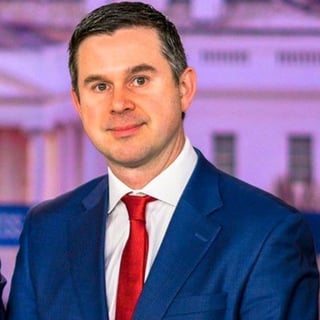
00:00:09 | Mark Murray
Hi, everybody, and welcome to the OpenAI Forum. I'm Mark Murray, the editorial director here at OpenAI, and I'm going to be moderating today's conversation. Today I'm joined by Bryan and Bradford Manning, co-founders of Two Blind Brothers. Both live with Stargardt's disease, and they built their company from scratch 10 years ago with a mission to support retinal causes and create opportunities for blind and low-vision workers. We're going to talk about how they use ChatGPT in their daily lives and across their business, how it's changed the way they work, and the possibilities they see ahead for accessible AI. We're going to save time for your questions at the end, so please add them into the Q&A tab throughout the conversation. Bryan and Bradford, thanks for joining us.
00:00:55 | Bradford Manning
Hello.
00:00:56 | Bryan Manning
Hey, Mark. Happy to be here, my friend.
00:00:58 | Mark Murray
Oh my gosh, I'm so glad to have you guys. Thanks for joining our community. And I just want to start off with, tell me about your journey, how you guys came to found Two Blind Brothers and your story. Bradford, why don't you start?
00:01:15 | Bradford Manning
I am the older brother, so I usually go first at everything. So I'm happy to do that.
00:01:20 | Bryan Manning
He said first, not better, Mark. I just want to make that very clear at the start here.
00:01:23 | Mark Murray
We'll get to better next.
00:01:25 | Bryan Manning
Yeah.
00:01:26 | Bradford Manning
So, as you mentioned, Bryan and I have a retinal degenerative eye disease, and our story really started when I was five years old. That was a tough year for me because I failed the kindergarten eye chart. It also happened to be the year that-- I was five years old when Bryan was born, so it was two tough things that year. But it started this hunt to figure out what had happened to my eyesight, and after a lot of doctors, a lot of bad guesses, bad diagnoses. They dye your blood, and they can see the scar tissue on your retina, and they told my mom that I had an eye condition called Stargardt's disease.
00:02:11 | Bradford Manning
It's a form of macular degeneration. A lot of people's parents, grandparents eventually may get macular degeneration, and this is a juvenile form with no cure. And that's really how our story started. And then we ascribe a lot of what we've done to having a lot of great resources, great parents. At that time, my mom, when I was diagnosed, I remember her sitting in the car. I'm seven years old at this time, and she is staring at the steering wheel, and she says, "F this." And she goes, "Let's go to Friendly's and get some ice cream." And as an aside, that's what I thought F this meant for a long time.
00:03:01 | Bradford Manning
We end up going to Friendly's, get a big sundae, and then we go to Blockbuster, and I get the movie "Air Bud," and I'm watching this dog shoot three-pointers for the basketball team, thinking this was the best day of my entire life.
00:03:16 | Mark Murray
Bryan, as the younger but self-described better brother, your turn. Same question.
00:03:22 | Bryan Manning
And so, fast forward a few years, and I get the same diagnosis at the same effing doctor, to steal words out of Mom's mouth. And Brad and I had to live with this for the rest of our lives. We had to be two inches from a textbook and in the front row of every class so we could kind of see the chalkboard until about 10, when that went away. And we suffered through not recognizing faces, not being able to read textbooks, really not living in a world that was designed for us. But despite all of that, and because of great parents who really didn't let us get away with much or make excuses for ourselves, we end up both going to the University of Virginia.
00:04:07 | Bryan Manning
And we graduated and both moved to New York, Brad a little ahead of me. And one day we were shopping at a Bloomingdale's, of all places, because my lovely brother told me I was the worst-dressed person in all of New York City, which hurt his pride, but it hurt. And we were talking how we're living through a medical revolution right now in the eye, that for the first time really in our lifetimes, retinal eye disease are starting to be cured. And at that time, there was a young man called Yannick Duwe who had a disease called Leber's congenital amaurosis, and there was a treatment, a gene therapy, one shot, that took him from blind to sighted, braille to print, and how just genuinely magical that was. And we wanted to see if we could get involved and help.
00:04:54 | Bryan Manning
So in this Bloomingdale's shop of all places, we lost each other immediately, because that's what happens when you both can't see. It's a liability. And about, I don't know, 20 minutes later, 30 minutes later, we walked out holding the exact same shirt. And what we realized in that moment is when you're blind or visually impaired, you experience the world through your hands first. And it was soft, it was cozy, it was comfortable. And we had this aha moment. What if we could make the best clothing in the world, the softest, best-fitting, best-feeling? And what if we could donate 100% of our profits to retinal research? And then we went on one of the greatest 10-year journeys, one of the greatest 10-year runs any two people ever have. And it's been a blast. We've donated several million dollars to our causes. And recently we actually got to convert into a 501(c)(3) charity, which has been a huge boon for us.
00:05:50 | Mark Murray
Walk me through some of the ways that you guys have adapted through your own personal journey. Whether it's personal lives, whether it is at work, on how you have been able to adapt. And Bryan, why don't you start with that?
00:06:04 | Bryan Manning
Yeah. Well, ChatGPT has been probably the greatest accessibility tool ever invented. And we've used all of them. And braille unlocked the ability to read. And glasses unlocked the ability to get better visual acuity. They don't work for Brad and I, unfortunately. I remember when the iPhone came out, and we could take a picture and zoom in on something and read it. We thought that was it. We thought we were in the big leagues. And now we have this tool that takes all of the incredibly challenging, incredibly tedious, and incredibly problematic things that we couldn't do. There was a lot of jobs Brad and I could never have because we couldn't see well enough to do them.
00:06:48 | Bryan Manning
I couldn't be a cashier at a grocery store because I couldn't type in the barcode number. I tried working in banking, but I just wasn't as fast in Excel because I have to go cell by cell, row by row, column by column. And so all of this latent potential, it got unlocked because of being able to use ChatGPT. And so it helps read emails, it helps evaluate Excel documents, it helps review memos, it helps write memos, it helps build websites, it helps make sure things are formatted correctly. And so on every business case, we use it. And even on a personal case, I'm a father of three, Brad's a father of three.
00:07:27 | Bryan Manning
Something you don't think about is him and I can't read our kids' bedtime stories because we can't see the book. It's just there's not big enough font to do it. And so for a while, I just made up the story every time and just would turn the pages and just be like, "Oh, this is what's happening." Until my son started learning his letters. He goes, "Dad, that's not what it says." And now, personally, we use ChatGPT at bedtime, where we'll prompt it to tell a story about Eddie the dinosaur detective who goes on a grand adventure with his little sister, Marlo, and his baby sister, Holland, who then go out and they have a grand whole crazy story together, and it feels like they get immersed, and then we get to talk about it afterwards. And it just creates this kind of magical moment, which for a while was something I was really worried about that was going to be a miss from a parenting perspective.
00:08:18 | Mark Murray
Bradford, your brother called ChatGPT the greatest technological innovation. Do you agree? And talk about how you've actually used technology and other things to deal with your vision.
00:08:29 | Bradford Manning
Well, like always, Bryan takes all the good stuff. But the fact is one of the reasons Bryan and I are so enthusiastic about opportunities like this to get to share this message is I don't think that most people understand what this is doing for different communities that might not have exposure in some of the mainstream discussion on these things. It is the most consequential accessibility tool in history. If you think about it, it's not hard for people to imagine because if you think about what slows people down, we get information through our senses. We can hear things, we can see things, we can touch things.
00:09:27 | Bradford Manning
So if you don't have to see something to get information about it, it's going to make you very fast. And although that that is true for everybody who's a user of these technologies, I think there's a special enthusiasm for people like Bryan and I, because it's almost like we were sort of limited. One of the analogies we think about, it's like imagine you're a runner, but you always had to run with a 10-pound weight vest on. You do the runs. Doesn't mean the run goes badly. You could do fantastic on the run. Maybe you're racing, maybe you do well, maybe you don't do well, but you have this weight vest on every day. And then one day when you turn 40, somebody says, "You know what? We can actually take that off now."
00:10:26 | Bradford Manning
Your enthusiasm as you run is just through the roof because you're realizing how much faster you can go. You're hitting milestones that you didn't hit before. For Bryan and I, that are in sort of an entrepreneurial environment here at Two Blind Brothers, so we have the flexibility to control how we work, it's really given a lot of opportunity back to us.
00:10:55 | Mark Murray
And Bradford, just as a quick follow-up, what were some of the first changes that you ended up seeing when you started using ChatGPT?
00:11:04 | Bradford Manning
Well, the first thing was synthesizing long documents. If you think about it, one of the first things that's tough if you can't see well is, okay, I need to get a piece of information from a long email, a long PDF, a contract, a spreadsheet, and that takes a lot of scanning with your eyes. So ChatGPT 2, when we were putting our long documents into the tool and getting that answer back, it was interesting because Bryan and I would typically rely on other people to try to do some of this. And it empowered us to be able to do it ourselves. So I think accessing documents and consolidating web search to just sort of direct response out of the chat client were some of the first things.
00:12:09 | Mark Murray
And Bryan, walk me through some of the ways in which how you use ChatGPT today.
00:12:15 | Bryan Manning
How long you got, Mark?
00:12:17 | Mark Murray
We've got some time.
00:12:18 | Bryan Manning
Oh, thanks, buddy. That's great. If I keep talking, Brad can't, so I think this is going to work out for everybody.
00:12:24 | Mark Murray
Yeah.
00:12:25 | Bryan Manning
So, when we converted to a 501(c)(3) charity, one of the great things it was able to do is I said, "Hey, go back through all of the organizations that we've had good conversations with through my email, and pull together a list, and then give me context on the last few things we talked about, and then help me draft an email to each and every one of them letting know we made this transition." And that could be everyone from Coca-Cola, where we made shirts for, to Puma, where we made the Paralympic uniforms for. And go back, and let's reopen all those doors now that we can fall into a different bucket and have that conversation. That's a job we just wouldn't have done.
00:13:05 | Bryan Manning
It's just something I wouldn't have been capable of, or it would've taken 100 hours to get done. Instead, it was seven minutes. Or we used it, we have a great Thrive Blind program, where we're encouraging blind and visually impaired folks to get behind using ChatGPT and get behind using AI and unlock their potential. Me chatting with chat for 20 minutes, we got the first drafts of the Thrive Blind website up that was able for me to send out to the team so we could actually have it be done by today rather than needing to go vet six different vendors to actually get ourselves there. And say, "Hey, follow all ADA compliance laws."
00:13:46 | Bryan Manning
And then let's view it as a blind individual, and let's view it as if we're using a screen reader. And so we knew that what we were making was actually going to be helpful and compliant. And it sounds just silly, but when we pull down our Shop Blind campaign data into an Excel spreadsheet, it used to be a four-day process going through all the orders, making sure everything shipped on time, making sure everything got out. Now we pull it down, we say, "Hey, ChatGPT, did every order go out within the window we had thought it would? Pull the orders it didn't. Find the reason why, write the email to the fulfillment center, and let's track this down." Now it's a five-minute job.
00:14:25 | Bryan Manning
And so these simple things are now so unbelievably fast. And the other part is with-- And this is all when we use the text-based models. When I actually just get to talk to it, because that's the preferred method for me to do any work, is either use the dictation into ChatGPT and then have it talk back to me. It cuts that whole loop down by 50%. And so my day gets to actually end with me finishing all the work that I needed to get done and be able to go be dad and husband and friend rather than, "Hey, I get to hang out for a little bit, but now I need to go back to work to make sure everything that we didn't do today got done."
00:15:04 | Mark Murray
Bryan, looking ahead to the future, maybe three or five years from now, what are some of the ways in which AI can actually even be more accessible for people who are visually impaired?
00:15:13 | Bryan Manning
Oh. Bryan and I were talking about this earlier. Five years ago, this didn't exist. That's the part that does it. Three years ago, it barely was there. Thinking three to five years from now is, frankly, almost impossible for me.
00:15:29 | Mark Murray
Yeah.
00:15:30 | Bryan Manning
But I will say ease of use. I think that's the big thing we'd love to make sure that happens. Is that if you're blind or visually impaired or you have any challenge, any disability, any hardship, there's an ease of use to actually getting into the hyper use of these tools. Brad and I spend six to 10 hours in ChatGPT every single day. At least that's what my tokens tell me. But there's a lot of kids out there, and we go and talk at blind schools, that don't use it to that degree, that haven't stepped in there because the ease of use hasn't quite been there for them. And so I would love it if it becomes almost so simple that it feels like a person walking next to you, that it feels like somebody going down the street with you saying, "Here's this building," or a great assistant or a great teammate who gets to actually be your sidekick and have it be as easy as walking around with a best friend.
00:16:28 | Bryan Manning
And optimistically, I think it'll get there because it is getting better every single day, but that would be the best-case scenario, is that every blind and visually impaired kid in the United States or around the world has a chance to use it and really understand how it can help their lives.
00:16:44 | Mark Murray
Bradford, your take on that?
00:16:46 | Bradford Manning
Well, when you had asked Bryan earlier about some of the ways that we're using it, I wanted to highlight a really fun use case. I don't know if most people are aware of this, but one thing we found astonishing that is actually incredibly helpful, is indoor navigation in large venues. So-
00:17:08 | Mark Murray
Mm.
00:17:09 | Bradford Manning
When I get off a plane and I'm trying to find the taxi line or the rideshare location, not being able to see the signs and having to navigate that, I'm always backtracking. I always miss one turn or go to the wrong floor or waiting on the curb for the Uber, but it's actually the further curb. Shockingly, you can get on the voice agent with chat and say, "Hey, I don't have great eyesight. I'm trying to find the rideshare pickup. Just give me the play-by-play. If I'm walking, is the turn on the right? Which floor is it on?" And it actually does that type of thing beautifully. You can be going to a restaurant and ask, "What does the building look like?" If you're walking through a city or something like that.
00:18:00 | Bradford Manning
And it can describe what the building looks like, what side of the street it's on. Some of the navigation that is in this incredible brain is very surprising. And then on Bryan's point on ... a few years from now, how do we make sure that this is accessible? As Bryan was sort of describing, that's exactly right, is we have an incredible tool. The tool itself will get better and better as a means of reasoning, intelligence, information. But it's almost like, so what is the bottleneck in that case? The bottleneck, it's almost like a car. Like a car is an incredible tool, but if you can't get the person in the car and teach them how to drive it, then they'll never be able to use it. And walking 10 miles is different than driving 10 miles.
00:18:59 | Bradford Manning
And I feel like that analogy holds up, with sort of making sure that folks that will get exceptional benefit out of this technology have an easy way to onboard onto it.
00:19:15 | Mark Murray
Bryan, describe to me how you use ChatGPT and AI to collaborate and divide work with colleagues, with sources, other folks.
00:19:25 | Bryan Manning
I will tell you my favorite feature that exists in all of ChatGPT is hooking it into the email. Because I can sit there and I can do the research on, I can go say, "Hey, we got to go find every foundation that works with blind organizations or every corporate that has made a blind donation," or any of that. Then I can say, "Hey, ChatGPT, can you put this in my drafts folder so that I can kick it over to the team?" And then it'll kick out to Krista, and then Krista can follow through it, or Ben can follow through on it. Or when we sit and have a team meeting, we can actually record the meeting, and then it can drop into my ChatGPT afterwards.
00:20:02 | Bryan Manning
So all the to-dos that we have to get done, get categorized, and it actually follows them, and it'll update me and hold me accountable sometimes, which I don't love. I mean, it's good that it does it, but not always my favorite thing that it does. It's like medicine. But it'll be like, "Oh hey, remember you told Krista to do this, you should check in with her on that." Or, "Brad said he was going to shoot this video today, make sure that that got done so you can do your part." And it's a great way to keep everybody accountable and on task, and it's a great way to share quickly what's been created.
00:20:37 | Bryan Manning
So something gets done, we can put it in, and then it's immediately actionable.
00:20:41 | Mark Murray
Mm-hmm.
00:20:41 | Bryan Manning
And if Krista doesn't need to come back to me for context, because we have the team.
00:20:45 | Mark Murray
Mm-hmm.
00:20:46 | Bryan Manning
So she can go in and see what I did and then ask ChatGPT her question about my work. And so we don't need to wait until 3:00 PM till our check-in starts. She can actually do it at 10:00 AM, and so then it's done. And I think that closing of the several-hour gap or the, in worst case, several-day gap, because let's say we're not going to talk till Thursday afternoon. Well, now we wasted two days, or now we wasted a week. And instead we can get it done today rather than tomorrow. And I, as a small company, that's your magic, right?
00:21:17 | Mark Murray
Mm-hmm.
00:21:17 | Bryan Manning
That's where you're better. That's where you can really get things done, is because we can finish it today than actually you have to wait for tomorrow to go do it.
00:21:25 | Mark Murray
All right, so Bradford, your brother ended up saying that it was the email plugin component is what he thinks is the magic. What is your favorite feature or what is the magic that you end up getting?
00:21:37 | Bradford Manning
Well, first of all, the kind of crazy thing is it changes every few weeks. New feature. That's actually one of the funny things. You'll go down a rabbit hole setting something up, and then all of a sudden, there's a new feature, and you want to completely change your whole architecture. Bryan and I are pretty deep down the rabbit hole. People call it AI psychosis. We call it AI enlightenment.
00:22:06 | Mark Murray
Ha.
00:22:08 | Bradford Manning
And look, one of the things that I think is relevant to an audience outside of the blind and visually impaired, is how powerful these OpenAI Whisper models are.
00:22:20 | Mark Murray
Mm-hmm.
00:22:22 | Bradford Manning
Bryan and I have used speech-to-text for a long time, and the Whisper models are a order of magnitude better at transcribing speech, and we don't type anymore. We use integrations with the OpenAI Whisper models to do all of our dictation, and if someone out there isn't using it yet, I think they'll be, once they sort of get it set up, I think they'll be blown away at how much they use it. Kind of going back to this unique enthusiasm that we feel, because it sort of unlocked things. Who gets excited about running analysis on spreadsheets? Well, we do because we actually couldn't really do that well before.
00:23:13 | Bradford Manning
And so we've got agent workflows and dashboards that are pulling in analytics, that are generating creative, that are looking at emails and notes and highlighting sort of highest and best use of different people's time. We have fall through the cracks agents that will look to see if something didn't get responded to or is stale or needs bumping. I mean, so it's hard to say it's one thing. I love the fact that we can do analysis without having to use our eyes. I love the OpenAI Whisper models for their dictation. And I love the indoor navigation. Those would be my top three.
00:24:07 | Mark Murray
Bryan, it is evident that you and your brother are super enthusiastic about this technology. What's your conversations that you guys hear from other people in the visually impaired community or people who are accessibility advocates?
00:24:25 | Bryan Manning
I'll answer that, but I want to tell you where a lot of this enthusiasm comes from, because I actually do get reflective when I use this stuff because Brad talked about our mom getting walked into a doctor's office and told, "Hey, your kids have Stargardt's," a disease she'd never heard of. "They're going to go blind. Here's a magnifier. Teach them braille. Best of luck." And then she took Brad-- thank gosh she's an unbelievable mother, and took Brad to Friendly's and went to see Air Bud and did all the great things. But now, what if we told that story in 2026? She walks to the car, she hits a button and says, "Hey, ChatGPT.
00:25:02 | Bryan Manning
My son just got diagnosed with Stargardt's disease. Can you tell me about that disease real fast? What's the progression look like? What does it feel like? I don't know anything about it. Can you give me background, and what do I do?" And then all of a sudden, it gives her full background on ABCA4, it gives her full background on what's going to happen, and it goes, "Hey, there's actually 14 clinical trials recruiting for Stargardt's patients right now. I'm happy to give you a clinicaltrials.gov link and synthesize what the trial is about." And it takes that scary, terrible, oh-my-God moment and contextualizes it, gives her space, gives her resources, gives her community, and gives her a chance to actually feel knowledgeable, empowered, and capable to go after this thing in a different way rather than just being in the dark.
00:25:50 | Bryan Manning
And that's where our enthusiasm comes from, because we meet families every single week that are going through this, that reach out to us because we've gotten the news coverage. And when you Google blindness, we pop up. And it's amazing what we've even seen from when we started till now. People come so much more informed, so much more thoughtful, because they get to use these tools. And there's a lot of work product, there's a lot of great efficiency and benefit and all of that. But making a mom who feels scared feel better, there's not enough email client work in the world to compete. That's where the enthusiasm comes from.
00:26:31 | Bryan Manning
That's where the love comes from. And we see a lot of that with the accessibility folks that we talk to and the other friends in this community and across the board. They're just so excited that their latent potential is opening up, and that families have better access, and that they feel empowered to go out and do the things that they thought once were impossible. It feels like a revolution of those that were otherwise forgotten for a long time, and that a lot of folks are finally given a chance to shine in a way they always could. They just didn't have that last piece to really do it.
00:27:08 | Mark Murray
Bradford, your take on that, and where do you see this going next?
00:27:12 | Bradford Manning
What I will add, your original question about how does the community sort of react to that. It's a really interesting question because what occurs to me when you ask that is-- and I think this is one of the reasons Bryan and I like being loud about this, is that a lot of folks who are blind or visually impaired, they are not in seats right now, in jobs, in places where they've had administrative workloads on them because they were never as capable at handling a lot of that. The unemployment rate in the blind community is atrocious. I think it's something like 80%. So what's interesting about your question, because I was like, when we do talk to people, what do they say?
00:28:01 | Bradford Manning
The fact is, a lot of this community isn't-- This is the very early days of this, Bryan used the word revolution. This is very early days. People are just starting to get exposed to this and realizing the capabilities that they have. That college grad who was not applying for those consulting jobs or investment jobs or corporate back office job, because they just felt like they were a step behind. They now are starting to wrap their heads around the idea, and the businesses themselves are getting more comfortable with integrating these tools into their environments. So I think what's really interesting is actually a lot of folks don't really understand the power of it just yet.
00:29:07 | Mark Murray
Mm-hmm.
00:29:09 | Bradford Manning
And so that's one thing that does stand out to me.
00:29:13 | Mark Murray
Thanks for that. Well, we've been getting tons of questions from the OpenAI Forum community, and so let's start answering some of those questions. The first one, Bryan, you're going to get this. This comes from Lana, and she asked, "What accessibility feature would you build next if the goal was not convenience, but equal entrepreneurial agency?"
00:29:36 | Bryan Manning
Sorry. Lana, hard question. Why don't you give this one to Brad? That would've been really nice of you, Marcus. Thought we talked about difficult ones go over there. I only want softballs.
00:29:45 | Mark Murray
Yeah.
00:29:46 | Bryan Manning
No, to build the next feature for equal opportunity for entrepreneurs, actually, I will be honest, is the voice-to-text and the text-to-voice, and that has gotten-- A year and a half ago, I would've said hands down that's what's needed. And now it is getting so good that it synthesizes, it understands, it lets me ramble. I can be in public, I can be in private. Anywhere I go, I can actually speak to the tool, and it can speak back to me. And if I'm on my phone, I don't need to triple tap zoom in and read one word at a time. I actually can get all the information back in real time.
00:30:28 | Bryan Manning
And that has been probably the biggest unlock in continuing to allow that, and continuing to encourage that program and to keep enhancing it by allowing it to connect to outside tools, by allowing it to have a little more autonomy, the same way the text version does, would be kind of the-- If I got to wave a wand, that's probably the tool I'd pick up first.
00:30:51 | Mark Murray
Awesome. All right, Bradford, this question comes from Daniel Green from Kansas City at the AI Collective, and he asked, "If you were starting from scratch with ChatGPT today, what would you tell your day one self?"
00:31:06 | Bryan Manning
You can't say fire Bryan. Just-
00:31:08 | Bradford Manning
Well- ... so, yeah. So this tool is introduced to me for the first time. I would say clear the next week- ... maybe next month, and sit down and use it. And try to use it in all-- Ask it how... Explain everything that you spend your time on, the nature of your work, the nature of your lifestyle, and ask it, "In what ways can you best help me get all of this done easier, faster, in a more convenient way?" That's a really good place to start. What I found is ChatGPT, it's a very, very good educator. You can actually say, "Hey, you just used 30 words that I don't understand. Explain it to me like I'm in fifth grade." And then it'll explain and be like, "Okay, I kind of get it now.
00:32:12 | Bradford Manning
You can explain it to me like I'm in eighth grade?" And actually, when I really need to know a topic, I'll ask it to kind of quiz me. And it's a very quick way to learn, which I find interesting. But I wanted to add one thing, because Bryan said it kind of quickly in his answers. But I think the greatest, the next step in accessibility for this tool is, as Bryan was saying at the end, connecting the live voice agents to all of the MCP plugins, integrations, et cetera. Right now, the voice agent does not do that natively.
00:32:51 | Mark Murray
Hmm.
00:32:51 | Bradford Manning
It can do web search. It can pull a few things. And I'm sure it's partly because there's timing and latency in the voice. You want it to be very responsive. But once it can integrate with all those plugins like the chat client can, I think that'll be a huge step.
00:33:12 | Mark Murray
All right, Bryan, here's another question from the community. How has your trust with AI grown over time? What would you tell to someone who's nervous about using AI, maybe for the first time?
00:33:22 | Bryan Manning
It's a great question, and it's funny because it has grown pretty exponentially because it has been kind of by my side. And it takes a big step to give it access to your email because you're like, "What will it do with all my emails?" And then you're like, "Do we really want to give it access to some of the Shopify data? I mean, that's where the money is. Do we really want to make sure it's in there, or do I really want it to have access to my full calendar and be able to book things?" And it's like any relationship. It's by it doing the job every single week, the same way you build trust with a friend or a partner.
00:33:59 | Bryan Manning
In the same way you build trust with an employee. On day one, you probably don't give your employees access to the bank account. But as they do the job, and every time, it makes it more efficient. It makes it better. The mistakes that are made are kind of identifiable. And they're not massive mistakes. And you set your own guardrails on things, right? ChatGPT right now for me, puts emails in drafts, right? I don't have it hit send itself. I actually don't even know if it can. Maybe it can. I don't know. But it's in the draft folder, and so I know where it is. I get to do a last validation check.
00:34:36 | Bryan Manning
But I trust it enough to read all my emails and say, "What's actually important today?" And I trust it enough to say, "Hey, look at the Shopify data. What's going on with the finances? Where are we at with cost of goods sold versus kind of budgeted versus CAC?" And it takes time to get comfortable with that, but I think step one is give it a project that it can build a little trust with you on. Step two is give it another project where it can build a little trust.
00:35:01 | Mark Murray
Mm-hmm.
00:35:01 | Bryan Manning
And be honest. And the one thing that I try to be honest about is, are the mistakes it's making because I think it's supposed to be perfect, or are the humans I trust, did they also make small mistakes that I forgive? And I think that was kind of one of the big realizations for me is that people make mistakes, too. And so as long as they're not giant, and as long as they're traceable, then give it the next project and the next project and the next project and kind of watch it blossom.
00:35:28 | Mark Murray
All right, Bradford, you get the last question from the community.
00:35:31 | Bradford Manning
Whoo.
00:35:31 | Mark Murray
What is something you wish AI could do that it is currently not doing?
00:35:37 | Bradford Manning
Oh, shoot. I wish I didn't waste my voice agent MCP integration on that. You know, that-
00:35:44 | Bryan Manning
Can it work out for me by chance? Is there a way that I could get it to do the exercises that I don't want to?
00:35:50 | Bradford Manning
Yeah. You know what? I'm going to take this in a-- This answers the question, but I think not in the way that the question was asked. I wish that AI could actually do a better job of communicating not just the opportunity that sits in front of us, but the cost of it not being utilized or existing for different folks that can benefit from it. There's a lot of great questions about trust and safety. What I appreciate is, I'm glad that a few years ago, that we innovated quite quickly to where we are today. Because to take it away at this point is really taking away a lot of accessibility.
00:36:53 | Bradford Manning
And so I want AI, as an industry, to understand that there's a lot of opportunity cost. And I'd like that to be in the conversation more. So that and the voice integrations would be amazing.
00:37:15 | Mark Murray
Oh, gosh.
00:37:16 | Overlapping speech
[Overlapping speech]
00:37:17 | Mark Murray
Bradford, Bryan, you guys were awesome. Thank you so much for joining us today. That was such a great talk, and I look forward to chatting with you guys again.
00:37:26 | Bradford Manning
Amazing.
00:37:26 | Bryan Manning
Unbelievable time. Thanks, everybody-
00:37:28 | Mark Murray
All right
00:37:28 | Bryan Manning
... for watching.
00:37:29 | Mark Murray
Bye, guys. And thanks to everyone who joined us today here at the OpenAI Forum. If you're in Los Angeles, be sure to register your interest to join us on September 29th for AI at Work in Local News: How Newsrooms are Using AI Today. We'll share the link in the comments. Thanks again, and we hope to see you there.